Datarella GmbH, a Web3 company builder, is joining forces with deltaDAO AG, a Web3 engineering and integration company, to expand the open data economy in the mobility and identity sectors. Both companies leverage their extensive experience in creating Web3 solutions for real-world use cases. The partners aim to allow corporate and individual users to monetize data while preserving their privacy. The first project is inspired by the partners’ collaboration in moveID, a Gaia-X 4 Future Mobility project. It will allow the monetization of mobility service provider data.
Datarella and deltaDAO will use their enterprise Web3 tools and consumer apps to jointly build solutions for the monetization of data featuring Fetch.AI and Ocean Protocol technologies. This combined tech stack serves as the foundational underlying protocol for digital business transformation with converging technologies, s.a. AI, and autonomous machines. Given the natural synergies between Datarella and deltaDAO, this cooperation will drive enterprise adoption across the partners’ client bases.
For Datarella, the purpose of technology is to increase the quality of living, by supporting human beings in professional activities and private lifestyles. The growing complexity and diversity of our ecosystem require technological infrastructures that facilitate collaboration and cooperation. By creating Web3 solutions for a global user base, Datarella illustrates the real-world benefits of its Web3 technology stack, and with deltaDAO, we will show how individual and professional users can turn the table and monetize their data, instead of “being the product”, .
Michael Reuter, CEO of Datarella
deltaDAO has become a trusted advisor for building sovereign, privacy-preserving, and secure data economy solutions. We seek to give freedom of choice and control back to data owners. As a DAO we create a new kind of data economy that is owned by no one – and open to everyone. Our partnership with Datarella will lead to many impactful real-world use cases and is a great example of how two companies can leverage each other’s strengths and experience to create real-world solutions for both individual and professional users alike. We are excited about building towards a decentralized data economy together with Datarella!
Frederic Schwill, Co–Founder of deltaDAO
About Datarella
Datarella GmbH is a Web3 company builder. Leveraging its technology stack of Blockchains, Self-Sovereign Identity SSI, Autonomous Agents, and Artificial Intelligence AI, as the tech hub for Web3 projects and companies like MOBIX, MOBIX family, IMMOBIX, or NOMIX, Datarella creates applications with real-world benefits. The Munich-based company was founded in 2013. With its decentralized teams in Munich, Gdansk (Poland), and Skopje (North Macedonia), Datarella develops bespoke Web3 innovations for their partners and clients, s.a. United Nations, World Food Programme, UKAid, ESA, Siemens, BMW, BOSCH, and Airbus.
About deltaDAO
deltaDAO AG is a software development, integration, and consulting company based in Hamburg, Germany. Its focus is to enable a transparent, secure, and decentralized data economy in which enterprises, SMEs, and public institutions can keep full technical control over their private data. As specialists in distributed ledger technologies (DLT) we are engaged in Gaia-X and built the first Minimal Viable Gaia-X (https://minimal-gaia-x.eu/) in 2021, based on open-source software and Web3 technology.
Datarella is proud to announce the signing of a piloting agreement with Aid Pioneers e.V. (Aid Pioneers) to further work on a shipment with the space-linked supply chain product Track and Trust (T&T). Track and Trust is funded by the European Space Agency as a 2-year Demonstration Project. In this regard, Datarella, as prime contractor, together with its partners Weaver Labs and OroraTech, recently successfully completed a significant milestone with ESA.
The consortium led by Datarella is currently working on a Blockchain-based enterprise solution to tackle complex supply chain challenges that humanitarian agencies across the world face in order to track aid in locations that lack access to reliable communications infrastructure. At the end of two years of development and commercial trials, Track & Trust aims to deliver a scalable cost-efficient communications platform & network combining satellite, IoT mesh and blockchain components serving mostly supply chain use cases.
Aid Pioneers agreed to join the Track and Trust initiative as a shipment partner. They will initiate and organize an aid supply for the demonstration of the Track and Trust service. The first shipment is planned for 2023 with the goal to support people in Ukraine. Aid Pioneers is a German association joining other NGOs to build logistics to foreign countries helping people in need.
“We are very proud to have Aid Pioneers on board as our piloting partner for Track and Trust. Aid Pioneers is a young but well-established aid organization active for aid shipments to various regions including Africa, Middle-East including Balkan and Ukraine. With Aid Pioneers as our shipment partner, we have a strong setup to make a success story out of Track and Trust.” Yukitaka Nezu, Co-Founder and CFO at Datarella.
We are very excited to have a piloting agreement with Aid Pioneers and are very much looking forward to a successful shipment with them, leveraging the integration of blockchain, space and network infrastructure technology into our product Track & Trust.
As an expression of our recent progress, we can also announce: Datarella, together with its partners, successfully passed the Critical Design Review (CDR) as one of the significant milestones with ESA. Our design for Track & Trust has been assessed as valid by ESA. We are looking forward to entering the development phase next, together with our partners, in order to start piloting soon!
As one of the selected parties in the current eSSIF program, Datarella aims to bring Anoncreds based on CL-Signatures to the Aries Framework Go. In this blogpost, we provide a progress report on the Aries Bridge from the project we are working on in the eSSIF-Lab and where we are heading next.
There are currently two major types of Verifiable Credentials used in the SSI world that implement different cryptography schemes and have different capabilities. However, both are perfectly fine to implement working SSI use cases.
The first type is based on the “Camenisch-Lysyanskaya ZKP” signature scheme, or short CL-Signatures, to issue so-called Anoncreds. It is used in SSI projects that implement Hyperledger Indy, a DLT with an SDK that was created specifically for SSI use cases and with support of the Aries Protocol. The popular Aries Cloud Agent Python is implementing these kinds of Verifiable Credentials and therefore a lot of existing SSI use cases are using Anoncreds.
The second type are JSON-LD credentials which is recommended as a standard by the W3C. It comes from an ledger independent approach and relies more on semantics which allow for a broader ecosystem interoperability. This approach is preferred among the Aries Framework Go ecosystem.
One major problem is that these two types of Verifiable Credentials are not compatible with each other as they are using different cryptography determined by the ecosystem they are residing in. Therefore, Datarella aims to make Anoncreds available to the Aries Framework Go to get the best of both worlds. This allows for deploying agents on non-mobile edge devices while being compatible with solutions built on the Aries Cloud Agent Python or Hyperledger Indy, respectively.
We decided to write a wrapper of the indy-credx library in Go. This allows us to call the indy-credx functions for credential management from a Go environment, such as a vehicle or a mobile device. Our pull request was successfully merged in the shared rust libraries and is now openly accessible by others. However, this was just the first step. In the next step, we will integrate the wrapper with the Aries Framework Go to simplify the integration from that side.
Stay tuned for when we are giving a progress report on the Aries Bridge again in our News section; e.g. leveraging it for the mobility space in our moveID Gaia-X project.
This project has received funding from the European Union’s Horizon 2020 research and innovation programme within the framework of the eSSIF-Lab Project funded under grant agreement No 871932.
With Datarella, we have been building software, tools, and applications for Web3 since 2015. Our first truly global project has been the Building Blocks application which enables users to securely pay with their smartphones in refugee camps.
We‘ve developed Track & Trust, a tracking solution for humanitarian aid logistics that leverages satellite communication. In the mobility sector, we have created SSI apps and smart parking solutions to enable secure P2P communications, streamline traffic flows, and minimize CO2 emissions. With 16 other companies, we’re part of Gaia-X consortium moveID that will create the decentralized digital infrastructure for mobility in Europe. And much more! And, in 2020, we decided to leverage our tech stack and create the Datarella Web3 Company Builder Model.
RAAY Real Estate
In 2020, we have launched RAAY Real Estate (RAAY RE) as our first standalone project, together with two partners from the real estate industry. Our RAAY RE joint venture with Hammer AG and Wertgrund Immobilien AG was the first to tokenize a commercial property, fully licensed by German regulator BaFin – Connex Coin was a breakthrough! RAAY RE will become the legal framework of our future IMMOBIX project and token.
MOBIX Marketplace
In 2021, we launched our micromobility marketplace MOBIX. By using the MOBIX app, more than 350,000 daily active users in over 120 countries are earning MOBIX Miles while riding eco-friendly vehicles, such as scooters, bikes, eBikes, eMopeds, or cargo bikes. By incentivizing users to swap their combustion engines with zero-emission transportation, MOBIX helps to decrease CO2 emissions and to make cities more liveable. In the meantime, MOBIX has evolved into the MOBIX Marketplace GmbH, a Munich-based company owned by Datarella, and Fetch.ai.
MOBIX family
The latest brainchild of Datarella’s Web3 Company Builder Model is MOBIX family – a decentralized gig economy network. MOBIX family is the first project in the Company Builder Model that will be driven with the support of an external team. Whereas RAAY RE and MOBIX have been built by internal Datarella resources, a young team of aspiring entrepreneurs from the Technical University of Munich (TUM) has taken care of the Family’s first steps. The team has presented the first MOBiX family MVP during START Ideasprint 2022, a 4-day hackathon based out of Munich.
NOMIX
In 2023, the next project – NOMIX – will launch its BIOCLOCK app. Leveraging the same tech stack as other Datarella Web3 companies, NOMIX will help users around the world maximize their healthspans, i.e. living longer while staying healthy!
We at Datarella are very happy to see more and more teams using our Web3 tools and applications, and creating new ventures! Are you interested in joining an existing Web3 team or do you want to pitch your own idea? Do you want to become part of the Web3 world but prefer to participate from the sideline, you might be interested in owning DREX, our Datarella token which entitles the holder to receive tokens of Web3 projects. In either case, please contact us!
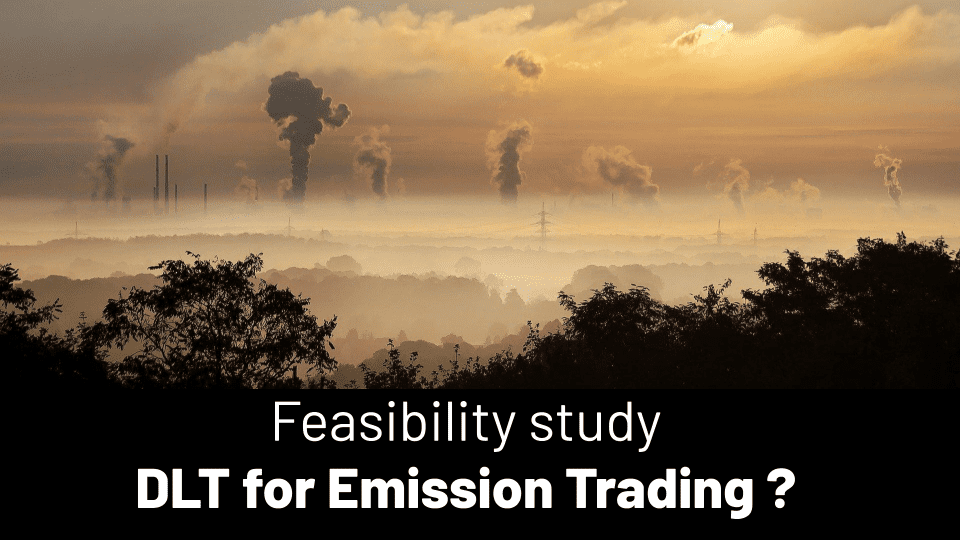
The German Environment Agency (UBA) commissioned the Frankfurt School Blockchain Center, Capgemini and Datarella to elaborate a feasibility study on the use of DLT in today’s emissions trading registries. Datarella is happy to announce its successful completion.
The aim was to evaluate whether the DLT is suited to efficiently represent the current European emissions trading system (EU ETS). The insights generated by the project partners will support policymakers in informed decision making with regards to the question of whether to remain with a traditional architecture or with a central relational database. For this purpose, the technical concept of an emissions trading DLT and the consideration of the efficiency and sustainability of an emissions trading DLT were explored. As a result, we were able to demonstrate how Emission Allowances can be represented on the blockchain. Hereby, the scope of an emissions trading system can be significantly expanded without extensively altering users’ current user experience .
As a key benefit, our DLT solution offers a robust infrastructure that is secure against manipulation attempts. Additionally, with DLT, well-known advantages such as transparency and traceability can be established in emission trading systems. Our concept also provides sustainable and energy-saving operability of a DLT-based emissions trading system.
The Frankfurt School Blockchain Center, as coordinator of the project, has contributed dedicated scientific blockchain expertise. Capgemini provided a rich set of expertise in carbon trading, registries, and private blockchain implementation. Datarella as a Web3 solution provider contributed comprehensive implementation expertise of enterprise blockchain solutions.
The result of the feasibility study was highly satisfactory for the client. In the future, the result will be presented to a larger circle of interested stakeholders.
In the last months, we have built the MVP of the Rohingya Archive, a digital heritage archive for the stateless Rohingya people. The R-Archive uses Arweave’s Blockweave technology to store documents immutable and permanently at very low costs. During our pilot phase, our partner, the Rohingya Project collected and uploaded various documents to preserve the Rohingya legacy. For detailed information on the pilot, checkout the pilot report here.
Feel invited to watch our demo, which will provide you more information on the background of the Rohingya Archive and its current features.
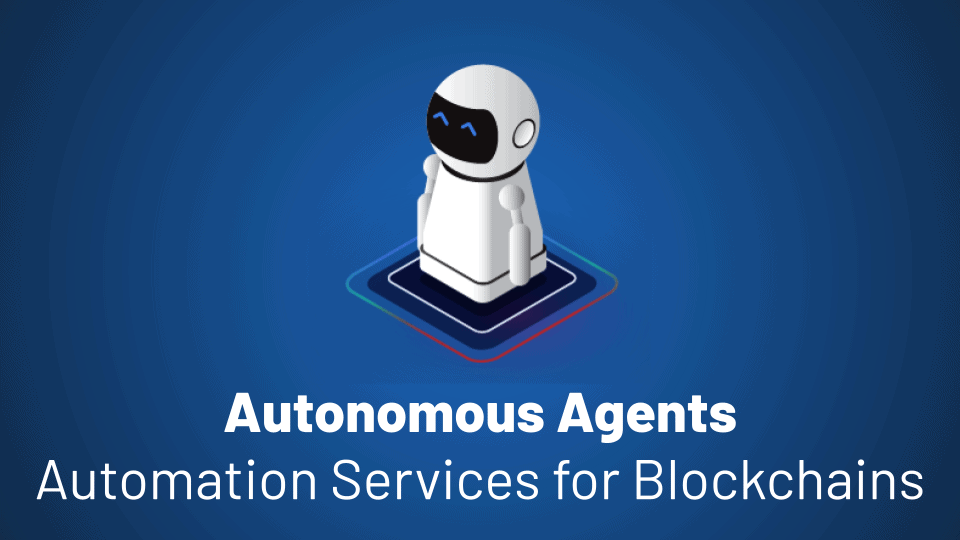
In this blog post, we look at the potential of service automation through autonomous economic agents in Blockchain-based systems. Datarella’s partner Fetch.ai has made it their mission to combine intelligent agents with blockchain technology in several use cases. Deep Parking is one of them, and using a specific example from MOBIX here you can get a feel for the potential of autonomous agents.
The path to the fourth industrial age is being paved by the interplay of Big Data-driven automation, robotics, IoT and Distributed Ledger Technologies, aka Blockchain. Given the increasing amount of data, and the number of digital services that go hand in hand with this progress, the need to automate them is also growing. Users should be relieved of unnecessary work and offered optimal results.
Agents take on the role of autonomously performing tasks on behalf of their clients (individuals or objects). For this purpose, they can also interact with each other. Intelligent agents can make complex decisions by using ML, i.e. AI-powered algorithms, based on large amounts of data.
A blockchain, with its data supply, offers a particularly favourable environment for intelligent agents. The data of a blockchain are permanently available and are logically related to each other. Decentralisation can offer robustness (no single point of failure) and lower transaction costs. Agents can assume a fully autonomous identity on a blockchain through private keys. They can use it to authenticate themselves and communicate their suitability for certain tasks. Agents can use shared protocols (possibly through smart contracts) to coordinate, collaborate efficiently, e.g. by distributing complex tasks among themselves. They can negotiate and make distributed decisions (even though voting processes use their blockchain). Tasks, goals or motives of agents can be recorded in the blockchain and economic incentives can be set for optimal task performance.
With regard to the IoT, a blockchain (as a single point of truth) can integrate various sub-systems, s.a. smart household appliances, smart buildings, smart districts and smart cities, and create added value for all agents participating in the network. Fetch.ai is an example of how intelligent agents can realize automated services based on blockchain technology.
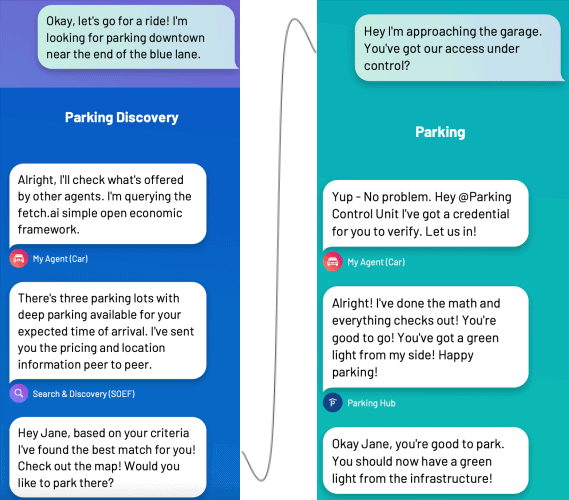
Among the use cases of Fetch.ai, we would like to highlight agents for mobility services – traffic sign agents, parking agents for Deep Parking, agents for eMobility, agents for trains and stations that could even form a decentralised train network. In the process, increasingly intelligent autonomous agents interact on behalf of people or infrastructure, searching for each other, negotiating with each other in the interest of offering their users optimal solutions. In such a case, an autonomous agent of a car could, on behalf of its owner, seek and negotiate with agents working on behalf of parking lots to navigate the car and its owner to a quick and cheap place to park. With Deep Parking at the IAA in Munich 2021, the potential of agents for such use cases becomes clear.
There it was demonstrated how agents negotiate their resources on behalf of vehicles, their owners and the infrastructure to find an optimal solution for everyone without further efforts for the users. The following graphics show an excerpt from the exemplary communication between the agents involved.
In this case, a user named Jane is looking for available parking space in the city centre. Without Jane having to do this herself, the agent in her car (My Agent (Car)) looks for another agent who offers a parking space via a specific (agent-)network (SOEF). Using Blockchain technology, agents handle authentication, price negotiation, reservation and even payment, autonomously according to their client’s preferences. When Jane approaches the parking lot, access is automatically granted to her car without further ado.
As shown, the scope of tasks autonomous agents can perform and the added value they can contribute is without limits. So, by using autonomous agents, the potential of Blockchain technology can be leveraged for all use cases where handling of huge amounts of data in real-time or near-time is needed.
Since 1982 an extensive destruction of public records, documenting the Rohingya legacy, has taken place. The remaining documents are at high risk of getting lost and are spread among the widely distributed Rohingya population. Preserving these documents is of tremendous value since they stake historical claims to be citizens of Myanmar as well as to preserve the Rohingya heritage.
We are happy to announce that Datarella teamed up with the Rohingya Project, and researchers from UCLA and CUNY to build the Rohingya Archive (R-Archive). The R-Archive is a decentralized digital heritage archive to preserve the endangered legacy of the stateless Rohingya people. Documents will be stored permanently and securely encrypted on the decentralized storage network Arweave.
The Rohingya People
The term, Rohingya people, describes an ethical group, originated in Rakhine State, Myanmar, previously known as Burma. In 1982, Myanmar’s government decided to deny citizenship to the predominantly Islamic Rohingya minority. In 2016, the Rohingya people were forced to flee their home country to escape the genocide through Myanmar’s armed forces and police. Now, the remaining Rohingya people are dispersed mainly over Bangladesh, India, Pakistan, Thailand, Indonesia and Saudi Arabia.
The situation of Rohingya people stays problematic. Many are living in refugee camps and are not granted a legal identity by their hosting governments. Without a legal identity, many do not have access to public services, like schooling and insurance, and are not allowed to work. The absence of a legal status results in immense barriers to creating a brighter future for the Rohingya community.
If there would be just proof of their legal claims?
The immutable Rohingya-Archive
There are still old passports and documents distributed among members of the Rohingya community. The R-Archive is meant as a decentralized tool for preserving the Rohingya legacy.
It serves three main purposes:
As a heritage and cultural archive for anthropologists and researchers.
As a community archive for the distributed Rohingya people.
As a trustworthy evidence archive for legal proceedings.
Rohingya documents, which are uploaded to the R-Archive, will be preserved forever.
Forever? Yes, because the R-Archive is connected to Arweave, a decentralized storage protocol. Our web app allows uploading securely encrypted and systematically tagged Rohingya documents to the “Blockweave”. The Blockweave (take a deep breath) is a blockchain-inspired, open & permissionless (=censorship resistance) data structure, which allows storing vast amounts of data permanently at low cost.
Okay, okay, let’s take this bite by bite.
A blockchain for data storage? Yes, you are right, normally you don’t store vast amounts of data on a blockchain. That’s the case because, with “normal” Blockchains, every node stores the complete chain, from the first to the latest block. This results in very high costs for storage. Storing 1 MB on Ethereum would set you back at least 5000USD in gas fees. In contrast, storing a 1 MB on Arweave will cost you only less then 0,03 USD in $AR.
How?
Blockweave data structure allows nodes of the network to only store an arbitrary size of the data set on their machine. The total weave size doubled in the last month from 10 to 20TB. If the growth continues, it is likely that individual miners only store a small fraction of the whole weave. However, Arweave’s consensus algorithm, incentivizes miners to replicate data sets as often as possible. The more data a miner stores of the weave, the higher is her chance of mining the next block and earning rewards.
To store data permanently, a fee is paid in $AR. The majority of AR transaction costs go into an endowment value, which is released over time to the miner. This, in combination with a very conservative estimation of the development of storage costs, allows permanent storage.
But let’s go back to the R-Archive and save the mind-blowing details of the Arweave technology for an R-Archive tech deep-dive blog post.
The R-Archive Partners
The R-Archive is a collaboration between the three partners and an MVP is built with a grant provided by the Arweave Foundation. Thank you <3.
Rohingya Project, a humanitarian organization, based in Kuala Lumpur, which is empowering refugees, leveraging innovative technologies, such as blockchain. You might know them already from our joint R-Coin project. The R-Project, led by Noor Muhammad and Saqib Sheikh, who initiated the R-Archive. Further, they provide and train field officers who are collecting Rohingya documents in Bangladesh, Saudi Arabia and Malaysia, as well as the scanning and indexing.
University researchers, Anne Gilliland from Center for Information as Evidence, UCLA and James Lowry from the Archival Technologies Lab, Queens College, City University of New York. Our academic partners created a guide for compliant data collection and a metadata standard, which allows us to index collected Rohingya documents. Further, Anne and James help us to connect to the archival and academic society.
And last but not least Datarella. We are in charge of the technical design, project management and development of the R-Archive.
Conclusion
The R-Archive is a pilot for using Arweave decentralized storage technology for any kind of digital archive. We are confident to prove the benefits of using decentralized technology, like increased security, distributed custody and democratization, and a wider distribution of trust to the archival society. Stay tuned for more updates and insights on the R-Archive.
Datarella is proud to announce the signing of a two-year contract with the European Space Agency (ESA) to further work on the space-linked supply chain product Track & Trust (T&T). As the main contractor to ESA, Datarella is supported by Weaver Labs and OroraTech.
The consortium will jointly work on a Blockchain-based enterprise solution to tackle complex supply chain challenges that humanitarian agencies across the world face in order to track aid in locations that lack access to reliable communications infrastructure.
At the end of two years of development and commercial trials, Track & Trust aims to deliver a scalable cost-efficient communications platform & network combining satellite, IoT mesh and blockchain components serving mostly supply chain use cases. The end solution will be a modular product that will provide a plug and play communication network that allows for end-to-end tracking of the supply chain. This will start from the initial supply of humanitarian aid goods, and extend all the way to the last-mile shipments even when limited or no telecommunication infrastructure is available.
Track and Trust is a unique opportunity to combine Blockchain technology with SatCom and telecom technology to expand the range of offerings for a supply chain monitoring system. With Weaver Labs and OroraTech as our consortium partners and with the technical and financial support by ESA, we have a strong setup to make a success story out of Track and Trust.
Yukitaka Nezu, Co-Founder and CFO at Datarella.
We are thrilled to expand our work with the European Space Agency and play a vital role in the Track and Trust project with our product Cell-Stack. Our innovative telecoms solution will ensure connectivity across the supply chain, making it possible for goods to be tracked in a trusted way.
Maria Lema, Co-Founder at Weaver Labs
We are looking forward to bringing in our satellite technology expertise in Track and Trust. With our IoT communication modules we will connect the products developed by the consortium via satellite networks. This allows the global tracking of deliveries, even in very remote areas.
Rupert Amann, Co-Founder and Head of Satellite Development at OroraTech
We are very excited to be backed by the ESA Business Applications and Space Solutions Program and are very much looking forward to the successful integration of blockchain, space and network infrastructure technology into our product Track & Trust.
About Datarella’s Consortium Partners
About Weaver Labs
At Weaver Labs, we are creating an open and shared marketplace of connectivity assets, with an extensive focus on security, to accelerate innovation by enabling connectivity. Our innovative software layer called Cell-Stack aggregates and digitises all the necessary assets to build Networks and access connectivity on-demand.
Weaver Labs believes that an open marketplace of connectivity assets can truly democratise access to reliable networks and stimulate innovative applications, making networks accessible to new industries and citizens that require reliable connectivity. Through prioritising security in a diverse supply chain and building trust with an open infrastructure model, we believe that these are the fundamental foundations needed to foster innovation and thus, create a positive impact on society. More about Weaver Labs: https://weaverlabs.io/
About OroraTech
OroraTech is a NewSpace start-up headquartered in Munich, Germany, providing a global satellite-based wildfire detection and monitoring service by processing data from various available satellite sources. In parallel, the company is developing its own nanosatellite constellation specialized in wildfire detection, with the first satellite launching at the end of 2021. Founded in 2018 by Thomas Grübler, Björn Stoffers, Florian Mauracher, and Rupert Amann as a spin-off from the Technical University of Munich (TUM), the company has grown to an international team of 50 employees. OroraTech has been supported by research grants from the Bavarian and German government, the European Space Agency and the European Commission, and graduated accelerator programs at Google, Samsung, Plug&Play, ESA BIC, and the German Accelerator Silicon Valley. More about OroraTech: https://ororatech.com/