
by Michael Reuter | 21 August 2025 | Blockchain, Gaia-X, moveID, SSI
Decentralized systems have been in vogue at least since the rise of Web3, particularly in Europe. Unlike in the USA or China, where centralized structures prevail, Europe consists of many comparatively small democratic nations that must coordinate in all areas of life to provide their citizens with a high quality of life.
Similar to participants in decentralized Web3 networks, individual citizens in Europe enjoy a high degree of autonomy, freedom, and self-determination. While this autonomy is inherently embedded in the software code of Web3, in Europe, national governments create the legal frameworks. Examples like eIDAS and Self-sovereign Identities (SSI) establish EU-wide standards that enable secure cross-border digital transactions.
At Datarella, we have actively participated in decentralized systems through our projects, most recently in the GAIA-X funding project moveID. The experiences gained lead to two key conclusions: The values and benefits of decentralized systems are recognizable and measurable, offering flexibility and innovation in dynamic environments. However, decentralized systems are not feasible or value-creating without a direct connection to centralized elements. This may sound contradictory at first, but it is not.
The Necessity of Centralized Elements in Decentralized Systems
Decentralized systems do not develop from within themselves; they always require a central idea or organization as the initial spark. Furthermore, a central entity must permanently handle tasks in governance, administration, and management. Without this, decentralized systems tend toward apathy or inactivity, as current incentive models do not ensure long-term constructive activity. A decentralized system remains active only as long as central functions provide the necessary incentives. Additionally, basic infrastructure must be created and operated – a task typically handled centrally, with costs distributed among participants.
From the perspective of organization theory, this aligns with contingency theory: There is no universally best structure; the choice between central and decentralized depends on the environment. In stable contexts, centralized systems provide efficiency and control, while decentralized ones promote agility in volatile markets. Henry Mintzberg describes in his organizational models that centralized structures (e.g., Machine Bureaucracy) are suitable for standardization, whereas decentralized ones (e.g., Adhocracy) foster innovations. Disadvantages of centralized systems include the lack of flexibility, while decentralized systems can lead to coordination issues.
Symbiosis as the Path to Success
In short, decentralized and centralized systems can form a beneficial symbiosis that compensates for the drawbacks of monolithic approaches and generates more prosperity for all participants. Hybrid models, as recommended in organization theory, combine stability with agility and are exceptionally sensitive in complex environments.
A necessary prerequisite for this symbiotic interplay is the ability and willingness of participants to understand the advantages and limitations of each system, along with the commitment to contribute to governance constructively. Only then do the positive outcomes emerge. Participants who see only the benefits of a monolithic structure should be excluded to maintain integrity.
At Datarella, we apply these insights in our data-driven solutions for health and sustainability, developing hybrid systems that link autonomy with reliable governance.
Do you have experience with such structures? Please share them in the comments!
by Simon Zehentreiter | 12 June 2025 | AI, Autonomous Agents, Blockchain, Gaia-X, MOBIX, moveID, SSI
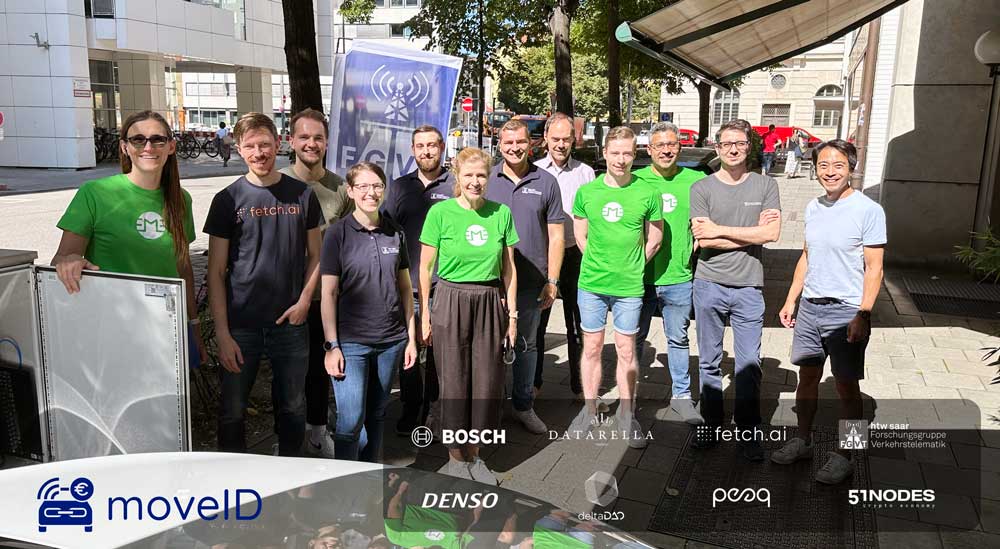
After three years of intense collaboration, innovation, and field testing, the moveID project—part of the Gaia‑X 4 Future Mobility initiative—has made significant strides toward redefining how mobility ecosystems work. At its core, moveID aimed to create a decentralized, user-centric infrastructure where vehicles, infrastructure, and service providers interact seamlessly using Self-sovereign Identity (SSI) and AI agents.
Building the Foundation for Trusted Machine Communication
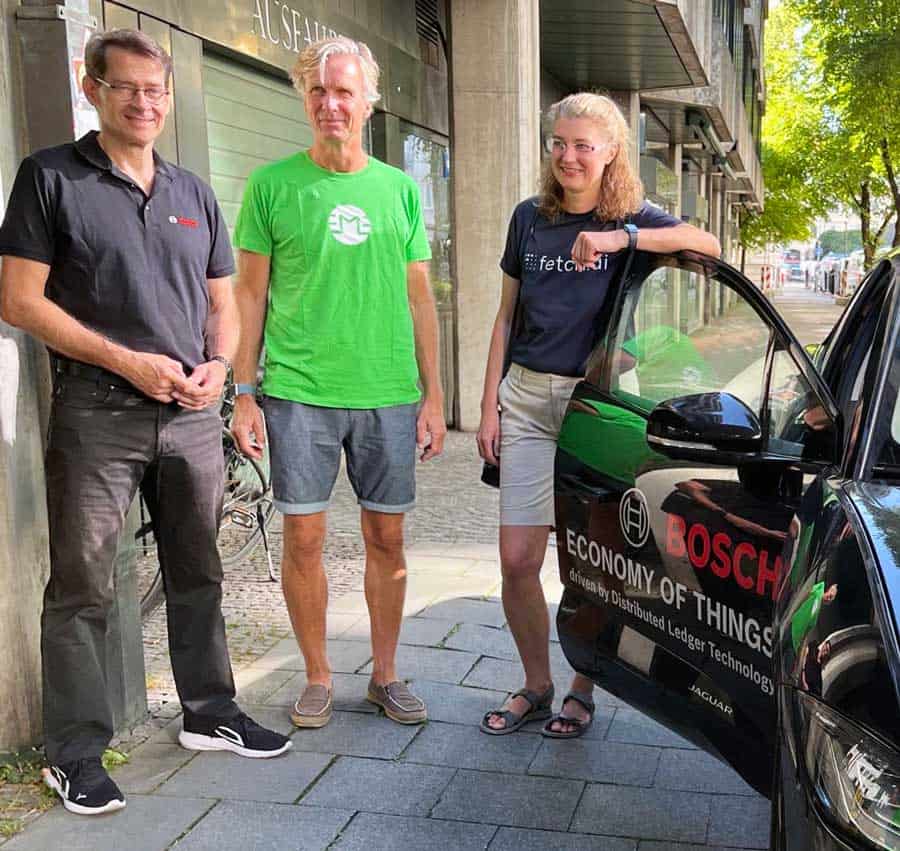
Working alongside industry leaders such as Bosch, Airbus, Continental, and leading Web3 projects, we contributed to building the technical and conceptual foundation for trusted machine-to-machine communication in the mobility sector. This included the secure exchange of credentials, decentralized data marketplaces, and AI-powered autonomous service interactions—all compliant with European data and privacy standards.
Demonstrating Real-World Impact: MOBIX Park & Charge
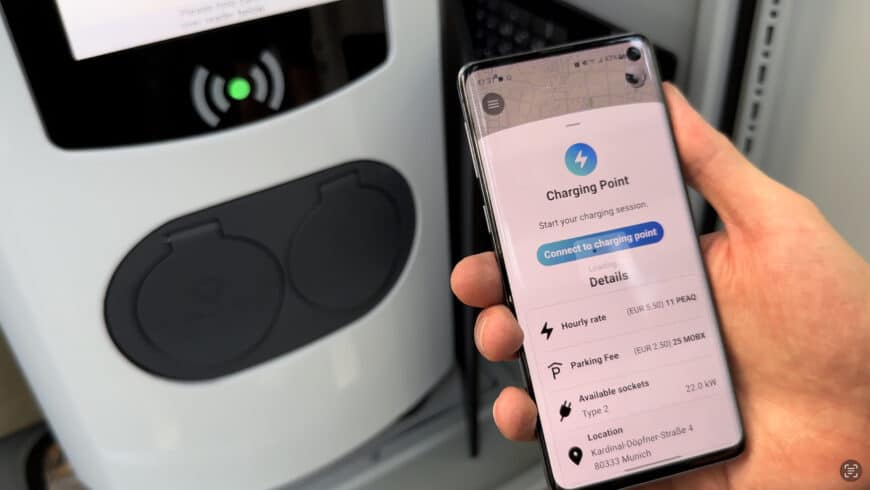
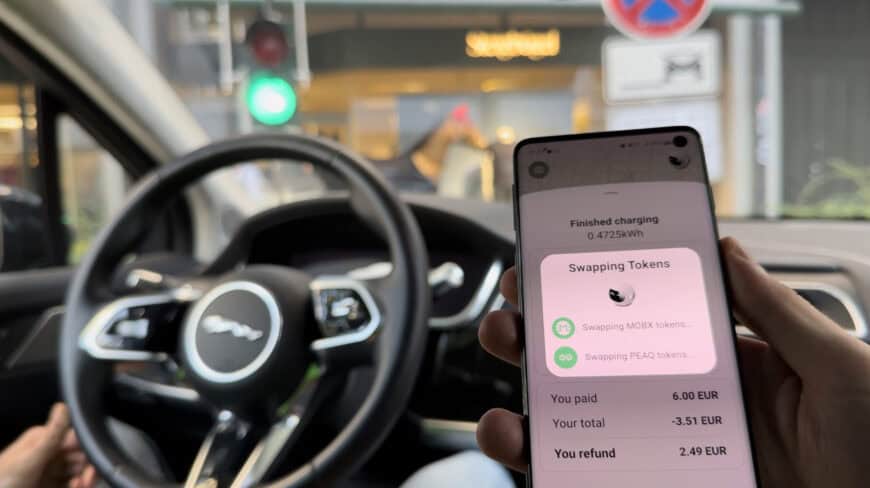
A standout achievement was the development and public demonstration of MOBIX Park & Charge, a fully operational system enabling electric vehicles (EV) to autonomously find parking spots, access charging stations, and handle payments. First showcased at IAA Mobility 2023, the system integrated SSI, blockchain-based payments, and AI agents in a live, real-world environment.
Scaling Toward Smart Cities
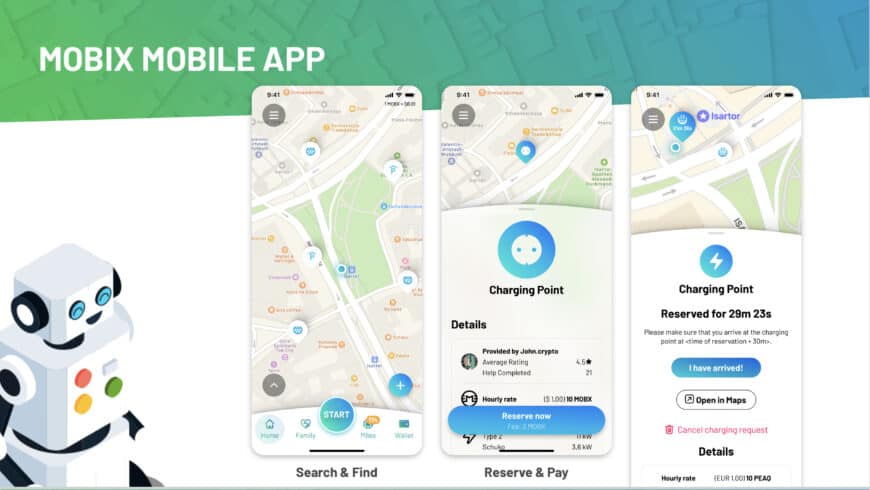
Beyond the demo, MOBIX has evolved into a scalable smart-city solution. By turning private EV chargers and parking spots into publicly accessible assets, we’re addressing key challenges in urban congestion and infrastructure scalability, while opening up new economic opportunities for individuals and municipalities.
Where Web3 Meets AI
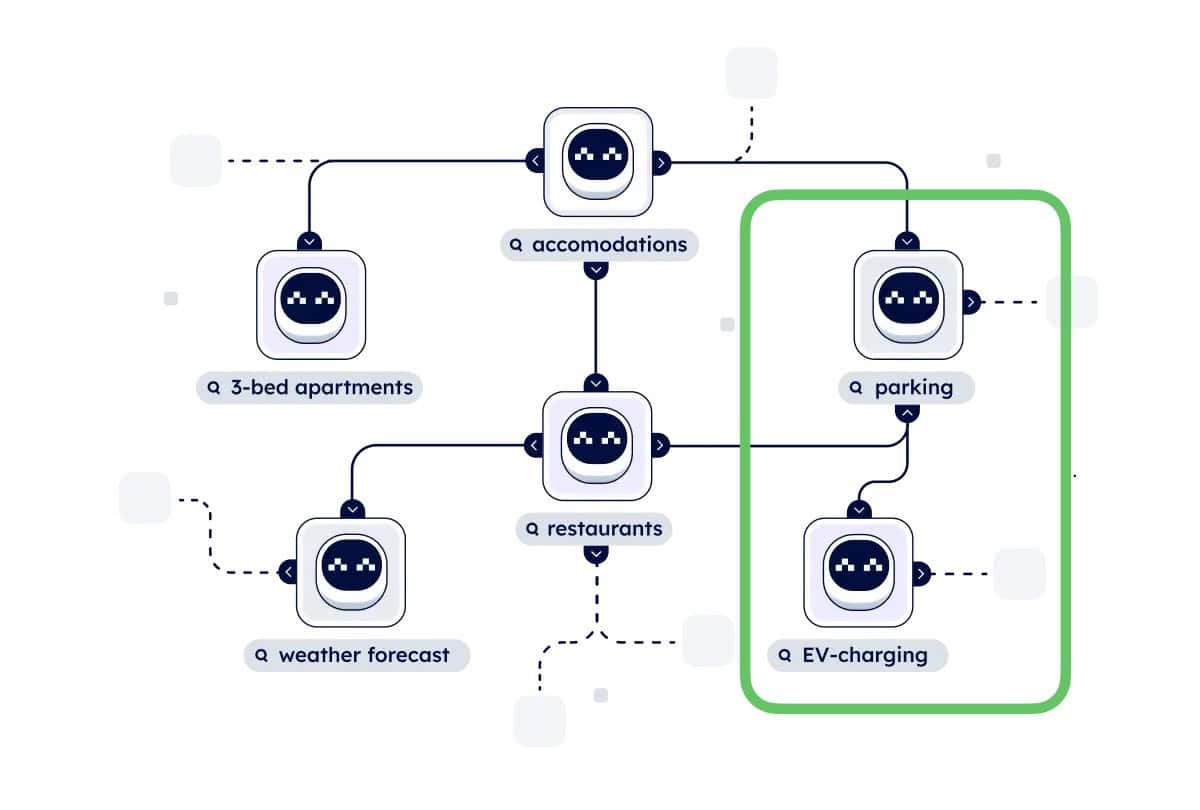
The project also served as a powerful example of the convergence between AI and Web3. By combining intelligent agents with decentralized infrastructure, we demonstrated how machines can not only interact but also negotiate, transact, and self-optimize—laying the groundwork for more ethical and transparent digital ecosystems.
A Foundation for the Future
In sum, moveID wasn’t just about mobility. It showcased how decentralized identity, autonomous agents, and AI can reshape how devices, services, and users interact—not just in cities, but across industries. As the project concludes, its outcomes provide a strong foundation for future applications in smart infrastructure, data sovereignty, and the broader digital economy.

by Kira Nezu | 8 April 2024 | Blockchain, Featured, Gaia-X, Partnerships, SSI, Track and Trust
Datarella’s Blockchain Solutions for Supply Chain Management: Streamlining CSDDD Compliance
Datarella has been at the forefront of deploying blockchain solutions for supply chain management. The introduction of the European Union’s Corporate Supply Chain Due Diligence Directive (CSDDD, or CS3D) presents a significant regulatory milestone. This article examines the directive’s implications and showcases how Datarella’s blockchain technology offers a streamlined path to compliance for businesses.
What is the EU Corporate Supply Chain Due Diligence Directive (CSDDD)?
The CSDDD is a critical component of the EU’s strategy to enhance supply chain sustainability and ethics. It mandates companies to actively prevent human rights and environmental abuses within their supply chains. The directive sets forth a phased compliance timeline, with larger corporations facing earlier deadlines. By 2028, entities with over 1,000 employees and a net worldwide turnover exceeding 450 million EUR must adhere to the directive. Non-compliance penalties could reach up to 5% of global turnover.
Navigating CSDDD Compliance with Blockchain Technology
Many companies are uncertain about how to address these new requirements. The answer lies in robust reporting, backed by verifiable data. Traditional compliance methods might overwhelm businesses with paperwork and lead to inefficiencies. However, blockchain technology presents a solution: by digitizing and securely logging every transaction and document in the supply chain, blockchain can simplify the compliance process.
How Blockchain Simplifies Compliance
Unlike traditional methods reliant on paperwork, blockchain ensures secure, transparent tracking of transactions. This technology can reduce the compliance burden by offering secure data storage and easy accessibility. Since records on the blockchain cannot be modified, it ensures data integrity and accurate documentation for compliance purposes. Integrating blockchain with digital identity solutions like the vLEI and the EU Digital Identity Regulation further strengthens this process. Companies can easily verify responsibilities and transactions, making blockchain an essential tool for CSDDD compliance.
Datarella’s Expertise in Blockchain for Supply Chain Management
Datarella has an impressive track record in implementing blockchain solutions to address complex supply chain challenges. From facilitating blockchain-based document handovers in humanitarian contexts to ensuring the integrity of 3D-printed parts for global suppliers, Datarella’s innovative projects demonstrate our expertise. Our involvement in initiatives like the Gaia-X consortia (ESCOM and Cosmic-X) and the European Space Agency’s Track & Trust initiative shows our commitment to advancing blockchain technology for supply chain management.
Partnering with Datarella for CSDDD Compliance
As the EU moves toward greater supply chain accountability, partnering with Datarella can help businesses navigate the complexities of CSDDD compliance. With our blockchain solutions, we not only help companies meet regulatory requirements but also drive efficiency and transparency. Choosing Datarella means collaborating with a leader in blockchain innovation, ready to transform today’s challenges into tomorrow’s successes.
The Future of Supply Chain Management with Blockchain
The CSDDD represents a pivotal shift towards responsible supply chain practices within the EU. For companies aiming to align with these new regulations, Datarella’s blockchain solutions offer a practical and efficient path to compliance. As the regulatory and business landscapes evolve, Datarella remains dedicated to empowering companies with the technology and expertise they need to thrive in this new era of supply chain management.
Interested in simplifying your CSDDD compliance with blockchain technology?
Contact us to learn more.
*On Feb. 29, 2024, the EU voted positive on the Digital Identity Regulation, paving way for EU citizens to truly own and control their data – a step towards secure, decentralized applications within the EU.

by Rebecca Johnson | 25 August 2023 | Autonomous Agents, Blockchain, Events, Featured, moveID, Partnerships, SSI
The Convergence of AI and Web3 in Decentralized Mobility Solutions
As noted by the venture capital firm Andreessen Horowitz, AI and Web3 are converging technologies that leverage decentralized networks, self-sovereign identities (SSI), autonomous agents, and machine learning. These innovations enable new business models and streamline business processes, particularly in the realm of decentralized mobility solutions. A crucial success factor lies in integrating these technologies with existing business processes. Collaboration between innovative AI and Web3 startups and established industry leaders is essential for driving impact and fostering innovation.
At IAA Mobility, AI and Web3 startups collaborate with industry players and universities in the moveID consortium. They are showcasing a state-of-the-art smart city solution called MOBIX Park & Charge. To meet the project’s goals, positioning innovative cutting-edge solutions is vital. These solutions leverage data to redefine the technological landscape, heralding a data-driven revolution. The synergistic trio of Fetch.ai, a long-time partner of Datarella, along with peaq and Ocean Protocol as moveID partners, is making significant strides forward. This initiative is further supported by solution providers and integrators like Datarella, DeltaDAO, 51Nodes, and university teams from htw saar and Zeppelin University.
Fetch.ai: Bridging AI and Blockchain
Datarella partner Fetch.ai seamlessly combines artificial intelligence (AI) with blockchain technology, unlocking new possibilities across various sectors. These possibilities include autonomous machine economies, smart cities, and efficient resource management. The Fetch.ai platform provides a decentralized infrastructure for Microagents capable of executing tasks autonomously.
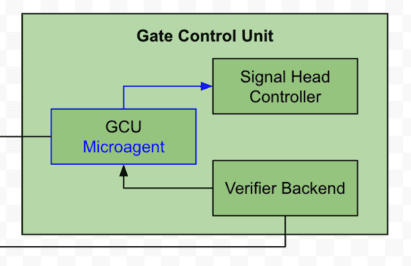
In the context of MOBIX Park & Charge, Microagents act as bridges between different software components on edge devices. This setup enables autonomous control over various systems, such as traffic lights.
Microagents in Action
Fetch.ai Microagents serve as multifunctional intermediaries. They communicate and initiate processes in external systems, handling complex tasks like:
- Managing crypto wallets
- Ensuring secure payment transfers
- Verifying events
- Controlling access to hardware such as gates, traffic lights, and chargers
In essence, Fetch.ai Microagents automate tasks on behalf of human clients, streamlining processes and enhancing efficiency. These functionalities contribute significantly to the development of decentralized mobility solutions.
peaq: Empowering the Economy of Things
As automation surges, the peaq network emerges as a key player in sharing its benefits with everyone. It fosters the Economy of Things by establishing a crucial layer-one blockchain infrastructure for decentralized mobility applications.
Peaq’s technology stack and economic incentives enable the development of applications for machines in this emerging economy. For instance, it powers electric vehicle (EV) charging applications. The peaq token fuels the entire ecosystem, facilitating digital identities for machines and enabling seamless payments.
In MOBIX Park & Charge, peaq allows communication with charging points, using peaq tokens to initiate and pay for EV charging processes.

Ocean Protocol: A New Data Economy
Ocean Protocol aims to unleash its potential for individuals and organizations alike. It empowers secure data sharing (Compute-to-Data), selling, and monetization while ensuring control and privacy. Users retain the power to determine who accesses their data and how it is used.
This establishes a novel paradigm in the data economy, especially for AI models in the mobility sector. In MOBIX Park & Charge, Ocean Protocol integrates its decentralized data marketplace technology. This facilitates sovereign and privacy-preserving data exchange within mobility applications.
Key Components of Ocean Protocol
Key components of Ocean’s data pricing mechanisms include Compute-to-Data and a Gaia-X-compliant Self-Sovereign Identity (SSI) approach. Additionally, Ocean solution provider DeltaDAO collaborates to implement the Ocean Tech Stack. In future versions of MOBIX Park & Charge, the goal is to simplify data sales for IoT devices. These devices will automatically sell data directly on the Ocean Marketplace or through Compute to Data. Fetch.ai agents possess built-in intelligence, allowing IoT devices in cars to decide when and how to post data to the Ocean Marketplace based on traffic situations.
Conclusion: Paving the Way for a Data-Driven Future
The versatile infrastructure of peaq, the automated decision-making capabilities of Fetch.ai’s Microagents, and Ocean Protocol’s sovereign data exchange mechanism synergistically converge to facilitate MOBIX Park & Charge. As we stride toward a data-driven future, these technologies pave the way for decentralized mobility solutions that could profoundly reshape mobility.

by Michael Reuter | 24 July 2023 | Blockchain, Featured, Gaia-X, moveID, SSI
moveID, the identity-focused project within the Gaia-X 4 Future Mobility family, unveils the MOBIX app, its live demonstrator at the IAA MOBILITY 2023. MOBIX allows for peer-to-peer parking and EV charging and IAA Mobility visitors can experience a first glimpse of its vision of a decentralized mobility service ecosystem.
The demonstration involving Tesla and Jaguar electric vehicles will allow the visitors to experience the moveID’s vision of a vendor-neutral open ecosystem of data-driven mobility services with integrated payment capabilities. The live demo will show how autonomous transactions between connected devices streamline expenses and add new revenue streams.
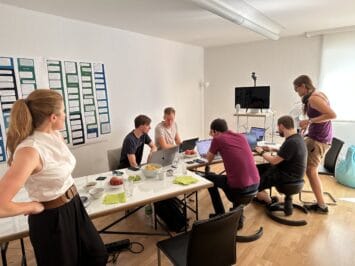
In preparation for the big event, several moveID consortium members, namely BOSCH, DENSO, ITK Engineering,peaq, htw saar, Ocean, and 51Nodes, have met for integration workshops in the Datarella offices in Munich. The goal of the first integration workshop was to connect the different software and hardware components provided by the partners and test the first set of workflows for the IAA demo from a user’s perspective. Datarella was entrusted with the planning and organization of the event as well as the integration of the different workflows into a seamless user experience via the MOBIX app.
 The critical path that was completed, included three workflows, namely issuance of a Verifiable Credential to a vehicle, access to a parking space via a Verifiable Presentation to a Signal Head, and checkout of a parking space via a Verifiable Presentation to a Signal Head. The workflows are enabled by state-of-the-art Self-Sovereign Identity (SSI), Vehicle-to-Everything (V2X) as well as Fetch.aI micro-agent technology, all controlled via the MOBIX mobile application.
“Leveraging our long-time partner Fetch.ai’s micro-agents to connect different technologies and seeing the distilled result of the agent’s work in our MOBIX app is living proof of the power of the moveID tech stack,” says Datarella CEO Michael Reuter.
While the demonstration focuses on the mobility industry, the business model behind it can be implemented in a wide array of industries, such as Public-to-Private power grid interplay and smart supply chain management. The moveID project invites all stakeholders in the EV charging ecosystem to participate and make their charging solution part of the overall charging network. If you are interested in test drives, please contact our IAA Mobility team!
by Simon Zehentreiter | 28 November 2022 | Blockchain, COSMIC-X, ESCOM, Featured, Gaia-X, KOSMoS, moveID, Ocean Protocol, Partnerships, SSI
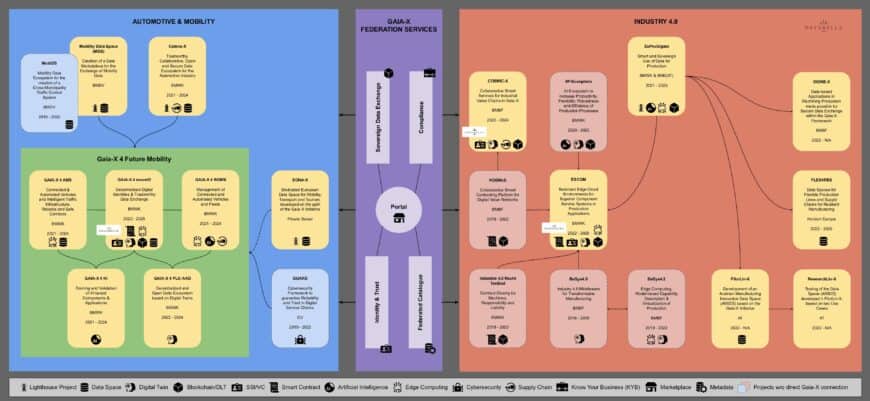
To visualize and structure ongoing Gaia-X projects and their thematically related studies, Datarella created a project landscape that comprises the three domains Gaia-X Federation Services, Automotive & Mobility and Industry 4.0. The relations between projects are modeled as directed edges, the technologies that are associated with each project are represented as icons – the Gaia-X Project Landscape:
The overarching goal of Gaia-X is to create a federated and secure data infrastructure for Europe and beyond that allows companies and citizens to share data without giving up control over it. Every ecosystem participant decides what happens to their data, where it is stored and thus always retains absolute data sovereignty. To achieve this, the Gaia-X architecture follows the principle of decentralization, with a multitude of individual platforms all following a common standard based on openness, transparency and trust.
The Gaia-X Federation Services, at the center of the visualization, are the implementation toolbox and minimum technical requirements and services that enable Gaia-X Federations to become operational and work together. Federations are individual participants that team up to create value for all participants and to open up new market potentials.
- The Identity & Trust service closes the trust gap by enabling federations to authenticate and authorize participants. This is achieved by utilizing Self-Sovereign Identity (SSI), specifically Decentralized Digital Identifiers (DIDs), Verifiable Credentials (VCs) and Verifiable Presentations (VPs), which ensure that every participant is in full control of their identity at all times.
- The Federated Catalogue service allows federations to set up a repository, in which participants can search for and discover information and services of other participants based on their aforementioned credentials.
- The Sovereign Data Exchange service helps participants in keeping sovereignty over their data by providing functionalities for specifying and tracking how their data is used.
- The Compliance service ensures that every participant and service is complying with the Gaia-X principles. Together with a number of decentralized services that are part of the Gaia-X policy, it provides decentralized, sovereign and immutable governance and control mechanisms that enable trustworthy transactions between participants.
- Lastly, the Gaia-X Portal provides user friendly access to the Federation Services and supports the onboarding and accreditation of participants as well as the discovery of services.
The Gaia-X Federation Services are co-developed by the GXFS-DE project, funded by the German Ministry of Economic Affairs and Climate Action (BMWK) and coordinated by eco – Association of the Internet Industry.
The Automotive & Mobility domain harbors three Gaia-X lighthouse projects, the Mobility Data Space, Catena-X and EONA-X. The Mobility Data Space is funded by the Federal Ministry for Digital and Transport (BMDV) and deals with the creation of a data marketplace that allows for the sovereign exchange of mobility data in Europe, Catena-X is funded by the BMWK and is tasked with establishing a trustworthy, collaborative, open and secure data ecosystem for the automotive industry. The objective of EONA-X is to establish a dedicated European data space for mobility, transport and tourism, developed on the path of the Gaia-X initiative. Funding is mostly provided by the private sector.
Datarella, as previously announced, is working on the moveID project, which, together with four related ventures, is part of the Gaia-X 4 Future Mobility project family. The goal of moveID is to develop a digital identity infrastructure and trustworthy data exchange process for the mobility of the future. Feasibility will be shown on the basis of two use cases, V2X services in heterogenous, decentralized mobility infrastructures and vehicle data sharing. moveID is funded by the BMWK and the interdisciplinary consortium of mobility enterprises, Web3 companies and research facilities is lead by BOSCH.
The Industry 4.0 sector features a German-Austrian joint Gaia-X lighthouse project, EuProGigant. It’s intention is to establish an ecosystem that enables the smart and sovereign use of data for production. Funding is provided by the BMWK and the Austrian Federal Ministry for Climate Action, Environment, Energy, Mobility, Innovation and Technology (BMK).
With KOSMoS, Datarella has already successfully finished a research project in the Industry 4.0 space by realizing a collaborative smart contracting platform for digital value networks. Now, based on these results, Datarella is also involved in the two followup Gaia-X projects Cosmic-X and ESCOM. Cosmic-X is funded by the Federal Ministry of Education and Research (BMBF) and deals with advanced smart services in the context of spare part supply chain automation and optimization. The specific use cases that will be explored are digital twins, trusted supply chains and platform-based maintenance. ESCOM is funded by the BMWK and seeks to make a demonstrable contribution to a responsible manufacturing industry regarding resource consumption and sustainable resource use. The project will demonstrate that the use and balancing of edge and cloud data spaces allows for the flexible, load- and energy demand-dependent use of services as a know-how offering of component manufacturers with high utility value for the end application. Both projects are carried out in collaboration with leading industry partners and research facilities.
We are incredibly proud to be contributing to the development of the Gaia-X ecosystem in two critical domains and hope that our illustration sheds some light on the work that has already been done and will continue to be done towards an open, transparent and secure data infrastructure for everyone.

by Simon Zehentreiter | 11 November 2022 | Blockchain, ESCOM, Featured, SSI
Datarella, as part of a consortium of leading industry manufacturers and research facilities, is beginning work on the feasibility study “ESCOM – Balanced Edge Cloud Environments for Superior Component Service Systems in Production Applications”, funded by the Federal Ministry for Economic Affairs and Climate Action.
With the project, the consortium plans to make a demonstrable contribution to a responsible manufacturing industry regarding resource consumption and sustainable resource use. The project seeks to actively strengthen the innovative power of European industry and infrastructure providers and promote the emergence of socially relevant, freely consumable qualification offerings in the industrial and academic sectors. In this way, the consortium intends to provide an incentive for the relocation of global production capacities back to Europe.
The sustainable value proposition of a future configurable digital product instance is formulated as a digital twin of any machine component to reduce resource consumption via component information and increase machine availability and process reliability with condition and process information. The interdisciplinary consortium will demonstrate that the use and balancing of edge and cloud data spaces allows for the flexible, load- and energy demand-dependent use of services as a know-how offering of component manufacturers with high utility value for the end application. For this purpose, the consortium will use standards and open source software on the basis of the Gaia-X data infrastructure, which in the future will enable the exchange of smart service offerings of component manufacturers via the product service representation under the management shell concept of Plattform Industrie 4.0.
Owing to its experience in leveraging blockchain technology for real-world use cases (e.g. KOSMoS), Datarella is responsible for identifying relevant components, processes, data and blockchain plattforms as well as developing and implementing the services and sovereign data exchange processes that will enable an open, transparent and secure infrastructure.
We are very proud to be part of this project and looking forward to collaborating with all of the partners involved.
Project consortium
by Simon Zehentreiter | 18 October 2022 | Blockchain, COSMIC-X, Featured, SSI
Datarella, together with leading industry partners and research facilities have been awarded a contract for the feasibility study titled “Collaborative Smart Services for Industrial Value Chains in Gaia-X (COSMIC-X)”, funded by the German Federal Ministry of Education and Research.
Building on the results of joint project KOSMoS, the goal of the two year project is to use the Gaia-X industry data space (IDS) for provisioning advanced smart services (ASS) in the context of spare part supply chain automation and optimization.
The target group of COSMIC-X are machine tool manufacturers, component suppliers and machine operators, with a special focus given to assisting small and medium-sized enterprises (SMEs) in taking part in and profiting off of the Gaia-X ecosystem. The specific use cases that will be explored in close collaboration with industry partners SW, HAWE und KROHNE are digital twins, trusted supply chains and platform-based maintenance.
With its expertise in blockchain technology and self-sovereign identity (SSI), Dataralla is tasked with defining the technical requirements of the use cases and, based on these, develop a blockchain-based system architecture in conformance with the Gaia-X framework. This will ensure an open, transparent and secure infrastructure for data sharing and collaboration.
We are looking forward to working on this project with all of our partners and will keep you updated on the results.
Project consortium
- Schwäbische Werkzeugmaschinen GmbH
- HAWE Hydraulik SE
- Krohne Innovation GmbH
- Universität Stuttgart – ISW
- Hochschule Furtwangen – IDACUS
- Datarella GmbH
- inovex GmbH
- Stackable GmbH

by Michael Reuter | 13 September 2022 | Blockchain, moveID, Partnerships, SSI
Together with 18 project partners in the Gaia-X 4 Future Mobility project moveID, Datarella develops the required digital identity infrastructure for the mobility of the future. With BOSCH heading the moveID consortium, leading mobility enterprises, Web3 companies, and research organizations create the foundation for autonomous driving and applications leveraging connected vehicles and devices.
Use Cases for the Mobility of the Future
The research project moveID comprises various scenarios of smart traffic management, s.a. parking, charging, or zoning. To create a trusted environment and connect all traffic participants, vehicles, and infrastructure components, s.a. traffic lights, access gates, and parking meters, obtain unique digital identities. All identities are managed as self-sovereign identities, a concept known as SSI, for maximum privacy and compliance with GDPR and the Gaia-X framework.
Datarella will co-create the standards and infrastructure for the future of mobility as part of the Gaia-X 4 Future Mobility moveID project, with an overall size of more than €20 million, by Gaia-X, the European Association for Data and Cloud. The three-year project brings together top industry players to build a sovereign digital infrastructure enabling secure, connected, and open mobility, with Datarella, conducting intense research and development as well as leveraging its expertise in creating successful mobility applications, s.a. Deep Parking, and MOBIX. To make moveID‘s decentralized digital identity infrastructure usable and to develop winning business models on top of it, B2B and B2C applications will be developed.
„With moveID, we will prove that European research projects like Gaia-X can be managed in an agile, dynamic way, and produce significant meaningful results for all mobility participants. Working with industry leaders like Bosch, or Continental on the one hand, and with Web3 projects and research institutes, on the other hand, collaboration is not a simple phrase – it‘s living reality“, says Datarella CEO Michael Reuter.
The Power of Web3
Besides Datarella, other project participants include Bosch, Ocean Protocol, Airbus, Continental, Fetch.ai, Materna, Denso, WOBCOM, ecsec, htw saar, Atos, Chainstep, ZU, peaq, 51nodes, ITK, DLR, and deltaDAO. The project will feature a strong Web3 component with contributions from leading projects in the space:
- peaq, the Web3 network powering the Economy of Things, will conduct intense research and development within the project. peaq will further build up its layer-one blockchain in line with the co-created requirements and standards, aiming to grant Gaia-X’s moveID the perfect infrastructure for decentralized mobility applications. peaq will also provide its core functions: peaq ID – Self-Sovereign Machine Identities (SSMIs), peaq access, and peaq pay. peaq is built using Substrate and will soon be live on both Kusama as well as Polkadot. It is working on enabling collaboration and interoperability with the Ethereum and Cosmos ecosystems for other Web3 consortia collaborators in Gaia-X.
- 51nodes, a Web3 developing and integration company brings to the project its experience with SSI architecture and implementation in the context of decentralized mobility infrastructure. In addition to the development and integration of various SSI technologies, the focus of work will be on SSI interoperability challenges.
- Through BigchainDB, Ocean Protocol – the Web3 platform to unlock data services for AI and business innovation – is providing key technical infrastructure for moveID to expedite the development of decentralized digital identity infrastructure for European mobility. Essential components of Ocean’s decentralized data marketplace technology, Compute-to-Data, and data pricing mechanisms are being leveraged to build a system architecture that ensures a seamless exchange of information between providers and customers of mobility applications.
- deltaDAO, a web3 software development, integration, and consulting company, will co-develop decentralized data infrastructure and federation services in the context of the broader Gaia-X ecosystem. deltaDAO contributes its extensive knowledge regarding Gaia-X compliance, interoperability, and integration
Peter Busch, Product Owner for Distributed Ledger Technologies (Mobility) at Bosch, said: “Web3 technologies offer a promising digital foundation for future mobility solutions. With moveID, we are setting the foundation for a hyper-connected mobility infrastructure by leveraging self-sovereign device identities and decentralized data sharing to enable hundreds of potential use cases. We are thrilled to be exploring this exciting prospect side by side with some of the leading projects in the decentralized space such as peaq, Ocean Protocol, Datarella, 51nodes, and Chainstep.”
