by Martin Schäffner | 1 February 2024 | Blockchain
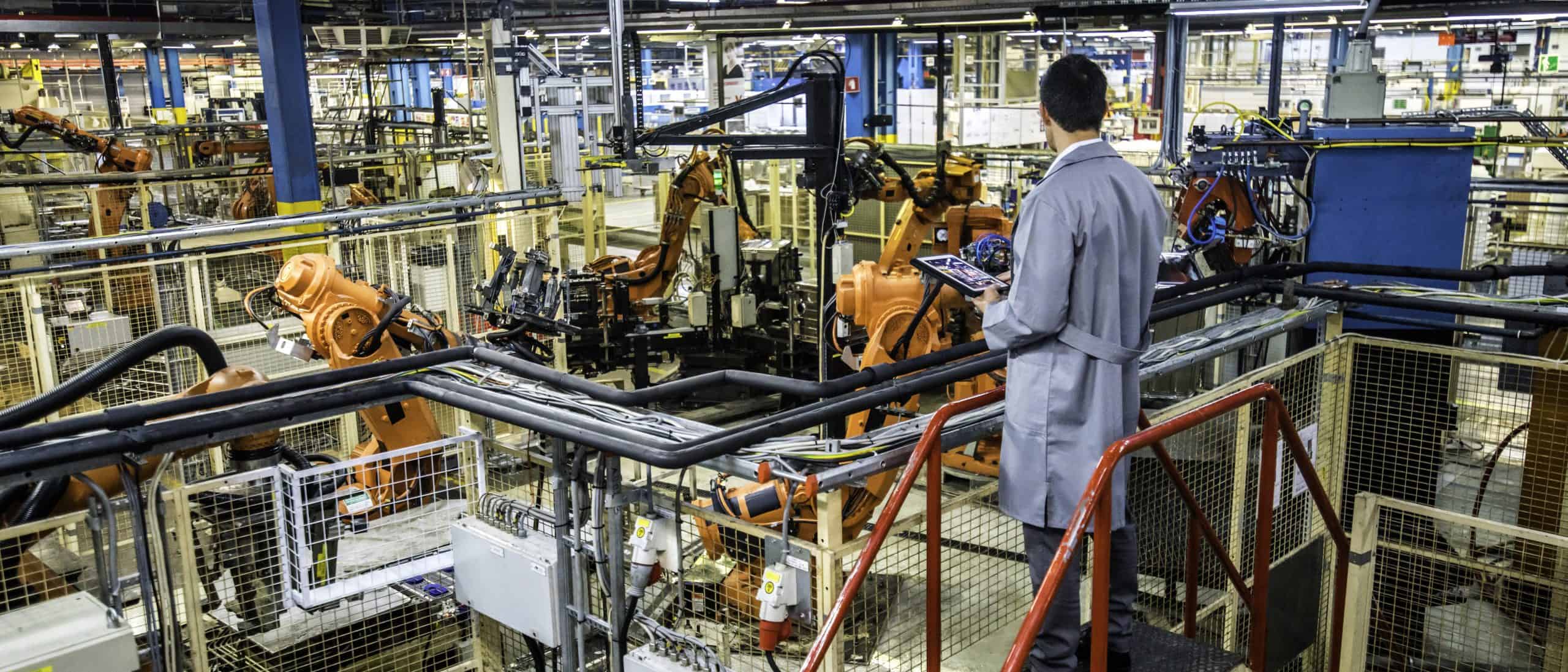
In the dynamic landscape of manufacturing, achieving efficiency is key. One effective solution is the implementation of Multi-Tenancy Architectures, which allow multiple users, or “tenants,” to share software infrastructure. By leveraging Multi-Tenancy Architectures, manufacturers can streamline processes and improve operational efficiency, among other benefits.
Benefits of Multi-Tenancy in Manufacturing
1. Enhanced Collaboration and Resource Optimization
First and foremost, Multi-Tenancy empowers manufacturers to share the same software infrastructure, optimizing resources and reducing operational costs. For instance, imagine a unified platform for real-time inventory managementthat fosters seamless collaboration and enhances overall supply chain efficiency.
2. Cost Efficiency and Sustainability
Moreover, by minimizing individual expenses, Multi-Tenancy fosters significant cost efficiency and promotes economic sustainability. Picture this: manufacturers utilizing shared software infrastructure can reduce overhead while enhancing their overall operational efficiency.
3. Flexibility to Adapt to Industry Demands
In addition, Multi-Tenancy provides the flexibility that manufacturers need to swiftly adapt to dynamic industry demands. Specifically, manufacturers leverage shared software infrastructure to adjust production lines for customized orders, showcasing remarkable adaptability and responsiveness.
4. Robust Data Security and Privacy
Furthermore, addressing data security concerns is crucial. Multi-Tenancy implements robust access controls, ensuring that sensitive data remains confidential. Consequently, collaborative design and production planning among manufacturers and suppliers become secure, bolstering overall data privacy.
5. Accelerated Innovation through Collaboration
Lastly, Multi-Tenancy accelerates innovation by fostering collaboration among industry players. By utilizing shared software infrastructure, manufacturers can work together on joint research and development projects, sharing insights and resources that lead to the rapid development of innovative products.
Conclusion
In conclusion, the pursuit of efficiency through the implementation of Multi-Tenancy Architectures in the manufacturing industry emerges as a strategic imperative. To sum up, this architecture emphasizes its transformative power in streamlining operations, optimizing resources, and fostering a resilient manufacturing ecosystem. Ultimately, businesses that embrace Multi-Tenancy Architectures position themselves at the forefront of innovation, ready to tackle challenges and seize opportunities.

by Martin Schäffner | 29 January 2024 | Blockchain
Until now, discussions have primarily centered around Private or Private Permissioned Blockchains in the context of Multi-Tenancy Architectures. Today, a Public Permissionless Blockchain like the Secret Network, with its privacy-preserving functionalities and access control mechanisms, can also implement such a Multi-Tenancy Architecture.
Two contrasting architectural models in software deployment are Multi-Tenancy and Single-Tenancy. In cloud computing and Software-as-a-Service (SaaS) environments, Multi-Tenancy allows multiple tenants to share the underlying infrastructure, optimizing resource utilization and reducing overall expenses for individual tenants. In contrast, Single-Tenancy allocates a dedicated instance of the software application to each customer, operating in isolation with its own set of resources.
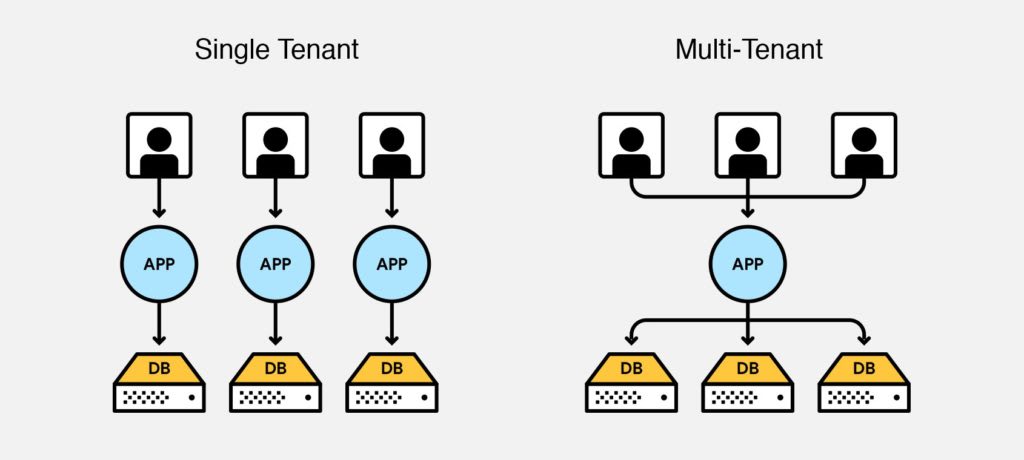
Single-Tenant vs. Multi-Tenant Architectures
The Secret Network, a public blockchain protocol centered on privacy-preserving smart contracts, offers a valuable solution for implementing Multi-Tenancy within the manufacturing industry. By harnessing the privacy features inherent in the Secret Network, the manufacturing sector stands to gain significantly from the establishment of cost-efficient, secure, and private data-sharing mechanisms among various stakeholders, including suppliers, manufacturers, and customers.
Distributed Ledger and Blockchain Technology
The progression of Distributed Ledger Technologies (DLTs), with blockchain being a notable type, has undergone a substantial transformation in its architecture and applications. This overview traces the evolution of blockchain from Single-Tenant solutions on public networks to the rise of private permissioned networks and the present state where public networks can facilitate multi-tenancy.
Secret Network Overview
The Secret Network, a public blockchain protocol, offers a comprehensive solution for implementing multi-tenancy in the manufacturing industry. It provides privacy-preserving smart contracts, programmable privacy, and a developer-friendly infrastructure, positioning it as an optimal choice for implementing multi-tenancy in the manufacturing sector.
Viewing Keys in Secret Network
Viewing keys, cryptographic tools that enable authorized users to access encrypted data, serve as a means of access control. They allow individuals to securely view specific data, assets, or content while preserving the overall privacy and confidentiality of the information. The owner of the corresponding private key creates a viewing key, which can be shared with trusted parties or applications but can also be revoked, providing a mechanism for controlled and secure data access.

Example of a transaction which can be read with the correct viewing key but stays encrypted when entering the wrong key
Conclusion
The integration of multi-tenancy within the manufacturing industry, particularly on the Secret Network, harnesses advanced blockchain features and cryptographic tools to achieve cost efficiency, streamlined data access, enhanced resource utilization, flexibility, and collaboration. The strategic use of viewing keys as an access control mechanism enhances the security and privacy of shared data, making it a valuable asset in managing user access within a multi-tenancy framework on the Secret Network.

by Rebecca Johnson | 25 August 2023 | Autonomous Agents, Blockchain, Events, Featured, moveID, Partnerships, SSI
The Convergence of AI and Web3 in Decentralized Mobility Solutions
As noted by the venture capital firm Andreessen Horowitz, AI and Web3 are converging technologies that leverage decentralized networks, self-sovereign identities (SSI), autonomous agents, and machine learning. These innovations enable new business models and streamline business processes, particularly in the realm of decentralized mobility solutions. A crucial success factor lies in integrating these technologies with existing business processes. Collaboration between innovative AI and Web3 startups and established industry leaders is essential for driving impact and fostering innovation.
At IAA Mobility, AI and Web3 startups collaborate with industry players and universities in the moveID consortium. They are showcasing a state-of-the-art smart city solution called MOBIX Park & Charge. To meet the project’s goals, positioning innovative cutting-edge solutions is vital. These solutions leverage data to redefine the technological landscape, heralding a data-driven revolution. The synergistic trio of Fetch.ai, a long-time partner of Datarella, along with peaq and Ocean Protocol as moveID partners, is making significant strides forward. This initiative is further supported by solution providers and integrators like Datarella, DeltaDAO, 51Nodes, and university teams from htw saar and Zeppelin University.
Fetch.ai: Bridging AI and Blockchain
Datarella partner Fetch.ai seamlessly combines artificial intelligence (AI) with blockchain technology, unlocking new possibilities across various sectors. These possibilities include autonomous machine economies, smart cities, and efficient resource management. The Fetch.ai platform provides a decentralized infrastructure for Microagents capable of executing tasks autonomously.
In the context of MOBIX Park & Charge, Microagents act as bridges between different software components on edge devices. This setup enables autonomous control over various systems, such as traffic lights.
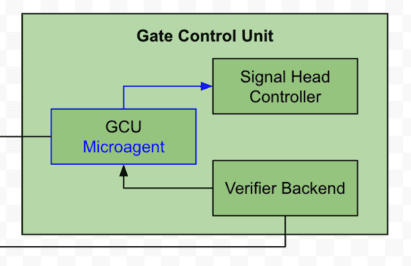
Microagents in Action
Fetch.ai Microagents serve as multifunctional intermediaries. They communicate and initiate processes in external systems, handling complex tasks like:
- Managing crypto wallets
- Ensuring secure payment transfers
- Verifying events
- Controlling access to hardware such as gates, traffic lights, and chargers
In essence, Fetch.ai Microagents automate tasks on behalf of human clients, streamlining processes and enhancing efficiency. These functionalities contribute significantly to the development of decentralized mobility solutions.
peaq: Empowering the Economy of Things
As automation surges, the peaq network emerges as a key player in sharing its benefits with everyone. It fosters the Economy of Things by establishing a crucial layer-one blockchain infrastructure for decentralized mobility applications.
Peaq’s technology stack and economic incentives enable the development of applications for machines in this emerging economy. For instance, it powers electric vehicle (EV) charging applications. The peaq token fuels the entire ecosystem, facilitating digital identities for machines and enabling seamless payments.
In MOBIX Park & Charge, peaq allows communication with charging points, using peaq tokens to initiate and pay for EV charging processes.

Ocean Protocol: A New Data Economy
Ocean Protocol aims to unleash its potential for individuals and organizations alike. It empowers secure data sharing (Compute-to-Data), selling, and monetization while ensuring control and privacy. Users retain the power to determine who accesses their data and how it is used.
This establishes a novel paradigm in the data economy, especially for AI models in the mobility sector. In MOBIX Park & Charge, Ocean Protocol integrates its decentralized data marketplace technology. This facilitates sovereign and privacy-preserving data exchange within mobility applications.
Key Components of Ocean Protocol
Key components of Ocean’s data pricing mechanisms include Compute-to-Data and a Gaia-X-compliant Self-Sovereign Identity (SSI) approach. Additionally, Ocean solution provider DeltaDAO collaborates to implement the Ocean Tech Stack. In future versions of MOBIX Park & Charge, the goal is to simplify data sales for IoT devices. These devices will automatically sell data directly on the Ocean Marketplace or through Compute to Data. Fetch.ai agents possess built-in intelligence, allowing IoT devices in cars to decide when and how to post data to the Ocean Marketplace based on traffic situations.
Conclusion: Paving the Way for a Data-Driven Future
The versatile infrastructure of peaq, the automated decision-making capabilities of Fetch.ai’s Microagents, and Ocean Protocol’s sovereign data exchange mechanism synergistically converge to facilitate MOBIX Park & Charge. As we stride toward a data-driven future, these technologies pave the way for decentralized mobility solutions that could profoundly reshape mobility.

by Martin Schäffner | 3 August 2023 | Blockchain, Featured
Datarella is happy to announce that Deniz Yavas is joining as a Blockchain Working Student. He is a technology enthusiast with a keen interest not only in the technologies themselves but also in their broader societal, environmental, and economic implications. Please welcome him on August 1st, 2023 as part of the Datarella team.
Deniz Yavas: “Hi everyone! My name is Deniz, and starting in August 2023, I am thrilled to join Datarella as a working student.
In today’s world, trust seems to be lacking due to non-transparent processes and companies. It is disheartening to witness instances where power is misused, and user/consumer privacy is not given the importance it deserves. That is why I am a staunch advocate of blockchain technology.
Blockchain presents an extraordinary opportunity to shape a future that is more efficient, transparent, and decentralized. It has the potential to revolutionize business operations, making them more streamlined and secure. Additionally, blockchain empowers individuals and consumers to reclaim control over their privacy. What’s more, it enables democratization, ensuring equal access and opportunities for all. However, we have only scratched the surface of blockchain’s potential, and its full capabilities are yet to be realized.
Working with Datarella and their impressive portfolio of projects, I am eagerly looking forward to expanding my knowledge in this domain. Being part of their team will provide me with invaluable hands-on experience and exposure to the forefront of blockchain innovation.
I am excited to embark on this journey with Datarella and contribute to their remarkable work in shaping a better future.”
by Rebecca Johnson | 2 August 2023 | Autonomous Agents, Blockchain, Featured, Ocean Protocol
Big data has broken privacy. We’ve built a way to solve this problem and create business intelligence while preserving user privacy. This post dives into how we are automating private business intelligence.
Introduction to Ocean Protocol’s decentralized data marketplace
The Ocean Protocol is a decentralized data exchange protocol that aims to unlock the value of data and enable secure and privacy-preserving on-chain data sharing and monetization ⛓️. It provides a framework for building data-centric applications that facilitate the exchange of data assets while ensuring data privacy, security, and compliance.
The Ocean Protocol marketplace is the heart of the entire Ocean Protocol ecosystem. These data sets can be bought and sold along with access to computation on those data. What Uniswap did for Finance, Ocean Protocol is doing for data. Ocean goes beyond just merely trading data in the clear though and makes it possible to order computation on data you never see and get actionable results while maintaining data privacy and secrecy. That in many ways is the holy grail of data privacy and security!
The Ocean Protocol approach to data markets is already gaining substantial traction in industries through the MoveID consortium and GAIA-X where Datarella is a partner. Specifically, there are already industry focused GAIA-X compliant Marketplaces utilizing Ocean protocol already released in the wild (see Pontus-X)
Fetch.ai Agents + Ocean Protocol: A Perfect Match
Switching gears, you may have also heard of Fetch.ai. It provides a next-generation protocol enabling a digital world where Autonomous Economic Agents and Microagents can perform proactive economic activity. AEAs have some unique attributes. Fetch Agents (AEAs) can find resources on their own, they have private keys so they can transact autonomously, and, more importantly, they can decide to execute business logic autonomously based on their programmed skills and behaviors. AEAs are perfect for delegating on-chain tasks that you need to make sure actually happen technically but don’t want to have to handle manually. A great example of this is the stop loss agents that Fetch.ai has released in order to allow people to provision liquidity on DeFi protocols autonomously. Another real-life use case is the kind of behavior that we demonstrated with MOBIX at the International Automobile Show (IAA) in 2021.
In that context, we demonstrated how an Autonomous Economic Agent, running on an edge device and accessible through a specialized version of the MOBIX app, could enable privacy-preserving ad workflows. That sounds super complicated, but its utility is really simple.
Smart Recommendations without Data-Lake-Honeypots
Consumers have come to expect really smart recommendations in their apps based on their current context and previous actions. We’ve come to take this for granted everywhere. It extends from the autocomplete suggestions in your search field to Netflix recommendations to mobility recommendations embedded in scooter rental apps. There’s a shadow side of this intelligence though. Simply put, in order to offer that kind of intelligence someone is invariably building a vast data lake full of your user data to power those convenient algorithms. We all know that this kind of data accumulation has massive privacy ramifications, not to mention the security risks associated with those giant data-lake-honeypots. By connecting Fetch.ai Autonomous Economic Agents with Ocean Compute to Data workflows and the Ocean Marketplace we are laying the cornerstone for enabling that kind context aware convenience without sacrificing any user privacy.
Moreover, outside of the consumer sector in the world of IoT devices, this code makes it really convenient for any number of machines to automatically sell their data either directly on the Ocean Marketplace or via Compute to Data! AEAs have a certain amount of built-in intelligence. This enables IoT devices from cars to weather stations to decide, based on their situation, when and how to post the data to the Ocean Marketplace for sale. Additionally, it allows consuming devices to autonomously search out and purchase the data that they need. Together, this approach provides the basis for autonomous adaptive machine learning without having to own your own ample data sets.
Privacy-Preserving Prediction Engines
TLDR: By enabling Fetch Agents to post data to Ocean Marketplace Compute to Data recommendation engines can be driven without violating privacy.
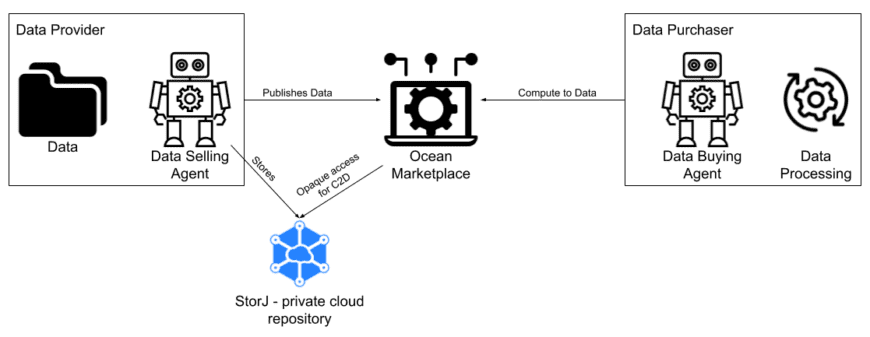
Datarella has joined forces with Fetch.ai and Ocean protocol over the last few months to build an Ocean Connection Agent to take private data available to itself, store it confidentially, and then spin up a fixed-rate exchange on the Ocean Market or with compute to data enabled as shown in the previous figure. You can imagine that in the near future, this might be your current location data or data about your preferences or searches performed locally within an app (the MOBIX app for example). This data never leaves the sovereign control of the user and the user doesn’t have to worry about handling or organizing or authorizing the data because the AEA does that on behalf of the user well, autonomously! The same applies to companies running AEAs on IoT devices too. You might be asking now why this is even beneficial. It’s useful because it solves the problems associated with those vast data lakes that are driving the recommendation engines behind all sorts of “smart” services.
The Solution for Automating Private Business Intelligence
Ocean Marketplace is an open-source decentralized market that you can fork to develop your own marketplace. It comes equipped with all the features right out of the box. The “Compute to Data” part enables the person, or in this case, AEA is posting the data to stipulate that it cannot be downloaded in the clear – but rather that you’re selling the results of selected algorithms which you or your agent will run (automatically) against the private data on behalf of a purchasing entity (person or AEA). They get the results of the computation – the basis for those context-aware recommendations, but they don’t have the opportunity to abuse the data because they never actually see it despite gaining actionable business intelligence based on the contents of said data. That’s what we mean by “Automating Private Business Intelligence”.
The world we’re building is one where your data remains yours but the results of computations on your data will enable a host of new context-aware smart services that respect your privacy by design but still feel like magic. Bringing the unique properties of the Ocean Marketplace together with Fetch.ai Agents means for the everyday person that it’s increasingly going to be possible that you can have your cake and eat it too. You won’t have to choose between amazing functionality and privacy – you’ll be able to have both – and get paid for it. Your data – your profits!
Developer Resources
If you’re a developer and want to dive into the code there are two spots you’ll want to check out. First of all, you’ll find the code open-sourced on github here. Additionally, if you’re already an AEA developer you’ll want to check out the package in the AEA registry. In the near future, we’re also planning to release the Storj AEA but for now, you can take any S3-compatible storage you choose. Let’s start automating private business intelligence generation!

by Michael Reuter | 24 July 2023 | Blockchain, Featured, Gaia-X, moveID, SSI
moveID, the identity-focused project within the Gaia-X 4 Future Mobility family, unveils the MOBIX app, its live demonstrator at the IAA MOBILITY 2023. MOBIX allows for peer-to-peer parking and EV charging and IAA Mobility visitors can experience a first glimpse of its vision of a decentralized mobility service ecosystem.
The demonstration involving Tesla and Jaguar electric vehicles will allow the visitors to experience the moveID’s vision of a vendor-neutral open ecosystem of data-driven mobility services with integrated payment capabilities. The live demo will show how autonomous transactions between connected devices streamline expenses and add new revenue streams.
In preparation for the big event, several moveID consortium members, namely BOSCH, DENSO, ITK Engineering,peaq, htw saar, Ocean, and 51Nodes, have met for integration workshops in the Datarella offices in Munich. The goal of the first integration workshop was to connect the different software and hardware components provided by the partners and test the first set of workflows for the IAA demo from a user’s perspective. Datarella was entrusted with the planning and organization of the event as well as the integration of the different workflows into a seamless user experience via the MOBIX app.
 The critical path that was completed, included three workflows, namely issuance of a Verifiable Credential to a vehicle, access to a parking space via a Verifiable Presentation to a Signal Head, and checkout of a parking space via a Verifiable Presentation to a Signal Head. The workflows are enabled by state-of-the-art Self-Sovereign Identity (SSI), Vehicle-to-Everything (V2X) as well as Fetch.aI micro-agent technology, all controlled via the MOBIX mobile application.
“Leveraging our long-time partner Fetch.ai’s micro-agents to connect different technologies and seeing the distilled result of the agent’s work in our MOBIX app is living proof of the power of the moveID tech stack,” says Datarella CEO Michael Reuter.
While the demonstration focuses on the mobility industry, the business model behind it can be implemented in a wide array of industries, such as Public-to-Private power grid interplay and smart supply chain management. The moveID project invites all stakeholders in the EV charging ecosystem to participate and make their charging solution part of the overall charging network. If you are interested in test drives, please contact our IAA Mobility team!

by Rebecca Johnson | 4 July 2023 | Blockchain, Featured, Track and Trust
Datarella and its partners Weaver Labs and OroraTech are proud to announce: Track & Trust has successfully passed the Factory Acceptance Test of the European Space Agency (ESA)! The development of Track & Trust has been successfully completed, undergoing rigorous testing procedures. Now, it is time for Track & Trust to showcase its capabilities and create value in a real-world deployment.
*** Visit our new Track & Trust website for more information ***
Track & Trust combines modern Web3, communication, and satellite technologies, creating a robust supply chain solution that caters to the actual needs of users. By leveraging these cutting-edge advancements, Track & Trust allows logistics companies and humanitarian organizations to navigate complex scenarios, such as aid supply coordination in regions with compromised or non-existent communications infrastructure. Even in remote and disconnected areas, Track & Trust provides the transparency and authentic data required for efficient operations.
From the very beginning, efforts were made to understand the requirements in the field of logistics precisely. Real logistic processes were examined to identify their weaknesses. We have dedicated ourselves to developing a robust system that ultimately had to meet high stress criteria in the testing procedures required by the ESA, which funded the project with about EUR 1.5 million. We went through a complex development process where partners with three different technologies had to position their core competencies appropriately while integrating them seamlessly to become more than the sum of their parts.
The product – introducing Probabilistic Supply Chain Tracking
Unlike traditional supply chain solutions, Track & Trust offers a probabilistic approach to tracking goods. Any interaction with the shipment, including scanning a Track & Trust QR code, triggers a status update, providing as much information about the shipment as possible! It is ultimately up to the client which information to utilize. Track & Trust’s emphasis on data collection unlocks a world of possibilities for process innovation. By leveraging the data obtained from the operational area, logisticians can complement and expand their services in new and exciting ways. This data-driven approach opens doors to potential future extensions, such as training AI models to predict delivery shrinkage, stock levels, and route recommendations. By harnessing the power of data, Track & Trust generates added value for logistic companies’ customers, offering new competitive advantages in the industry
What lies ahead in the journey of Track & Trust?
We have successfully completed a significant milestone with the Factory Acceptance Test. Concrete processes with our partners are already being planned for the upcoming pilot phase. In the coming weeks, these plans will be further refined, and the delivery of Track & Trust system components will be carried out in the most suitable deployment area where it can achieve the greatest impact and benefit. We will announce the specific deployment scenario in our future blog posts. So, stay tuned!
Our next milestone is the Site Acceptance Test. Here we will conduct another series of tests under real conditions before the system is used for the first time by logisticians and partners.
We are excited to demonstrate the impact and benefits of Track & Trust very soon and to revolutionize the supply chain sector with its technological potential!

by Rebecca Johnson | 16 May 2023 | Blockchain, Featured, SmartAid, Track and Trust, Web3 Company Builder
Track & Trust is ready to launch soon! Here’s what’s new: Unlike many other supply chain solutions, it offers a probabilistic rather than a deterministic approach to tracking goods. In short, this means the solution captures tons of data that logistics firms are currently missing out on, with Track & Trust – Probabilistic 360° Supply Chain Tracking.
Track & Trust combines a set of modern Web3, communication, and satellite technologies and aims to address significant unsolved challenges of today’s supply chains. Combining various communication systems creates a network for the supply chain even in the most remote areas of the world.
Any kind of shipment information from such areas is highly valuable for all actors along the supply chain, such as logistic firms, their clients, the end consumer, and the operating teams on the ground. One of the current challenges is the accessibility of information in fast-changing and remote areas – an issue the Track & Trust team seeks to facilitate. While other supply chain systems deterministically produce output information by requiring a specific input, Track & Trust does not rely on standardized initial input, minimizing hurdles in gaining knowledge. Our probabilistic approach, in contrast, allows maximum flexibility. Any kind of slightest interaction with the shipment, even if it is only the scanning of a T&T QR code with a smartphone, leads to the submission of a status update. And it doesn’t matter whether logistical staff or anyone else has carried out this scan or someone not related to it.
Additionally, users are free to report on the status of the shipment or their own circumstances, meaning they can communicate through a text field and provide any extra information on the shipment on their terms, e.g. “flooded route. Took a different route, delivery delayed by two hours”. It is ultimately at the discretion of the logistics operators to multiply the effectiveness of their tracking tools to decide how and what data they use.
Leveraging Data to Drive Process Innovation
Data from the operational area is the actual raw material – logisticians can use them to complement or expand their services in a new way. This leaves room for extensions in the future, for example, on a basis of such a broad database, AI models could be trained to ultimately make predictions about the shrinkage of deliveries, stock levels, and route recommendations. Doing so creates added value for logistic companies’ customers and new competitive advantages for the company itself. Thereby, while increasing efficiency and transparency, Track & Trust holds the potential to change the logistics industry. Lastly, we feel grateful that by investing in this project, the European Space Agency underscores the overall potential of our tracking tool.
As things are beginning to take shape, stay tuned for updates on Track & Trust as it is ready for deployment by 2023!

by Rebecca Johnson | 13 February 2023 | Blockchain, Featured, Track and Trust
Track & Trust – the satellite-powered supply chain solution by Datarella is coming! Track & Trust combines a set of modern Web3, communication, and satellite technologies and aims to address major unsolved challenges of today’s supply chains. Once completed, it seeks to prove its reliability in the most challenging regions of the world.
The supply chain industry is facing massive changes through technological evolution. Led by Datarella, a consortium with our partners Weaver Labs and OroraTech has realized the opportunity to merge blockchain, network and satellite technologies to create a unique supply chain solution that meets the actual needs of its users. With its investment in Track & Trust, the European Space Agency (ESA) underlines the potential of this unique project. We at Datarella are proud of the progress the project has made since its kick-off in 2021. Track & Trust is currently in its late development phase and is scheduled to be ready for deployment by 2023!
What makes Track & Trust so innovative?
Today’s delivery processes face complex challenges – especially when dealing with crisis scenarios involving aid supplies and when the technical conditions on the ground are poor, but the demands for reliability and accountability are high. Logistics companies and humanitarian organizations, like our partner Aid Pioneers, are then faced with the challenge of coordinating aid supplies in regions where the communications infrastructure has most likely been destroyed. To ensure that goods arrive where they are supposed to, sufficient transparency, especially in these remote and disconnected areas, is required. Ultimately, it is not only a matter of transmitting information about the aid supplies but also of ensuring authentic undistorted data that reflects the actual facts on the ground.
What impact can Track & Trust have?
With the help of satellite technology and network technology, we intend to span the Internet over those separate areas that have no or insufficient Internet connection due to the crisis. In other words, we are putting a lot of effort into tracking deliveries right down to the last mile, which is unique in this way. Emerging from such a challenging demonstration, Track & Trust ultimately proves its suitability for any commercial application. Track & Trust holds the potential to change the logistics industry by increasing efficiency, transparency, and security.
So, it stays exciting! Stay tuned for updates on Track & Trust!
