Faced with the imminent Wirecard accounting scandal, and an apparent lack of diligence by audit firms, regulatory bodies, and the government have realized that financial accounting must be improved significantly. However, previous improvements in financial accounting were aimed at an intensification of financial controls that, in turn, led corporations to intensify their internal bookkeeping creativity, and limited positive results. However, we need something different: We need Traceable Accounting -A blockchain-based automated real-time accounting approach.
A new approach to financial accounting is needed. An approach that eliminates fraudulent behavior from the start. Traceable, immutable financial transactions, processed on secure, transparent distributed ledgers – this is what governments should require from all publicly listed companies.
Blockchain technology may represent the next level of accounting: Instead of keeping separate records based on transaction receipts, companies can write their transactions directly into a shared ledger, creating a system of historically consistent, enduring accounting records. All entries are distributed and cryptographically sealed, therefore falsifying or destroying them to conceal activity is practically impossible.
Benefits Companies would benefit in many ways from this real-time traceable auditing:
Automation: A high degree of standardization enables auditors to verify a large portion of the most critical data behind the financial statements automatically
Minimized Costs: The cost and time necessary to conduct an audit would decline considerably
Value Add: Companies and auditors could spend freed-up time adding value to the company’s controlling: e.g. data analysis and algorithmic predictions on the future company (and market) development
Inclusion: The auditor and compliance officer can be included in the entire accounting process by running a trust node
It is not feasible to start with a joint register for all accounting entries. The Blockchain, as a source of trust, can also be beneficial in today’s accounting structures. It can be gradually integrated with typical accounting procedures: starting from securing the integrity of records to completely traceable audit trails. At the end of the road, fully automated audits may be the reality.
Trust in Public and Private Blockchains Whereas Public Blockchains are designed as truly decentralized, or ‘trust-less” systems; i.e. networks that don’t need a specific trust anchor since they come with integrated trust through algorithm-based consensus mechanisms, Private Blockchains are lacking this integral trust. Private Blockchains are mostly run as centralized networks, by companies or organizations, that have full control of the data flow. Blockchain technology provides historically consistent immutable data records – but under the sole responsibility and control of the respective company. Governance Models, in which rules and processes of the Blockchain are defined, allow for a wide acceptance of the system with all participants. However, third parties that are prevented from participating in the permissioned network, can’t falsify or verify the data output.
Step 1: Adding Trust With A Trust Node Datarella’s Traceable Accounting concept adds trust to Private Blockchains by integrating a ‘trust node’ run by a trusted third party, s.a. an audit firm or compliance officer. Additionally to the nodes run by the company itself, an audit firm runs a node with full access to the network, therefore servicing as a notary in the first place. The auditor conducts a real-time audit to verify a large portion of the most critical data. Through smart contracts, this audit can be automated to a high degree and save time and money. The audit engagement is mapped in a Governance Model, which allows for full transparency among the network’s participants as well as towards external stakeholders, s.a. stockholders, etc..
By adding trust to a Private Blockchain system through a trust node, a key inherent weakness of a partly-decentralized system is eliminated: Through the integration of audit firms in the company’s data flow, its accounting becomes trustworthy, and innovative at the same time: Traceable Accounting allows companies to run AI-based data analyses that provide valuable data to the finance department for improved controlling capabilities.
Step 2: A Fully Trustless System At a later stage, the Private Blockchain should be morphed into a Public Blockchain that provides all interested parties with access and audit opportunities. The architecture and mechanisms of a Public Blockchain allow for the participation of entities in the network that do not have to trust each other – a Public Blockchain is designed as a ‘trustless’ system: it works without the existence of trust between the parties.
A Public Blockchain can be designed as a permissioned or a permissionless system. In a permissioned system, there is a regulatory body that sets-up a governance model defining the rules for access and behavior in the network. In a permissionless system, anyone can participate.
Traceable Accounting – A Blockchain-Based Automated Real-time Accounting Approach
Developing a fully trustless system must be the final goal for regulatory and legal bodies when envisioning a new framework for financial auditing. It meets all due diligence criteria, especially those that have fraudulently been bypassed in the Wirecard scandal.
On 8 June, the Proof-of-Stake EUPos Working Group within the European Blockchain Association EBA has published its Staking Infrastructure Position Paper (PDF) over the course of a website relaunch with a new, fresh look & feel. The Position Paper aims to give policymakers the tools necessary to craft wise regulation of blockchain infrastructure that benefits the European Union and its member states.
The Position Paper’s goal is to achieve a level of regulation that incentivises blockchain infrastructure providers to choose the EU over competing jurisdictions, as in particular China, Russia, or the USA. This will allow the EU to shape the development of globally relevant blockchain networks according to its federal values. As all EBA Working Groups, the EUPoS Working Group is open for all aspiring participants, willing to comply with the general EBA Governance and respective working group requirements.
Empowering The European Blockchain Ecosystem
The European Blockchain Association aims to become a partner of choice for organisations, corporations, institutions, and policymakers working in the field of blockchain and DLT in the European Union. We combine, synchronize, and leverage blockchain-related activities of European corporations, startups, venture capitalists, and scientific institutes. We serve as a superior, neutral body to aggregate and coordinate blockchain activities throughout Europe and to provide Non-European parties access into the European blockchain ecosystem. By building bridges, s.a. by creating the EUPos Position Paper, the EBA lowers hurdles and reduces obstacles that stand in the way of innovation in the field of decentralisation.
The New EBA Website
Besides the publication of the EUPoS Position Paper, EBA has launched its new website. Great EBA features, s.a. EBA Engagements, EBAx, or EBA Tenders, have achieved higher visibility and better access for interested visitors. We at Datarella like the new look & feel very much and love to support EBA as active members in several working groups!
Since 2015, Datarella has been active in building enterprise blockchain solutions in the humanitarian sector, in the fields of supply chain and mobility, and in finance and real estate. Leveraging combined resources from Munich, Germany, and its Gdansk, Poland, Baltic Data Science team, has allowed for highly agile, interdisciplinary teamwork which has been a significant success factor especially during the Coronavirus crisis. Now, Datarella expands the blockchain development team to Macedonia.
Blockchain and distributed ledger technology are emerging technologies that will have a significant impact on the economy and society. The implications of Blockchain technologies are expected to be industry spanning and are not restricted by geographical boundaries. To raise the awareness and potential of this technology in my home country Macedonia last year on 02 August 2019 I create the meetup group “Macedonia Blockchain Group”.The first presentation was in December at the Faculty of Computer Science and Engineering in Skopje. The Interest of the students about the topic was impressive. For the students to get practical knowledge, they need to be exposed to Blockchain projects. To do this, we were searching for industry partners that will cooperate with the group and allow the students to work on blockchain projects.
I am happy to announce that we now have finalized cooperation with our industry partner Datarella from Munich, Germany. Datarella is a company that is an early adopter of the blockchain technology and already has finished successful projects in this domain. We started the cooperation this month, and the developers will work on three different projects additionally represented in the form of seminar work. We are looking forward to a successful partnership!
Datarella’s Munich and Gdansk teams have already started with the integration of the Skopje team and are delighted about this significant strengthening of our development stack. We would like to thank Dimche Risteski and his Macedonian team for entering this cooperation and look forward to a our joined journey!
The Building Blocks payment system that Datarella has developed for the UN World Food Programme may serve as a blueprint for highly efficient distribution of financial transfers during the Corona crisis. The Building Blocks system was launched on 1 May, 2017, and since has supported several hundreds of thousands of Syrian refugees with their payments in Jordanian camp supermarkets. We at Datarella envision a similar system for disbursements of Corona-induced money transfers by governments and state agencies: Datarella can deploy a blockchain disbursement system for Coronavirus aid at short notice.
How Building Blocks Works Donor countries provide the UN High Commission with funds for specific use in refugee aid. The UN High Commission forwards the funds to the WFP. The WFP administration in Rome is part of the Building Blocks Blockchain, through which all transactions in refugee camp supermarkets are processed. Every refugee receives a certain amount on their account each month, which they can spend for certain purposes. The refugee identifies herself at the supermarket checkout using the iris scan or ID app and has the amount incurred during his purchase debited from his account. The supermarket operator carries out a weekly transaction with the WFP administration in Rome and receives his money in local currency. Up to this point, all transactions have been carried out purely digitally in the form of blockchain transactions. With this process, savings of millions in bank and transfer fees are achieved. In addition to the highly efficient billing, there is no need for an additional audit by an auditor, since the building blocks system has been certified and blockchain technology guarantees the correctness of the transaction history.
Building Blocks for Corona Financial Transfers A system inspired by theBuilding Blocks system can be used for financial transfers in the corona crisis. The federal and state ministries of economics and finance operate system nodes and thus have full control. Other nodes could – but do not have to be – operated by process-relevant organizations such as BaFin, Landesbanken, IHK, chambers of handicrafts, auditing companies, etc..The complete set of rules, including all levels, conditions and dependencies, are programmed as smart contracts. The final payouts can also be automated.
For Citizens and Companies – For All Types of Corona Aid Every citizen and every company downloads an app that works as a wallet and that can be used to receive and send funds. The wallet also serves as an identification tool for the citizen or the company. The user fills out the application form for Corona emergency aid, loans, basic security or protection funds provided via the wallet. She uploads the necessary documents such as ID card via the wallet and sends the complete application. The user’s identity can be determined with a high degree of certainty via an additional ID function. If the authorized transfer recipient has been determined beyond doubt and automatically, the payment will be transferred to his account – also automatically.
We at Datarella are ready and working on a Building Blocks inspired version of a Corona Aid Disbursement System to be used in Germany, and the EU, we can deploy a Blockchain disbursement system for Coronavirus aid at short notice.
Other Approaches to Corona Aid Disbursements There are other approaches to address the urgent need for efficient distribution of Corona-based aid. We can’t evaluate them in the same way we can assess our above described own system, but in one of our next posts we will describe one of them – the project “Diggi” which was created during a hackathon organised by the German Bundeskanzleramt a week ago.
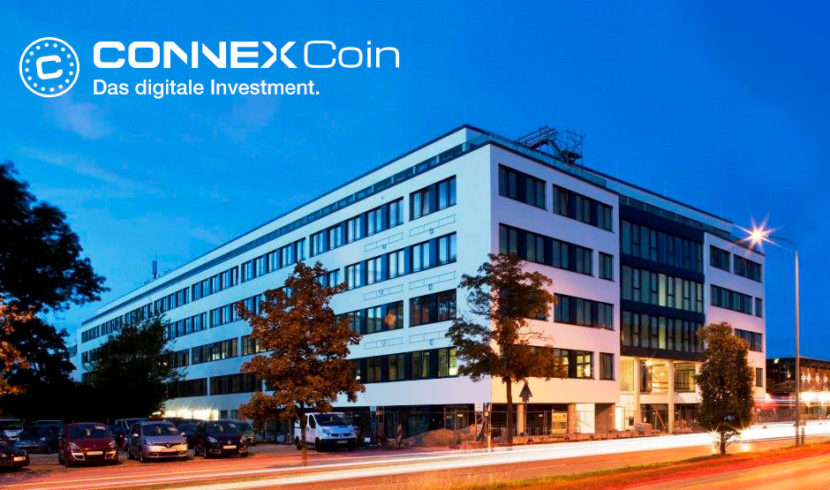
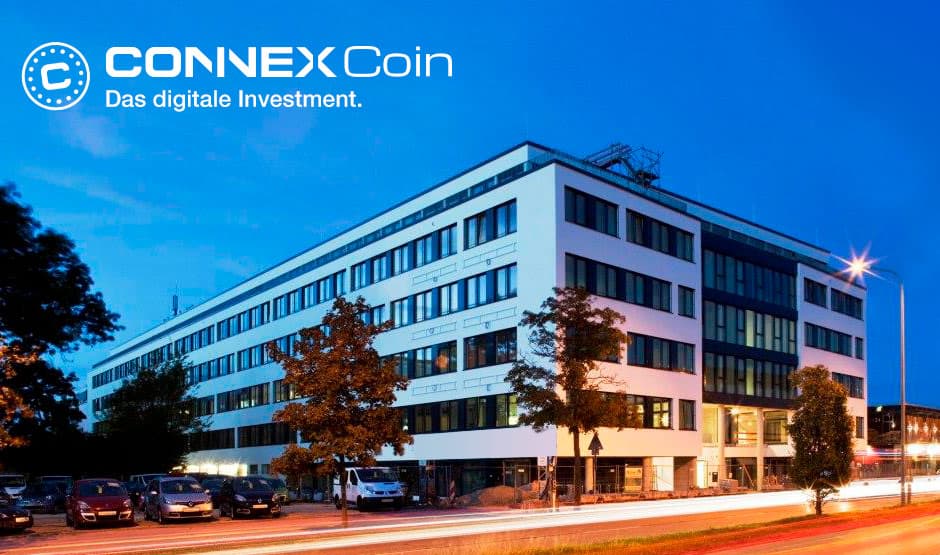
Today, our company starts the security token sale of Connex Coin, the first tokenised investment token compliant with EU regulations. In essence, Connex Coin represents a loan towards the managing entity of a fully leased, premium commercial property, named Connex, in central Munich.
Since the token qualifies as investment token (“Vermögensanlage” in german), it is not tradeable on crypto currency exchanges. Token holders receive a fixed interest of 3% and may sell the token back at nominal value.
Why Tokenisation?
Traditionally, real estate has been financed by owners, banks or external investors participating in real estate funds. The investment process in real estate is complex, takes time and effort. By using blockchain technology and crypto currencies or tokens, this process can be simplified and made much more efficient.
Liquidity
First, there is the securitisation aspect of tokenisation:: by making an illiquid real estate asset completely liquid, this type of investment is made accessible for a much larger target group of potential investors. Traditionally, mainly wealthy individuals or companies could invest in real estate. With a liquid asset, such as the Connex Coin, an individual can become a real estate investor starting with a 10 EUR investment.
Beside having a bank account in an EU country and a registration, nothing else is required to buy this investment token. Since Connex Coin is a non-tradeable, stable investment token, the token holder receives 3% interest paid directly to her bank account. Information about the personal holdings are displayed in the personal account. By using tokens, securitisation is made easy and efficient.
Programmability
Tokenisation is much more than securitisation: a token can be described as programmable money. In other words: tokenisation adds programmability to an asset. This way, business logic can be introduced, reducing the need for manual settlements and smart contracts can have functions for automatic transactions, formulas for calculating asset prices and other specific features at marginal costs. So, what kind of business logic can you add? Simple answer: any. And exactly this large number of degree of freedom makes it somewhat challenging to start with.
At RAAY RE, we have started by leveraging our proprietary (Crypto) Smart Wallet by adding features that allow token holders making use of specific property-related functions, such as granting access, or allowing for the use and payment of facilities. We will elaborate more on this aspect of programmability in a next post. From our perspective, programmability of formerly static assets provides great opportunities for the real estate industry.
Immutability
A digital, integer trail of transactions proves history of ownership and eliminates data misuse and fraud, such as double-spending. Furthermore, the consistent historical record of all transactions allows for a realtime, frictionless reporting. Just ask your asset managers and CFOs about their administrative headaches that traditionally could only be healed by tremendous accounting efforts. With a guaranteed complete historic data set of all transactions, this headache can be eliminated completely. Tokenisation helps to minimise administrative efforts, time- and costwise.
For RAAY RE, the tokenisation of a share of the Connex building is the first proof of functionality in our tokenisation module, that is one part of our Digital Operating System for the real estate industry. There will be more assets tokenised – as well as in terms of securitisation, and, specifically regarding the programmability aspect of tokenisation: our tokens will come with built-in business logic that will unleash the full value of real estate assets.
This week, our partner company RAAY Real Estate GmbH, launches Connex Coin, its first security token.Connex Coin is Germany‘s first security token that qualifies as a productive investment and is fully compliant with EU regulations.
At EXPO REAL 2019, Europe’s largest real estate fair, RAAY RE presented first details of this project. In February, the token received final approval by German financial regulatory body BaFin. The very first phase of the STO, the sale of Connex Coin, to friends and family, has already begun.
The idea of Connex Coin was born in 2018. Then, we discussed digitisation projects in the field of real estate funds with Thomas Meyer, founder and CEO of Wertgrund Immobilien AG, a residential real estate fund manager. Shortly afterwards, we started a similar conversation with Hans Hammer, founder and CEO of Hammer AG, a commercial real estate developer. It became clear within weeks: we should have these conversations together, as a team.
Fast forward: In July 2019, we founded our new partner company RAAY Real Estate (RAAY RE) as a joint venture of Hammer, Wertgrund and Datarella. The purpose of RAAY RE is to offer blockchain-based products and solutions to the real estate industry, which itself is a late adopter regarding digitisation efforts. We decided to start RAAY RE with the tokenisation of a Hammer-owned property, located in central Munich. With the Connex building, we have a first class property in one of the best real estate locations in Europe, with first class tenants — in short: the best product you can imagine for the start of a product category in your company!
By tokenising this property, we provide the perfect investment opportunity — especially for retail investors — since individuals can become real estate investors starting at 10 EUR. The Connex Coin token sale will take place from March to May 2020. Connex Coin owners will receive an interest of 3% on their investments and can sell Connex Coin back to the issuer. In the first phase, there will be no public trading of Connex Coin, since at the moment there are no EU-compliant cryptocurrency exchanges that offer trading security tokens. As soon as there is approval from financial regulators, Connex Coin will be one of the first security tokens listed on exchanges in Europe.
Connex Coin is the first token issued by RAAY RE, others will follow. RAAY RE is planning to launch more token sales for self-owned real estate properties in 2020. Additionally, tokenisation will be offered as a service to players on the real estate industry. This offering comprises the complete tokenisation process, including technical, legal and regulatory elements, based on an existing long-term real estate expertise.
In addition to tokenisation services RAAY RE offers a variety of tools and products that can be used by real estate developers, owners and funds, ranging from KYC onboarding processes, to smart digital (crypto) wallets. With the launch of Connex Coin, RAAY RE proves that blockchain technology can be leveraged to make payment and transaction processes within real estate more efficient, thus paving the way to a digitised future for the real estate industry.
The acquisition of this investment involves considerable risks and can lead to the complete loss of the invested assets.
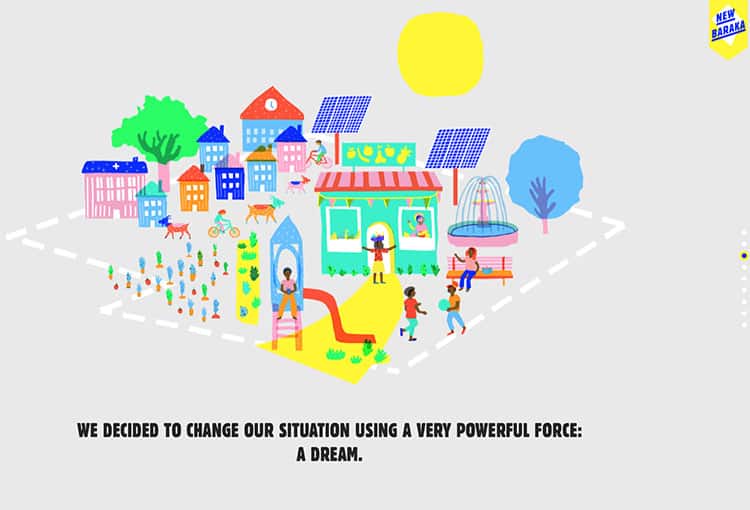
When Macky Sall, President of the Republic of Senegal, personally launched the project ‚Cité Baraka‘ on April 27, 2017, few had thought that in March, 2018, the construction of the first six buildings would be started, and in February, 2020, the Soreba Manager, a blockchain-based payment solution, would be in place to allow for secure, traceable community fees.
Cité Baraka, a project by German-based YOU Stiftung, headed by UNESCO Special Ambassador Ute Ohoven and her daughter Claudia Jerger, is supported by its technical and financial partner Orascom Group, headed by Mr. Samih Sawiris and its subsidiary Casa Orascom, headed by Alex Calderoni and Stefan Zingerle. The Minister of Urban Renewal and Living Environment Senegal is responsible for monitoring this project in Dakar.
Anna Gueye, Finance Director United Teams (Alliance YOU Stiftung & HOPE87)
Baraka has evolved as a slum in the outskirts of Dakar. Senegal‘s capital has grown dramatically over the last decades, and Baraka’s inhabitants found themselves living in the city center, surrounded by high income neighborhoods. YOU Stiftung’s Ute Ohoven and her daughter Claudia Jerger, who have supported Baraka by building a school, planting trees and organizing social and cultural events came up with the idea of the slum‘s rehabilitation in 2016. With the support of the Senegalese government, HOPE87-Senegal, Orascom, Casa Orascom, the Association of German Architects (“Bund Deutscher Architekten”) and the Peter Behrens School of Architecture in Düsseldorf, „Blonde Mum“ – as Ute Ohoven is called in Senegal – started the construction work of 210 apartments for 1.600 dwellers. Additionally, a training program was started for all 215 craftsmen, semi-skilled workers and service providers of Baraka to enhance their capacities in strategic management and marketing and to make them fit to stabilise or to enlarge their economic activities.
Since Datarella has closely worked with the YOU Stiftung and Casa Orascom on several projects in the past and we are fascinated by the Baraka project and the commitment of all supporters, we agreed to create a blockchain-based payment solution to allow for community fees.. In late January 2020, the operations team in Baraka was provided with the Soreba Manager, named after the organisation responsible for all administrative aspects of Cité Baraka. Starting in March, first rental payments will be processed through the Soreba Manager. Cité Baraka dwellers now have a high-tech tool that allows for safe and trusted payments.
“We are very proud to launch another pilot in the pilot project Baraka with this Blockchain solution. Our big thanks goes to Datarella who made it possible and who supports the Baraka project on a pro-bono basis”, says Claudia Jerger of YOU Stiftung.
Stefan Zingerle, Co-CEO of Casa Orascom, adds: „As a leading developer of affordable housing communities, Casa Orascom is always searching for ways to optimize its projects and to simplify processes. We seek to leverage new technologies to increase the quality of life for residents. Datarella is a partner who continues to produce tools allowing us to achieve this mission”.
After the first use of the Soreba Manager as a payment rental management tool, more services will be added. We at Datarella are looking forward to developing the Soreba Manager further, jointly with the Soreba staff and Cité Baraka dwellers.
Climate crisis has made environmental, social and governance factors a force in investing: Asset managers managing over $3 trillion of institutional assets use ESG scoring systems to track their potential investment targets’ behaviour regarding environmental, social and governance factors.
Chris Hohn, the head of hedge fund ICI, has announced to vote against the directors of companies that fail to reveal their carbon emissions. European Central Bank’s new head, Christine Lagarde, considers using monetary policy and bank supervision to actively fight climate crisis; a move that would involve assessing which firms are dirtier than others. A big challenge in using ESG scores is that, unlike credit ratings, ESG scores used by different ESG rating companies are poorly correlated with each other.
And, interestingly enough, tobacco and alcohol companies rank near the top of many ESG rankings – since it does not matter what the companies are selling, it only has to be done in a sustainable way. For instance, in FTSE Russel’s ESG rating, electric auto manufacturer Tesla performs worse than companies that produce gas-guzzlers.
In short – a standard is needed. Over the last few years, big credit ratings firms have either built their ESG ratings in-house, or acquired smaller ESG rating systems. That allows to hope that ESG scores will be usable in the near future.
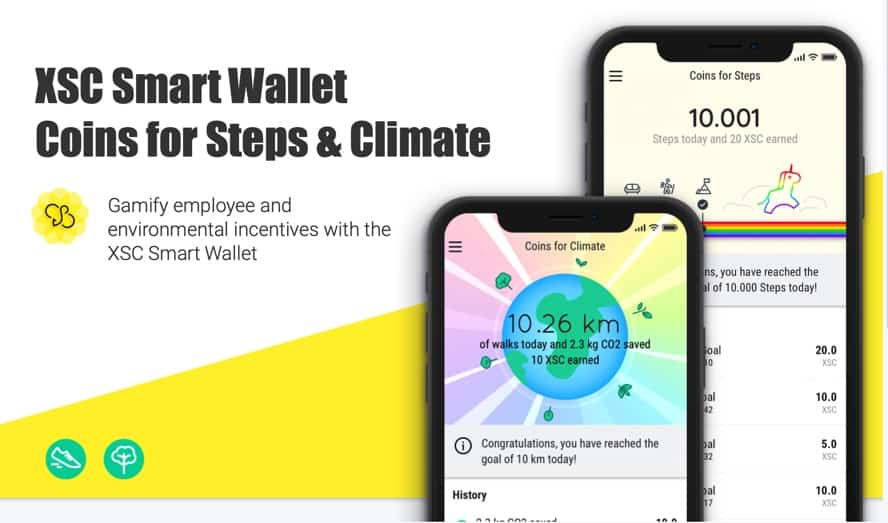
With its XSC Smart Wallet, Datarella is offering a handy solution for enterprises to measure the CO2 emissions of its employees, and the CO2 savings of employees who use public transport, ride their bikes or choose another emission-friendly approach to transit to and from work. The XSC Smart Wallet can measure employees’ CO2 emissions, as well as activity data, and incentivises them to behave in a good manner by rewarding them with digital coins – hence “XSC” – that can be exchanged with food and beverages in the company’s cafeteria. By providing both, a measurement of environmental and activity data of its workforce, a company is able to use the XSC Smart Wallet as a handy, reliable and fun-to-use instrument to improve its ESG score.
If you want to know more about the XSC Smart Wallet, where its is already in use and how you could use it for your company, please contact us!
Beside delivering digital work, we regularlyorganise meetups to have keynote talks by industry experts, have personal conversations and network within the larger blockchain community. At the end of 2019, our Munich Blockchain Meetup group boasts 2.690 members, a number that demonstrates blockchain’s great impact and the readiness of the community.
These are our stories that made it onto the website. We had more stories, some of them can only be whispered behind NDA-secured curtains, for others we did not find the time to transform them into news posts. At our X-mas party, we all agreed that 2019 was a fantastic year for Blockchain and its AI-driven apps in general, and for Datarella in particular.
Since our field of work is in its infamcy, we expect 2020 to become even better! If you, dear reader, know someone who is an exceptional dedicated individual with an affinity for an entrepreneurial way of work and without mental reservations , please refer her or him to us!