
by Kira Nezu | 25 April 2024 | Blockchain, Featured, Track and Trust
In this article, we explore how the Track & Trust system ensures predictive maintenance in offline environments, enabling organizations to maintain equipment efficiently even without internet connectivity.
In today’s industrial landscape, predictive maintenance is crucial for efficiency and reducing downtime. However, challenges arise when equipment operates in areas with limited or no internet. This is where Track & Trust steps in, enabling predictive maintenance online, even in offline environments.
Bringing Predictive Maintenance Online, Anywhere
Track & Trust uses a mesh network to collect data from sensors and machinery in offline environments. Once collected, the system sends this data to a device with internet connectivity. From there, it integrates into the operational data infrastructure. As a result, organizations can access real-time insights despite any connectivity challenges.
Enhancing Asset Reliability and Efficiency
Track & Trust enables predictive maintenance in offline environments, helping organizations reduce breakdowns. Moreover, it minimizes reactive maintenance for machinery without internet access. This is particularly beneficial in industries like smart mining, asteroid mining, and smart farming. In these industries, connectivity limitations are common. With Track & Trust, organizations can proactively address equipment issues, reduce downtime, and optimize operational efficiency.
Empowering Industries to Thrive
Track & Trust acts as a catalyst for industries aiming to enhance their capabilities in offline environments. In addition, it bridges the gap between offline monitoring and online systems. Therefore, organizations can make data-driven decisions and improve overall asset reliability.
Key Takeaways
In an era where connectivity is not always guaranteed, Track & Trust offers a reliable solution for bringing predictive maintenance online, even in offline environments. Through its seamless integration of offline monitoring with online systems, organizations can gain real-time insights. Consequently, they can drive operational efficiency even when facing connectivity challenges. As industries continue to evolve, Track & Trust helps them stay ahead of the curve, maximizing operational performance.
Track & Trust is funded by the European Space Agency. It is a joint development project by Ororatech, Weaverlabs, and Datarella.

by Kira Nezu | 8 April 2024 | Blockchain, Featured, Gaia-X, Partnerships, SSI, Track and Trust
Datarella’s Blockchain Solutions for Supply Chain Management: Streamlining CSDDD Compliance
Datarella has been at the forefront of deploying blockchain solutions for supply chain management. The introduction of the European Union’s Corporate Supply Chain Due Diligence Directive (CSDDD, or CS3D) presents a significant regulatory milestone. This article examines the directive’s implications and showcases how Datarella’s blockchain technology offers a streamlined path to compliance for businesses.
What is the EU Corporate Supply Chain Due Diligence Directive (CSDDD)?
The CSDDD is a critical component of the EU’s strategy to enhance supply chain sustainability and ethics. It mandates companies to actively prevent human rights and environmental abuses within their supply chains. The directive sets forth a phased compliance timeline, with larger corporations facing earlier deadlines. By 2028, entities with over 1,000 employees and a net worldwide turnover exceeding 450 million EUR must adhere to the directive. Non-compliance penalties could reach up to 5% of global turnover.
Navigating CSDDD Compliance with Blockchain Technology
Many companies are uncertain about how to address these new requirements. The answer lies in robust reporting, backed by verifiable data. Traditional compliance methods might overwhelm businesses with paperwork and lead to inefficiencies. However, blockchain technology presents a solution: by digitizing and securely logging every transaction and document in the supply chain, blockchain can simplify the compliance process.
How Blockchain Simplifies Compliance
Unlike traditional methods reliant on paperwork, blockchain ensures secure, transparent tracking of transactions. This technology can reduce the compliance burden by offering secure data storage and easy accessibility. Since records on the blockchain cannot be modified, it ensures data integrity and accurate documentation for compliance purposes. Integrating blockchain with digital identity solutions like the vLEI and the EU Digital Identity Regulation further strengthens this process. Companies can easily verify responsibilities and transactions, making blockchain an essential tool for CSDDD compliance.
Datarella’s Expertise in Blockchain for Supply Chain Management
Datarella has an impressive track record in implementing blockchain solutions to address complex supply chain challenges. From facilitating blockchain-based document handovers in humanitarian contexts to ensuring the integrity of 3D-printed parts for global suppliers, Datarella’s innovative projects demonstrate our expertise. Our involvement in initiatives like the Gaia-X consortia (ESCOM and Cosmic-X) and the European Space Agency’s Track & Trust initiative shows our commitment to advancing blockchain technology for supply chain management.
Partnering with Datarella for CSDDD Compliance
As the EU moves toward greater supply chain accountability, partnering with Datarella can help businesses navigate the complexities of CSDDD compliance. With our blockchain solutions, we not only help companies meet regulatory requirements but also drive efficiency and transparency. Choosing Datarella means collaborating with a leader in blockchain innovation, ready to transform today’s challenges into tomorrow’s successes.
The Future of Supply Chain Management with Blockchain
The CSDDD represents a pivotal shift towards responsible supply chain practices within the EU. For companies aiming to align with these new regulations, Datarella’s blockchain solutions offer a practical and efficient path to compliance. As the regulatory and business landscapes evolve, Datarella remains dedicated to empowering companies with the technology and expertise they need to thrive in this new era of supply chain management.
Interested in simplifying your CSDDD compliance with blockchain technology?
Contact us to learn more.
*On Feb. 29, 2024, the EU voted positive on the Digital Identity Regulation, paving way for EU citizens to truly own and control their data – a step towards secure, decentralized applications within the EU.

by Kira Nezu | 4 October 2022 | Featured
Datarella is happy to announce that Simon Zehentreiter is joining as a Blockchain Consultant. He is extremely passionate about blockchain technology and brings experience in business administration and information systems. Beginning in October 2022, Simon is on board as a member of the Datarella team.
Simon Zehentreiter: “My name is Simon Zehentreiter and I will be working as a Blockchain Consultant at Datarella from October 2022.
I strongly believe that blockchain technology is one of the most important inventions of our time, having the potential to radically transform entrenched processes and to open up a range of new business models. Its ability for disintermediation and democratization can unlock value for both enterprises and individuals alike. Consequently, I see it as a main driver in shaping the digital society of the future.
With my proficiency in data analytics as well as a deep understanding of the fundamentals of blockchain technology and digital assets, I want to help build innovative blockchain-based solutions, based upon real-world needs, that have a lasting transformative impact.
Datarella has already established itself at the forefront of the Web3 space, owing to a comprehensive technology stack and a bold vision for the future of blockchain technology, which is why I am excited to be a part of the team and the journey ahead.”

by Kira Nezu | 26 November 2020 | Blockchain, SmartAid
Admittedly, it’s a German original: The “Adventskalender”. Every year on December 1st, children’s eyes in Germany start to shine – the Christmas countdown starts! This tradition has been going on on for decades. In the last few years, advent calendars have grown more and more elaborate, heating up the greed for consumption.
This year at SmartAid, the team thinks it’s time for an advent calendar that grounds us all in the Christmas frenzy and lets us rediscover the essentials of the Advent season.
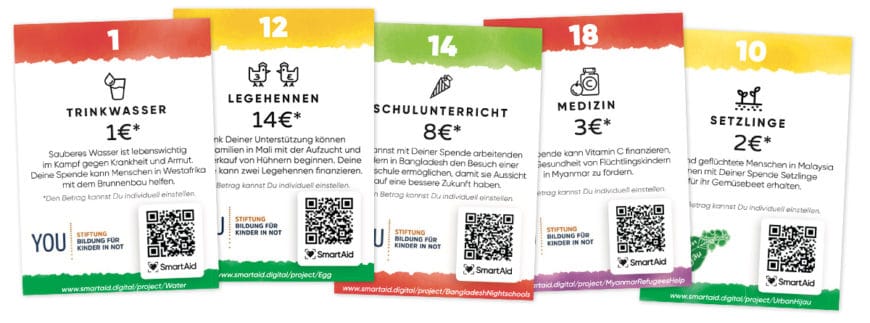
As a result, you find here SmartAid Advent Calendar: Every day, starting December 1st to December 24th, you can perform a good deed. With a small contribution you have the opportunity to make the world a little better – by donating for food, school materials, medicine or hygiene.
This is how it works:
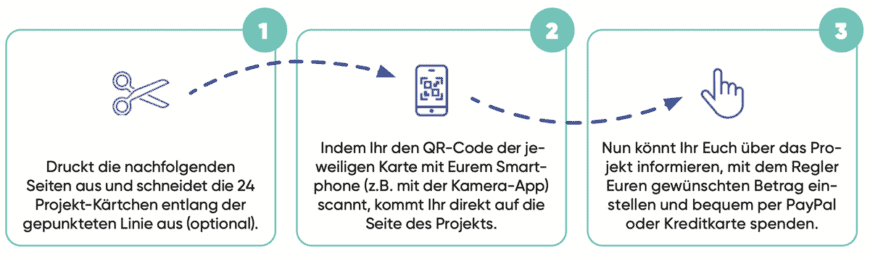
- Download the advent calendar as a PDF here
- Print out the pages with the cards and cut out the 24 project cards along the dotted line (optional).
- By scanning the QR code of the respective card with your smartphone (e.g. with the camera app), you will be taken directly to the project page.
- Now you can find out more about the project, set your desired amount with the controller and donate comfortably via PayPal or credit card.
The nice thing about donating with SmartAid: With the blockchain based donation tracker, you can precisely track your donation. You can adjust the amount of your donation yourself!
So, get ready for December 1st – we wish you lots of fun donating!
by Kira Nezu | 30 January 2020 | Blockchain
In the past years, we have built numerous blockchain projects – most of them private permissioned networks with Proof of Authority (PoA: A defined number of nodes “control” the network). Every now and then, we encounter the question “Are private permissioned blockchain systems less safe?“. We sat down to clarify this question on a high level.
We won’t jump into technical details. Instead, let’s look at how a private permissioned blockchain network comes into existence: Someone gets the brilliant idea to create a shared network for a specific case in which data must be effectively shared between multiple parties. She might go to other parties and ask them to join her case and present them a beautiful Big Picture. Most likely, the others will react tentatively – they might have to turn larger wheels within their environment in order to join. So, our lone blockchain pioneer might collect loose commitments from those parties and have them intend to join (after the system has been created and proven, of course) and start out on her own.
Hence, the first step is taken to create a private permissioned blockchain network. And, as all first steps, it costs some effort and is in the beginning just – a step. A blockchain network with perhaps 2-3 nodes for a start. Very small, controlled by one entity and – admittedly – vulnerable. “Less safe”. In terms of security, there is no great difference here compared to a traditional centralized network with “a server”.
But, dear reader, we are forgetting something cruical: The Big Picture.
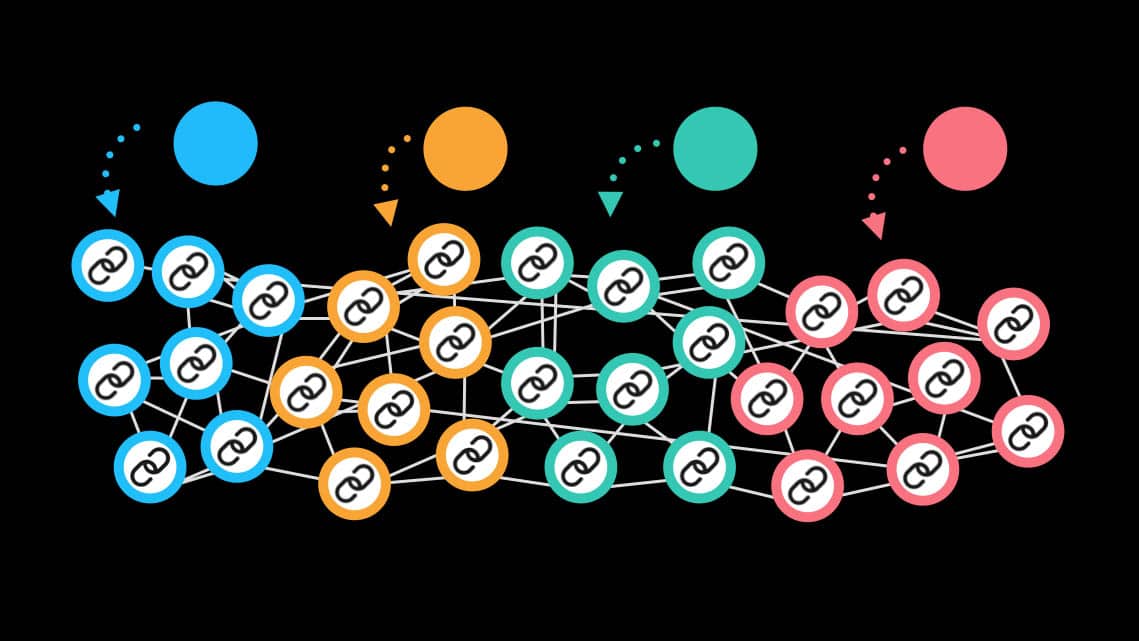
A seed does not make a forest, but it can start one. Our pioneer now will go to the parties she has collected commitments from. One or two will agree in testing. In an ideal case, they will see the benefit (usually it’s largely increased efficiency and/or cost savings) and better understand the Big Picture. With this lever, they will be able to turn the wheels in their environment – and add their own nodes to the network. With more parties joining the network over time, we have a consortium of real world entities which controls the network. They will create a governance model in order to set down the rules for the network. And of course, with the added nodes the network becomes safer.
So, on top of the technology (consensus algorithms, encryption, blocks, keys, distribution, zero knowledge proofs, channels… you name it) exists a real world layer to the network which is typically ignored by people who are fresh to the idea of private permissioned blockchains. This real world layer ideally contains
- a consortium (often found in form of a foundation),
- a governance model (set of rules agreed upon by the consortium)
- arbitration (to some extent automated within the network)
- auditing (possibly even through nodes of a neutral audit company for real-time auditing)
Can a large private permissioned blockchain network still be captured by a malicious party? Yes. BUT: This party will knowingly risk its reputation within the consortium, since it is transparent who holds which nodes. Imagine a humanitarian supply blockchain in which a number of humanitarian organizations make up the consortium. Would it make sense for one of these to risk their reputation? Imagine a money-transfer blockchain network held by a consortium of banks – would a bank want to risk its reputation? Or, think universities issuing degrees on a blockchain?
Are private permissioned blockchain systems less safe? It depends. Next time you encounter one, take a step back and challenge yourself: What could the big picture look like?
by Kira Nezu | 3 December 2019 | Blockchain, Track and Trust
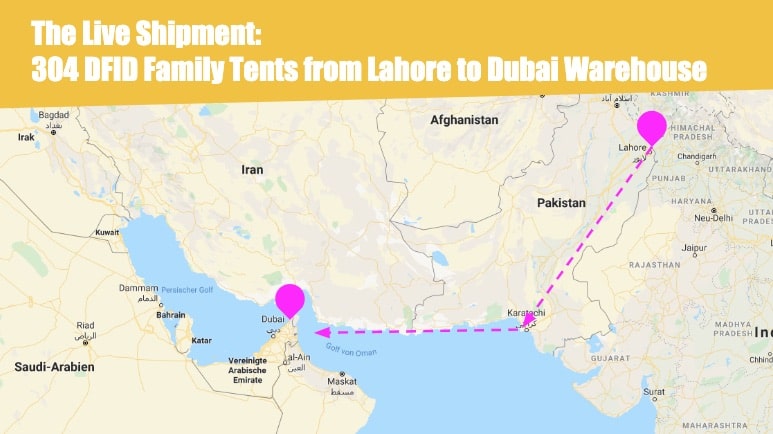
In 2018, we at Datarella started developing the Track & Trust System – the humanitarian supply chain on blockchain – for DFID. The first issue for Track & Trust Proof of Technology to tackle was to track custodianship of shipped goods. This test shipment was a replenishment of family tents, to be delivered from the supplier in Lahore, Pakistan, to Dubai. It took several weeks and was completed in July 2019. We created this presentation to show the Proof of Technology, including a demo on how a blockchain transaction is completed. Listen closely 😉

by Kira Nezu | 22 November 2019 | Blockchain
At Datarella we have been active in the humanitarian space since our first project with the United Nations World Food Programme, saving them millions of Dollars every year. Supporting aid agencies by adding trust to supply chains & logistics has been another highly interesting effort. Lately, in October 2019, we launched the R Wallet – a smart wallet based on blockchain technology – for a 2-month pilot of the Rohingya Project.
The Rohingya Project
Nearly 40 years ago, the Rohingya people were driven from their home lands in Burma (now Myanmar) and deprived of their identity documents. Up to today, these ~1.5 mio. women, men and children live in a stateless limbo without rights or protection throughout Southern Asia. Needless to say, plenty of them are victims of human rights violations.
In 2018 we were approached by the Rohingya Project, a grassroots organization supported by the UNHCR that is standing up for the Rohingya people. The aim of the Rohingya Project is to create a digital ecosystem for the Rohingya people based on blockchain technology. Datarella had the honor to deliver the first product for a 2-month pilot project: the R Wallet, which serves as blockchain based smart wallet.
The R Wallet – a smart wallet for volunteer rewards
The R Wallet is a simple, usable mobile application that can store R Coin – a crypto currency that serves as reward coin for volunteer work within the Rohingya community such as teaching, counseling, assisting in soup kitchens and group cleanups.
Until the end of 2019, about 35 volunteers and NGO field partners will test the wallet and reward functionality. Earned R Coins can then be redeemed for gift cards and insurance packages – or they can be traded among participating volunteers. And by the way: the R Wallet is also open for other refugee communities in Malaysia.
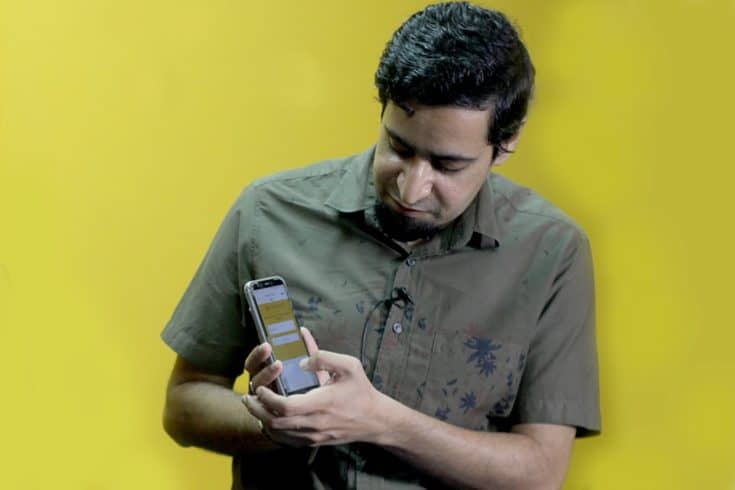
Saqib Sheikh, from the Rohingya Project, demonstrating the Wallet for Rohingya Vision – a Rohingya TV station.
How does the R Wallet work?
The basis of the R Wallet is provided by the XSC Wallet, the crypto wallet we successfully launched in 2018. The R Wallet got its own skin, matching the corporate design of the Rohingya Project for better identification. Participants – consisting of volunteers, field partners and Rohingya project managers – downloaded the app and activated it with a one-time code provided by Datarella.
Volunteers will now perform their work and report it to the field partners. These partners receive an amount of coins directly from the R Wallet of Rohingya management for rewarding the volunteers: The partner enters the wallet ID and R Coin amount for the volunteer in her R Wallet and sends the transaction off by authenticating it with a swipe. The R Coin is instantly moved to the wallet of the volunteer.
The R Coin
We designed the R Coin to run on a private Ethereum network. This means, that the R Coin is not available for public trading which ensures that it remains stable and non-susceptible for speculation-driven currency volatility.
For a stateless people that are deprived of any official identity, creating an ID on a blockchain with financial potential could mean a lot more than volunteer rewards. It is exciting for us to be part of this pilot and we are curious about the outcome at the end of the year! Creating the R Wallet and thereby supporting the Rohingya case is a great opportunity to demonstrate how blockchain technology can enable inclusion in many ways.
by Kira Nezu | 9 October 2019 | Blockchain
October last year in London, we kicked off the Humanitarian Supply Blockchain Proof of Technology with members of Britain’s Department for International Development (DFID) and their Frontier Technology Livestreaming (FTL) programme. The technology to be “proven” in this case was blockchain, specifically within the setting of humanitarian supply chain management. Over the last months, we have developed this system, named it “Track & Trust”, and successfully tracked the first shipment from Pakistan to Dubai.
The project essentially was concluded in three phases:
- Concept
- Development
- Live shipment
In the concept phase we tried to figure out the actors and their common denominator within the humanitarian supply chain. For this we identified and interviewed the actors involved in the DFID’s supply chain. As a result, we identified four actors: Humanitarian organization (in this case DFID), the supplier (SUP), the logistics service provider (LSP) and the implementing partner (IP – who also acted as consignee). The system was to be able to track the actor accountable for the shipped goods:

Process: Tracking accountability of a shipment.
After the development phase was completed, all we needed was: a shipment. Since the Mozambique flooding had just happened a few weeks earlier, a first potential candidate was tracking a special vehicle used for loading and unloading aircrafts freight during the event. Unfortunately the time was too short for onboarding the involved actors. So the choice fell on a far calmer event: We were to track a delivery from a supplier located in Pakistan to a warehouse in Dubai. The warehouse serves as stock and enables fast distribution to disaster areas in the region.
This last chapter took place this summer, with a DFID-scheduled shipment of goods. An amount of 304 DFID family tents were to be sent to the warehouse. The logistics organization was done by the domain experts and officers at DFID, who also had managed to source the parties involved. Before the shipment took place, the actors had to be onboarded to the system. For this we created user manuals and scheduled screencasts (varying from 20 to 60 minutes) for each participating party where questions could be clarified.
As expected, the most difficult part for the users was the ones where interaction with blockchain was required. In our case, that meant uploading a key-file and entering the password to unlock the key-file into the user interface. We received most questions on this aspect during the demos, and in the follow-up survey this was the source of the most uncertainty with respect to the usability.
The actual shipment started with us learning about something we could improve, which was the whole purpose of the testing phase! Luckily it was a rather minor detail, namely that goods to be shipped need to be inspected before they can be marked as ready for pick-up. The implementation of this was nothing more than adding an option in a drop-down menu, but the time the goods were waiting to be inspected was significant. As the goods were handed over from the supplier to the logistics service provider we received our first question on how to use the key-file. However, even before we could respond to the email, they figured it out themselves, so no intervention was necessary.

Screenshot from the Track & Trust shipment overview – status: Completed
From there on the shipment flowed like expected, the last handover was frictionless and all goods arrived safely. But since one of the goals was that we learn as much as possible and try to get our partners to share as much of their insider knowledge about the supply chain as possible, we decided to issue a survey to them. There we collected impressions and scores on usability, perception of blockchain in the system and general feedback. All of the partners responded to the survey, including the logistics officer from DFID. All of the respondents found the briefing beforehand to have been relevant, sufficient, clear and precise. Although, one could say we should have put more focus on the key-file and it’s importance.
The usability overall was rated highly with an average score of 4.2/5. Potential improvements noted as comments were mainly about added information points such as ETA and increased visibility. Additionally, the relatively high security was perceived by one respondent as confusing. However, not a single party found that any necessary functionality was missing, which meant that we’d set the level of prototype-abstraction correctly.
According to the survey, it was clear to all actors how the blockchain improved accountability across the supply chain, which meant that we’d achieved one of our goals: to have blockchain only where needed and empower the user.
As a technical partner, creating Track & Trust has been a great experience and learning process – applying the blockchain to an important pain point of the humanitarian supply chain. Working with the participants in this project has been delightful – everyone was extremely helpful in discussions (on- and offline) as well as workshops.
For Track & Trust, the ending of this phase is the beginning of a new one: Tracking the last mile in the humanitarian supply chain has been described by leading humanitarian organizations as the most murky. Therefor we decided to tackle this next pain point as we applied for a grant by the European Space Agency. We are continuing the development of Track & Trust and taking it to the next level – literally.
by Kira Nezu | 2 October 2019 | Blockchain, Track and Trust
In October 2018, we started developing a blockchain based supply chain solution for UK government’s DFID. The system was supposed to track accountability of goods on their way to disaster areas. In June 2019 we successfully tracked a shipment from Pakistan to Dubai, involving four parties managing and handing over the shipped items. With this delivery, the first pilot was successfully concluded. We are continuing to develop the system – which now carries the name „Track & Trust“.
So, naturally, a system under continuous development needs some kind of visual identity – starting with the logo. Having a strong graphical background, anything that needs to be visually enhanced at Datarella ends up on my desk – be it websites, visuals or: Logos. To be honest, this kind of work is a real treat for me! It allows for deep concentration on one single task (opposed to fast communication of everyday work). So, I indulged in some meditative work for a few hours and came up with the Track & Trust logo.
At the beginning of the logo design process, we brainstormed on which qualities, objects and attributes we connect with the Track & Trust system. We came up with: Accountability, security, location, path, road, ID, fingerprint, authenticity, address tag, technology – and the letter „T“.
After completing this list, I chose 1-3 aspects and started scribbling with pencil and a good deal of paper. The winning idea of this scribble contest then was replicated in vectors (I prefer Adobe Illustrator for this work).
The result combines several attributes: The sense of security is transported through the shield form of the logo. The lines represent authenticity and digitalization through their fingerprint- and circuit-like appearance. And lastly, even the letter “T” made it into the logo!
