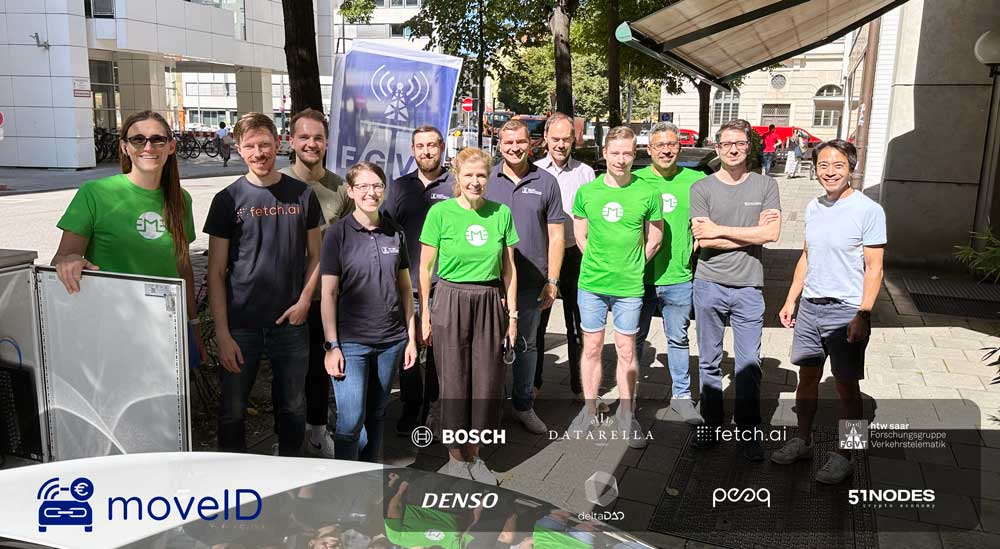
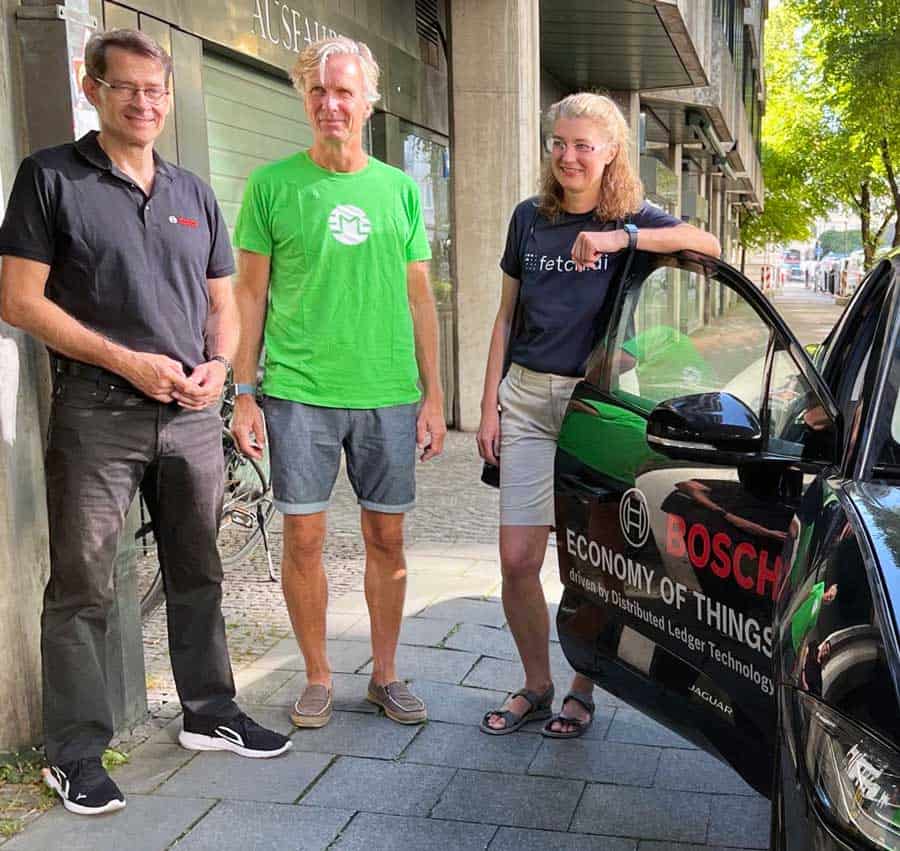
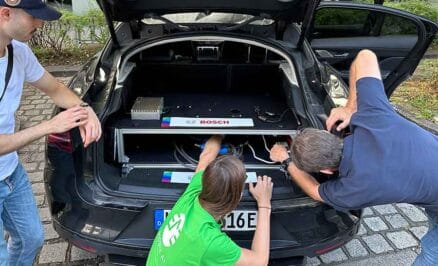
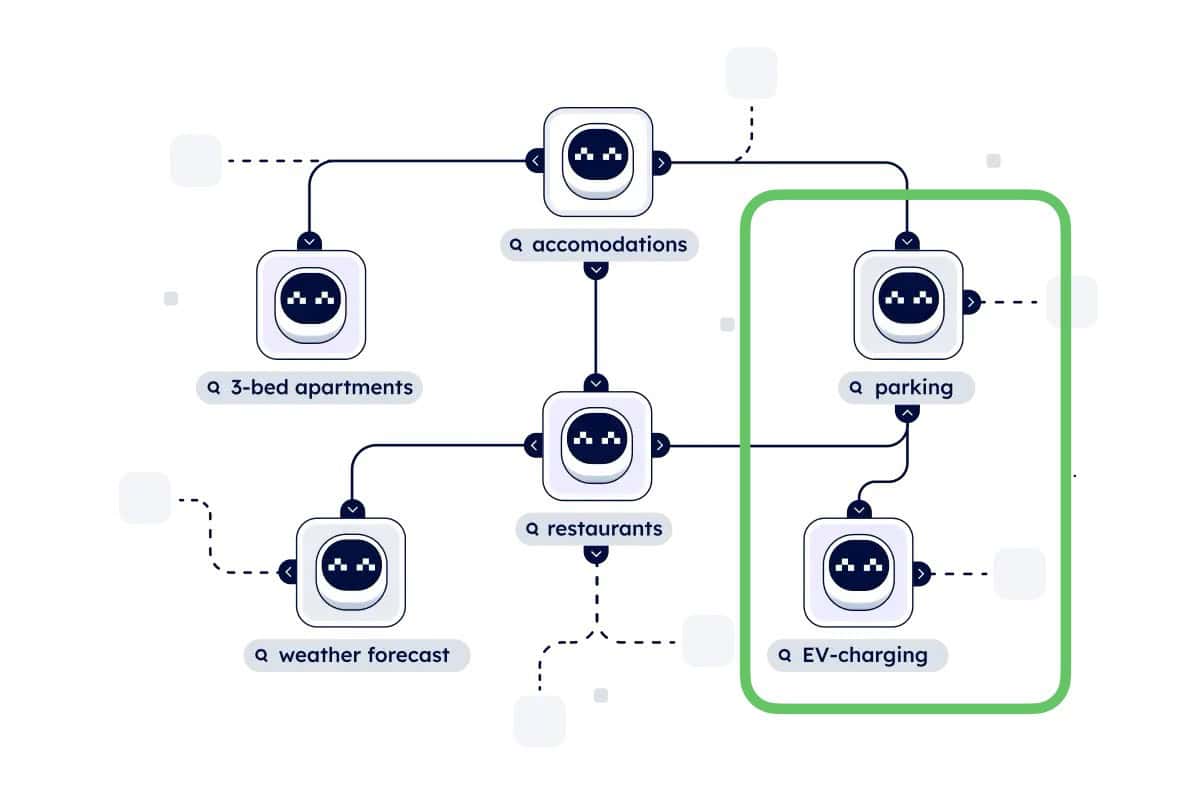
After three years of intense collaboration, innovation, and field testing, the moveID project—part of the Gaia‑X 4 Future Mobility initiative—has made significant strides toward redefining how mobility ecosystems work. At its core, moveID aimed to create a decentralized, user-centric infrastructure where vehicles, infrastructure, and service providers interact seamlessly using Self-sovereign Identity (SSI) and AI agents.
Building the Foundation for Trusted Machine Communication
Working alongside industry leaders such as Bosch, Airbus, Continental, and leading Web3 projects, we contributed to building the technical and conceptual foundation for trusted machine-to-machine communication in the mobility sector. This included the secure exchange of credentials, decentralized data marketplaces, and AI-powered autonomous service interactions—all compliant with European data and privacy standards.
Demonstrating Real-World Impact: MOBIX Park & Charge
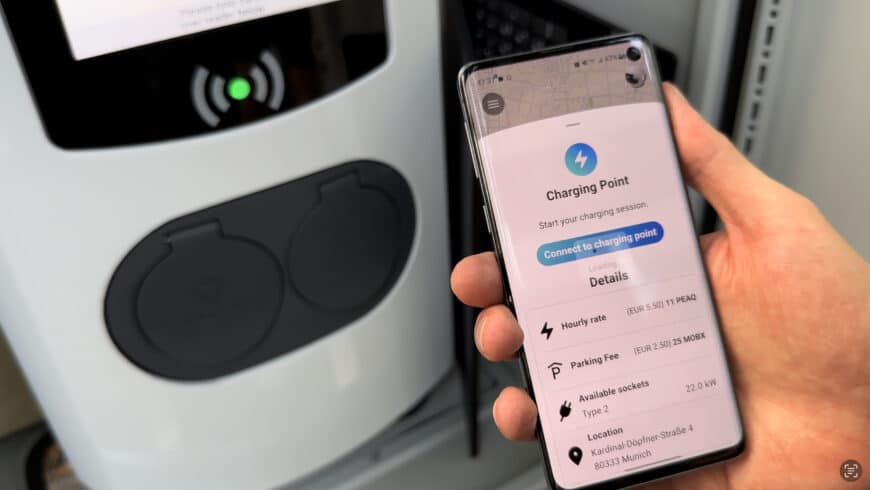
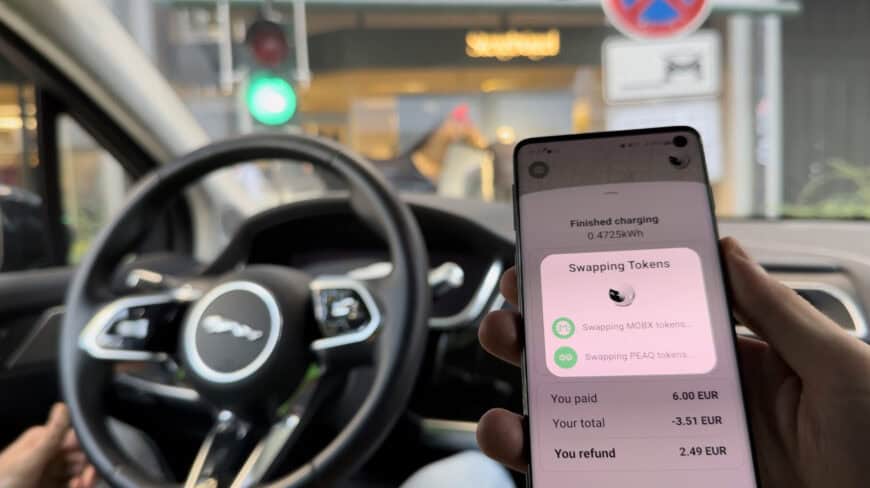
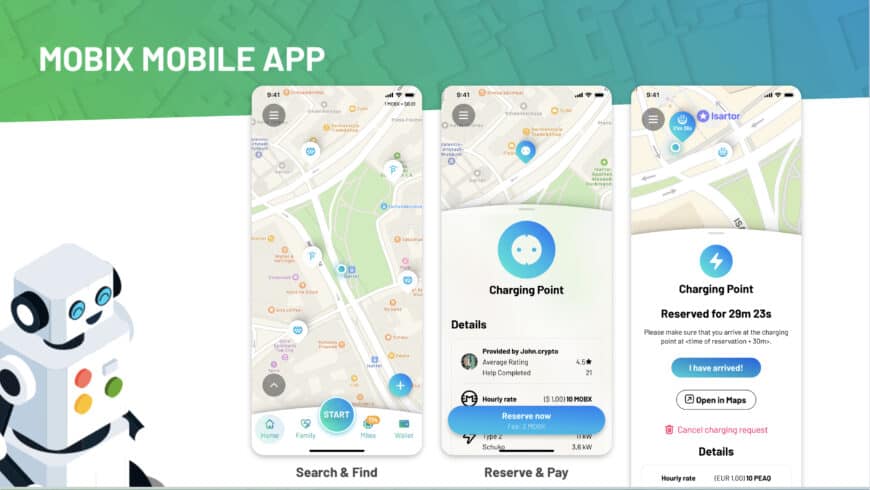
A standout achievement was the development and public demonstration of MOBIX Park & Charge, a fully operational system enabling electric vehicles (EV) to autonomously find parking spots, access charging stations, and handle payments. First showcased at IAA Mobility 2023, the system integrated SSI, blockchain-based payments, and AI agents in a live, real-world environment.
Scaling Toward Smart Cities
Beyond the demo, MOBIX has evolved into a scalable smart-city solution. By turning private EV chargers and parking spots into publicly accessible assets, we’re addressing key challenges in urban congestion and infrastructure scalability, while opening up new economic opportunities for individuals and municipalities.
Where Web3 Meets AI
The project also served as a powerful example of the convergence between AI and Web3. By combining intelligent agents with decentralized infrastructure, we demonstrated how machines can not only interact but also negotiate, transact, and self-optimize—laying the groundwork for more ethical and transparent digital ecosystems.
A Foundation for the Future
In sum, moveID wasn’t just about mobility. It showcased how decentralized identity, autonomous agents, and AI can reshape how devices, services, and users interact—not just in cities, but across industries. As the project concludes, its outcomes provide a strong foundation for future applications in smart infrastructure, data sovereignty, and the broader digital economy.
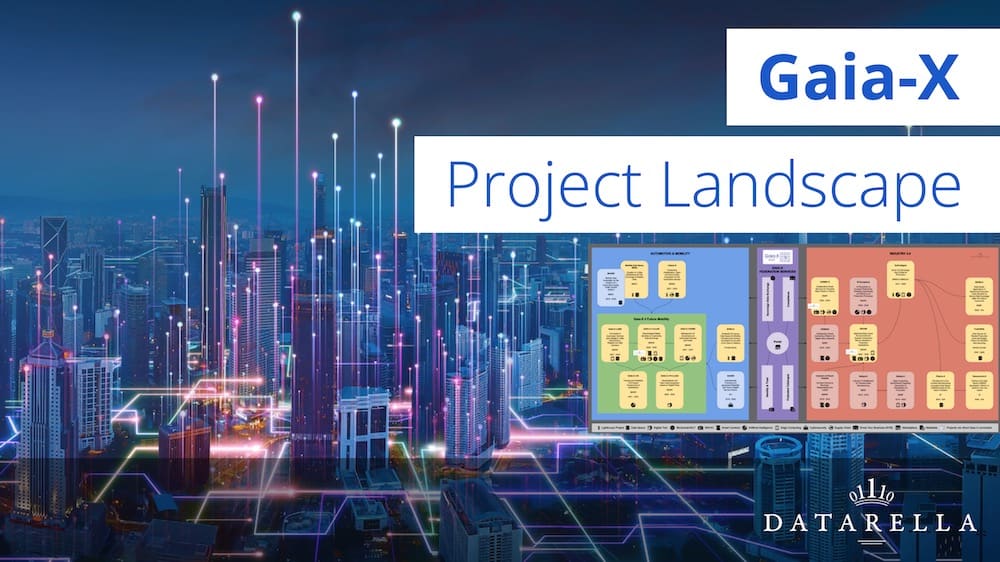
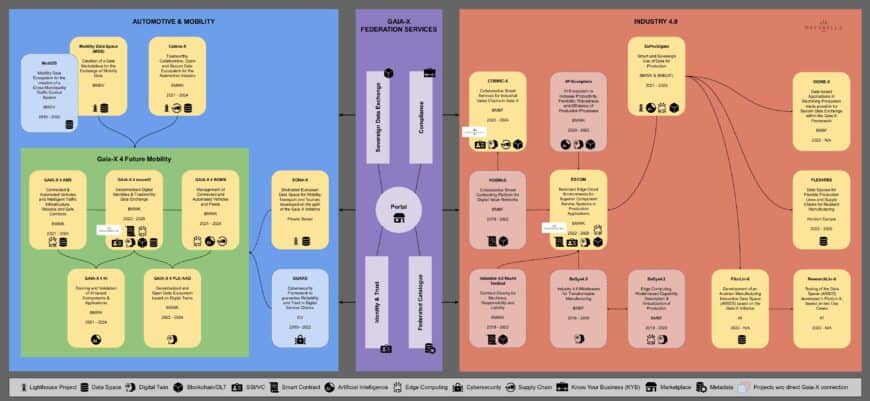
To visualize and structure ongoing Gaia-X projects and their thematically related studies, Datarella created a project landscape that comprises the three domains Gaia-X Federation Services, Automotive & Mobility and Industry 4.0. The relations between projects are modeled as directed edges, the technologies that are associated with each project are represented as icons – the Gaia-X Project Landscape:
The overarching goal of Gaia-X is to create a federated and secure data infrastructure for Europe and beyond that allows companies and citizens to share data without giving up control over it. Every ecosystem participant decides what happens to their data, where it is stored and thus always retains absolute data sovereignty. To achieve this, the Gaia-X architecture follows the principle of decentralization, with a multitude of individual platforms all following a common standard based on openness, transparency and trust.
The Gaia-X Federation Services, at the center of the visualization, are the implementation toolbox and minimum technical requirements and services that enable Gaia-X Federations to become operational and work together. Federations are individual participants that team up to create value for all participants and to open up new market potentials.
The Identity & Trust service closes the trust gap by enabling federations to authenticate and authorize participants. This is achieved by utilizing Self-Sovereign Identity (SSI), specifically Decentralized Digital Identifiers (DIDs), Verifiable Credentials (VCs) and Verifiable Presentations (VPs), which ensure that every participant is in full control of their identity at all times.
The Federated Catalogue service allows federations to set up a repository, in which participants can search for and discover information and services of other participants based on their aforementioned credentials.
The Sovereign Data Exchange service helps participants in keeping sovereignty over their data by providing functionalities for specifying and tracking how their data is used.
The Compliance service ensures that every participant and service is complying with the Gaia-X principles. Together with a number of decentralized services that are part of the Gaia-X policy, it provides decentralized, sovereign and immutable governance and control mechanisms that enable trustworthy transactions between participants.
Lastly, the Gaia-X Portal provides user friendly access to the Federation Services and supports the onboarding and accreditation of participants as well as the discovery of services.
The Automotive & Mobility domain harbors three Gaia-X lighthouse projects, the Mobility Data Space, Catena-X and EONA-X. The Mobility Data Space is funded by the Federal Ministry for Digital and Transport (BMDV) and deals with the creation of a data marketplace that allows for the sovereign exchange of mobility data in Europe, Catena-X is funded by the BMWK and is tasked with establishing a trustworthy, collaborative, open and secure data ecosystem for the automotive industry. The objective of EONA-X is to establish a dedicated European data space for mobility, transport and tourism, developed on the path of the Gaia-X initiative. Funding is mostly provided by the private sector.
Datarella, as previously announced, is working on the moveID project, which, together with four related ventures, is part of the Gaia-X 4 Future Mobility project family. The goal of moveID is to develop a digital identity infrastructure and trustworthy data exchange process for the mobility of the future. Feasibility will be shown on the basis of two use cases, V2X services in heterogenous, decentralized mobility infrastructures and vehicle data sharing. moveID is funded by the BMWK and the interdisciplinary consortium of mobility enterprises, Web3 companies and research facilities is lead by BOSCH.
With KOSMoS, Datarella has already successfully finished a research project in the Industry 4.0 space by realizing a collaborative smart contracting platform for digital value networks. Now, based on these results, Datarella is also involved in the two followup Gaia-X projects Cosmic-X and ESCOM. Cosmic-X is funded by the Federal Ministry of Education and Research (BMBF) and deals with advanced smart services in the context of spare part supply chain automation and optimization. The specific use cases that will be explored are digital twins, trusted supply chains and platform-based maintenance. ESCOM is funded by the BMWK and seeks to make a demonstrable contribution to a responsible manufacturing industry regarding resource consumption and sustainable resource use. The project will demonstrate that the use and balancing of edge and cloud data spaces allows for the flexible, load- and energy demand-dependent use of services as a know-how offering of component manufacturers with high utility value for the end application. Both projects are carried out in collaboration with leading industry partners and research facilities.
We are incredibly proud to be contributing to the development of the Gaia-X ecosystem in two critical domains and hope that our illustration sheds some light on the work that has already been done and will continue to be done towards an open, transparent and secure data infrastructure for everyone.
Datarella GmbH, a Web3 company builder, is joining forces with deltaDAO AG, a Web3 engineering and integration company, to expand the open data economy in the mobility and identity sectors. Both companies leverage their extensive experience in creating Web3 solutions for real-world use cases. The partners aim to allow corporate and individual users to monetize data while preserving their privacy. The first project is inspired by the partners’ collaboration in moveID, a Gaia-X 4 Future Mobility project. It will allow the monetization of mobility service provider data.
Datarella and deltaDAO will use their enterprise Web3 tools and consumer apps to jointly build solutions for the monetization of data featuring Fetch.AI and Ocean Protocol technologies. This combined tech stack serves as the foundational underlying protocol for digital business transformation with converging technologies, s.a. AI, and autonomous machines. Given the natural synergies between Datarella and deltaDAO, this cooperation will drive enterprise adoption across the partners’ client bases.
For Datarella, the purpose of technology is to increase the quality of living, by supporting human beings in professional activities and private lifestyles. The growing complexity and diversity of our ecosystem require technological infrastructures that facilitate collaboration and cooperation. By creating Web3 solutions for a global user base, Datarella illustrates the real-world benefits of its Web3 technology stack, and with deltaDAO, we will show how individual and professional users can turn the table and monetize their data, instead of “being the product”, .
Michael Reuter, CEO of Datarella
deltaDAO has become a trusted advisor for building sovereign, privacy-preserving, and secure data economy solutions. We seek to give freedom of choice and control back to data owners. As a DAO we create a new kind of data economy that is owned by no one – and open to everyone. Our partnership with Datarella will lead to many impactful real-world use cases and is a great example of how two companies can leverage each other’s strengths and experience to create real-world solutions for both individual and professional users alike. We are excited about building towards a decentralized data economy together with Datarella!
Frederic Schwill, Co–Founder of deltaDAO
About Datarella
Datarella GmbH is a Web3 company builder. Leveraging its technology stack of Blockchains, Self-Sovereign Identity SSI, Autonomous Agents, and Artificial Intelligence AI, as the tech hub for Web3 projects and companies like MOBIX, MOBIX family, IMMOBIX, or NOMIX, Datarella creates applications with real-world benefits. The Munich-based company was founded in 2013. With its decentralized teams in Munich, Gdansk (Poland), and Skopje (North Macedonia), Datarella develops bespoke Web3 innovations for their partners and clients, s.a. United Nations, World Food Programme, UKAid, ESA, Siemens, BMW, BOSCH, and Airbus.
About deltaDAO
deltaDAO AG is a software development, integration, and consulting company based in Hamburg, Germany. Its focus is to enable a transparent, secure, and decentralized data economy in which enterprises, SMEs, and public institutions can keep full technical control over their private data. As specialists in distributed ledger technologies (DLT) we are engaged in Gaia-X and built the first Minimal Viable Gaia-X (https://minimal-gaia-x.eu/) in 2021, based on open-source software and Web3 technology.
Datarella is joining forces with Ocean Protocol to expand the Open Data Economy. moveID, our first project will be under the umbrella of GAIA-X, the European Association for Data & Cloud, as part of the GAIA-X 4 Future Mobility Project, which aims at bringing cloud applications to autonomous & networked vehicles.
The project’s overall goal will be the creation of a decentralized ecosystem of data & services that allows autonomous & networked vehicles to integrate into smart infrastructures and third-party services, following GAIA-X’s design principles. With mutual trust as its core concept, its stated goal will be achieving data sovereignty.
For Datarella, technology is an instrument to increase the quality of living, by supporting human beings in all kinds of professional and private activities. The growing complexity and diversity of our ecosystem require technological infrastructures that facilitate collaboration and cooperation. By planning, developing and implementing blockchain solutions worldwide, Datarella meets this requirement: in the fields of Finance, Supply Chain, and Mobility, we enable industry participants to join forces and create sustainable, crisis-proof business models. GAIA-X is the perfect environment for true collaboration. – Michael Reuter, CEO of Datarella
Data generated by network actors or Autonomous Economic Agents (AEAs) in the ecosystem can be useful to 3rd parties, and thus has value as an asset. Ocean Market unlocks the value of these by enabling every authenticated user to put their data up for sale and to monetize it. Vehicle data, for example, could be (re)used for traffic analysis for the generation of better traffic models such as optimized traffic light switching.
Different market actors will price data differently, depending on the method of data generation, data quality, and its utility to the potential buyer. Ocean Market allows for dynamic pricing and thus for optimal value generation for data generators and data curators, in a privacy-preserving manner.
This project will use Datarella’s Enterprise Blockchain Solutions, which serve as the foundational, underlying protocol for digital business transformation with converging technologies such as AI and autonomous machines. Datarella’s future mobility solutions are fueled by blockchain technology, real-time decentralized data management, transparency and GDPR compliance. Given the natural synergies between Ocean and Datarella, this partnership is the first of many that will drive enterprise adoption of Ocean Protocol technology in Datarella’s client base.
Our mission is for data to be treated as an asset. By tapping into underutilized data from mobility IoT sensors, AI can uncover mobility patterns and optimize services / reduce waste. Machines can speak to each other and algorithms can make optimizations – all in real-time. Ocean can tokenize mobility data from devices, thereby creating an opportunity for these tokens to be used as instruments in DeFi projects. This is one of the many ways in which we enable data owners to share in the value their data creates. – Razvan Olteanu, COO of Ocean Protocol
Ocean Protocol is a Day 1 Member of GAIA-X Association AISBL, an international non-profit organisation established to achieve the GAIA-X project goals for the development of an efficient, competitive, secure and trustworthy federation of data infrastructure and service providers for Europe – fostering digital sovereignty of European cloud service users.
—-
About Ocean Protocol Ocean Protocol’s mission is to kickstart a Web3 Data Economy that reaches the world, giving power back to data owners and enabling people to capture value from data to better our world. Data is a new asset class; Ocean Protocol unlocks its value. Data owners and consumers use the Ocean Market app to publish, discover, and consume data assets in a secure, privacy-preserving fashion. Ocean datatokens turn data into data assets. This enables data wallets, data exchanges, and data co-ops by leveraging crypto wallets, exchanges, and other DeFi tools. Projects use Ocean libraries and OCEAN in their own apps to help drive the Web3 Data Economy. The Ocean token is used to stake on data, to govern Ocean Protocol’s community funding, and to buy & sell data. Its supply is disbursed over time to drive near-term growth and long-term sustainability. OCEAN is designed to increase with a rise in usage volume.
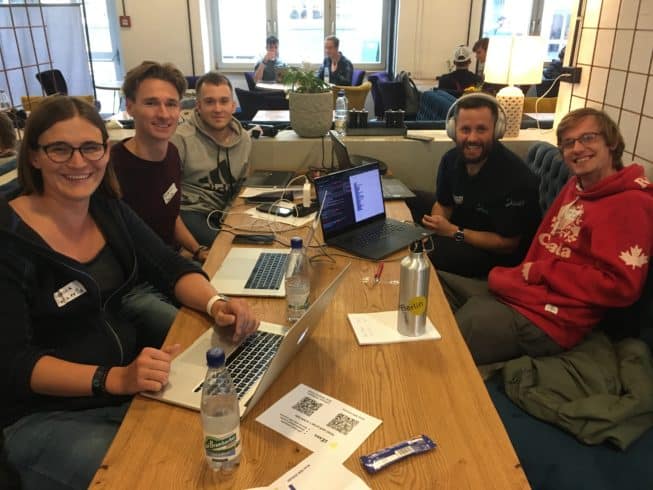
For the last year, we at Datarella have been working together with two leading sensor, IoT and infrastructure providers to collectively set technological standards and build distributed ledger technology to shape the future of mobility. On 19th and 20th of October Datarella participated at the Diffusion Hackathon by Outlier Ventures to experience live the 20 most exciting Web 3 protocols. We had the opportunity to dive deep into the Fetch.ai tech stack during the event and were able to leverage those tools to build a PoC over the course of two days. Fetch offers a unique agent-based approach to allow developers to turbocharge the matchmaking capabilities enabled by converging blockchain and AI. We proudly announce that our team of Rebecca Johnson (Datarealla), Tom Rae (Agent3), Idan Portal (2key), Tomasz Gęsior (Baltic Data Science) and Philipp Kothe (Datarella) won with our project “Effortless Parking” in two tracks.
During the hackathon, we built a project on top of a real-world use case in development within our consortium. Our Diffusion 2019 project is meant to extend and build on top of our current prototypes for improving coordination between parking lot operators, cars and the IoT & infrastructure providers whose systems make up the mobility landscape in which parking transactions take place.
Our goal was to increase the efficiency in the parking market by reducing the transaction costs which occur between the driver and the parking lot owner. Further, we wanted to prove that an open and collaborative market, enabled by web3 technologies, would be beneficial for both sides of this market. To strengthen our argument we will refer in this post to two economic theories, the transaction cost, and economic surplus theory.
1. Transaction costs
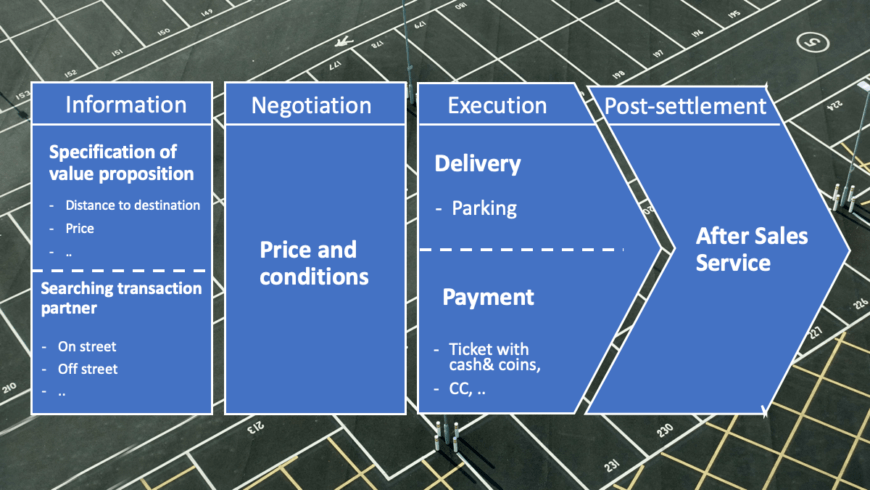
According to a study, car drivers spend around 40 hours a year searching for a parking space. This is not only a waste of time but is also responsible for one-third of all traffic, respectively traffic-related air pollution in inner cities. At the moment drivers have to download multiple apps and compare the offers of various parking garage operators to evaluate what is the best parking option close to the destination. Alternatively, many drives just drive around looking visually for an opportunity to park. However, both approaches are related to high opportunity and searching costs for the consumer. These costs together are also referred to as transactions costs and occur whenever a good or service is transferred via a technologically separable interface. Transaction costs describe both monetary and indirect costs such as time or effort. For a systematic approach, these costs can be divided by the time they take place in the transaction process. For example, prior to the conclusion of a contract, time needs to be spent searching and evaluating information, negotiating price and drafting/reviewing contracts, adjusting the contract/s, and finally, after contract execution, time must be spent to resolve any post-settlement disputes.
Like all costs, transaction costs have a limiting effect on economic growth. As a result, technological and organizational innovations that reduce transactions costs for users are becoming increasingly important for macroeconomic development.
2. Economic Surplus
Also, on the other side of the market, we identified high inefficiencies. In contrast to airlines or hotels, car park providers currently do not usually implement any kind of capacity utilization-based pricing. This, in combination with a lack of coordination and information among drivers, leads to a system of suboptimal asset utilization since some car parks are overbooked and while others are still nearly empty. The consequence is a limitation of the economic surplus created in the parking industry. Economic surplus is a macroeconomic concept established and framed by the economist Alfred Marshall in the mid-19th century. Together with Karl Heinrich Rau, he developed a diagram, which shows the relation of demand and supply in dependency on price and available quantities of an economic good.
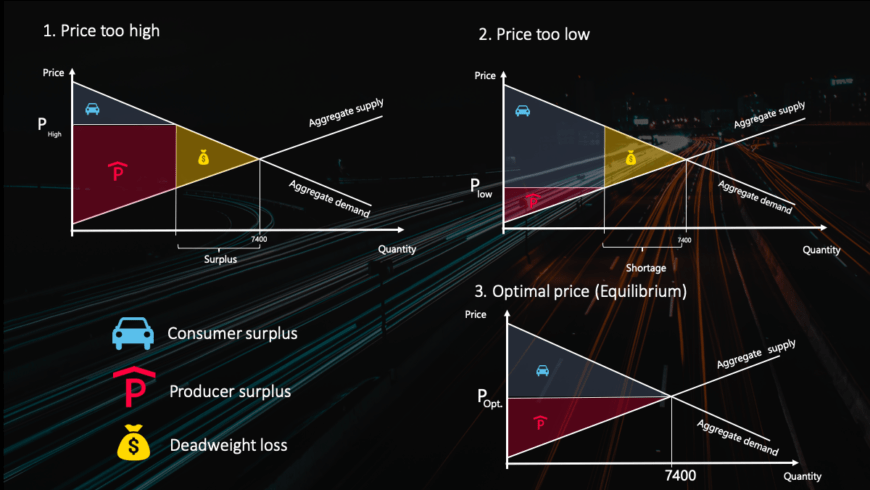
But let’s take this into practice and look at an example. The paid parking market in Munich consists of over 24 parking garages which offer about 7400 parking spaces. In this simplified example, three scenarios are possible as shown in the graphic.
1. If the price is too high, there is not enough demand and we face a surplus in parking spaces. 2. If the price is too low a shortage occurs because there would be more people willing to park than operators offering lots. -> In both cases, a deadweight loss is created and value is lost since the full market potential cannot be captured. 3. The equilibrium price is found. Hereby, the price is set where demand exactly meets supply, which allows to capture the full market potential. Important to note is that this system is referring to the average price, which is composed of the individual prices of each parking garage.
3. The Fetch.ai Solution
To solve this dilemma of coordination and optimal pricing our team used Fetch.ai, a system designed to increase market efficiency by helping to match supply and demand.
So, during this hackathon, we used Fetch.ai to build a software simulation that would allow us to model the revenue generated by the parking providers under both optimal and suboptimal coordination conditions. Our first model simulated the revenue of each parking lot operator without any cooperation between the different provider, coordination or dynamic capacity utilization based pricing. In that model, drivers just attempt to find the closest spot (which is close to the real behavior of inner-city drivers). The second model simulates a smart network in which the different operators collaborate and drivers are coordinated to the available parking spaces, which match their preferences for distance and price. Autonomous economic agents powered by AI negotiate to achieve economically efficient outcomes.
We implemented our project using Fecht.AI prebuild SDK library, which allowed us to run a local ledger and a local IEF node. Further, we implement a custom data service to represent the parking garages. In this model, the parking garages acted as data provider and the drivers compared then the data they saved as preference vector (like distance to destination, price..) with all of the available data from the garages. After all options are evaluated, the agents choose the best option for the driver and sets a deposit in Fetch (FET), the native token of the ecosystem, to reserve the parking spot. We then used Fetch.ai smart contracts to represent the tickets which are sold and bought.
This system allows to discover the equilibrium of the whole parking market dynamically, reacting to any changes in capacity utilization in real time. Practically it can be used to demonstrate to parking lot operators that they are leaving significant money on the table by not using a fair and neutral DLT based coordination and booking system alongside their competitors. Everyone’s better off in this model as deadweight loss and negative externalities are removed from the system while maximizing both parking operator revenues and net economic surplus.
We are absolutely thrilled to further discover the endless possibilities Fetch.ai offers. The best part of the system is the fact that these “simulations” are intended to be implemented within production systems in the future. This means that the same system we’re using to simulate the future economic and environmental effects can then be put into use to actually achieve those outcomes in a real-world system.
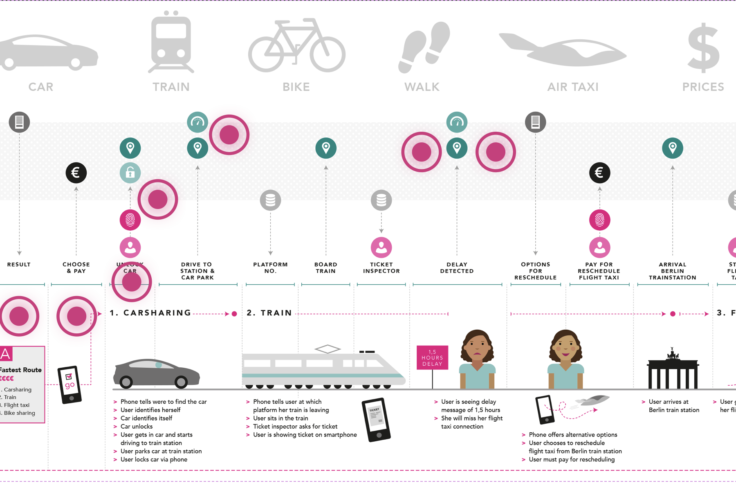
The Blockchained Mobility Hackathon on the weekend of July 20-22 saw a flurry of innovation by a colorful mix of corporate and independent hackers along with some of the world’s biggest mobility players. In order to visualize the PoCs presented, we’ve built an interactive infographic.
Building a blockchain mobility ecosystem with multiple distributed ledger technologies is a complex task that will require the smartest minds among us over a number of years. To that end, we asked each of the hacker teams competing at the Blockchained Mobility Hackathon to locate their prototype within a specific point in the tech stack as part of a future mobility user journey. In the infographic above, you can click to explore each of the PoCs presented and see immediately where the solution fits into the big picture for blockchained mobility.
Embedded in the infographic you’ll also find the results for each team including videos of the final pitches, team interviews about next steps and you can even drill down into the code with direct access to the repositories from each team. Click the image now to expand the infographic and navigate to detailed information about each teams results.
We’re working hard to move toward the development of a mobility future where everyone can compete and collaborate by leveraging blockchain and distributed ledger technology across the mobility industry. Thank you to all of the participants and sponsors of the Blockchained Mobility Hackathon 2018! This is just the beginning.
A: Mobility as a service (MaaS) through connecting Ethereum smart contracts with Datastreams on IOTA.
Q: What problem does your project solve?
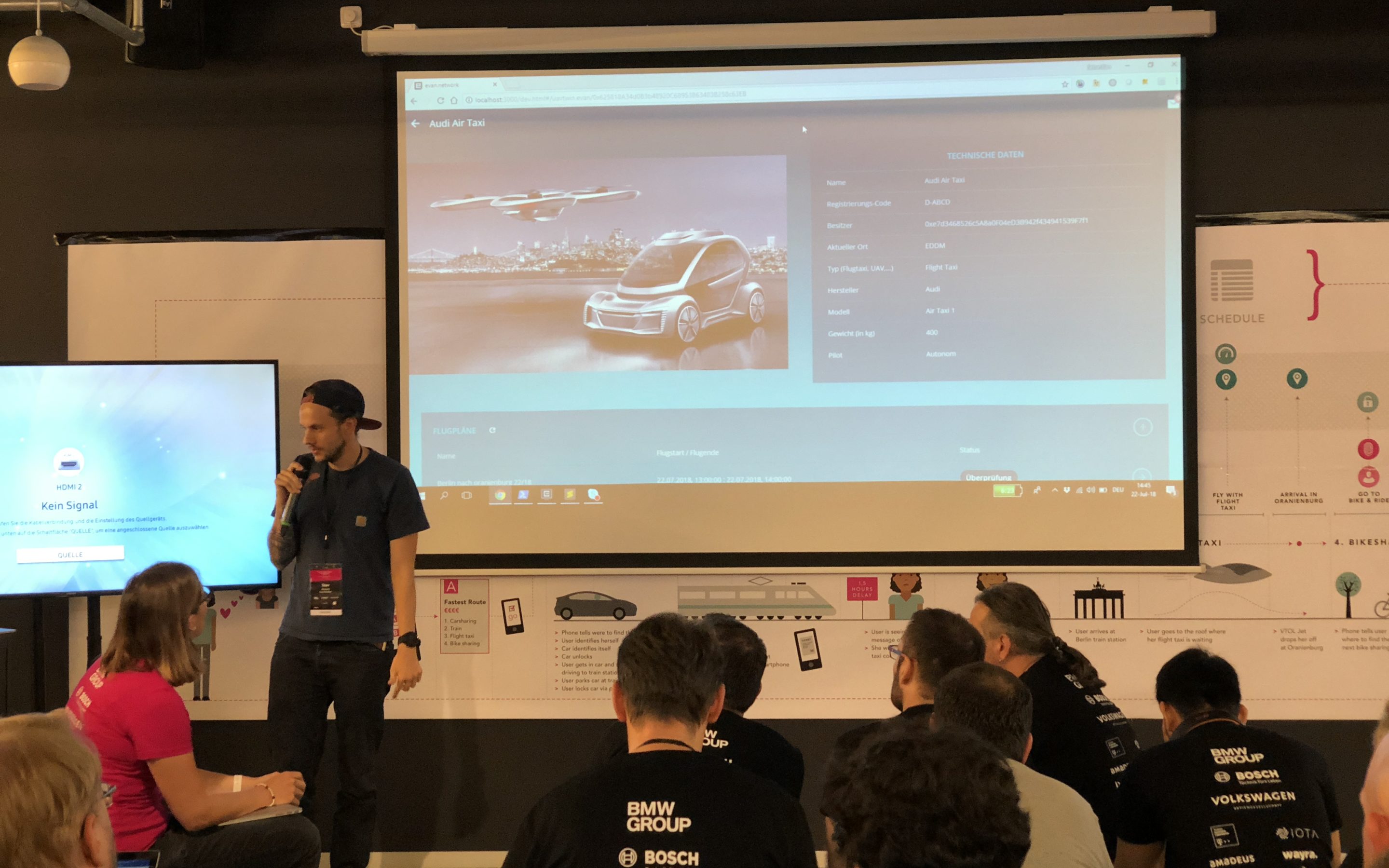
A: We wanted to develop a case in the field of autonomous urban air mobility, better known for example as the concept of air taxis. In order to implement such an autonomous mobility concept, you have to bring together different partners. Making an air taxi fly is actually a bit more complicated than sending an autonomous car into traffic. Because you need some very important permission before you are allowed to start.
There is, for example, the flight control that has to check all the details of your flight to make sure that there is no other vehicle on the same route. Or the weather forecast service telling you if the conditions are okay for your flight. In addition to the permits, there are also other stakeholders, who should be integrated into the process. What about the insurance company offering real time insurance conditions depending on how much passengers you have and how long your flight will take? Or the booking platform where everybody can book easily his flight in an air taxi? So, at the end, it just makes sense to involve all parties in smart contracts on blockchain to automate as much processes as possible. And this is what we did.
Q: What expertise and roles do your team members have?
A: In our team we were one designer and two backend developers with numerous experiences in blockchain projects.
Q: Which technologies do you use for which purposes?
A: Mainly we used all kind of Ethereum based smart contracts, to bring the different participants together on a decentralized network. To get real time data of the air taxi we used the data streaming technology of IOTA. In our case, we created a process that opens a new data stream automatically in the moment in which the air taxi starts. From this point on we push the data stream in our Ethereum based smart contracts. To show the connection between IOTA and Ethereum, we used the data of the battery of the air taxi. The battery will be a very critical point for every autonomous process in the future. Because, while the air taxi is flying, the partners around, like for example the market places where you can book your air taxi, need the information when the air taxi will be available again for the next flight. And that is highly depended on the current status of the battery. So, to know in advance how long the air taxi has to charge after the flight before it can go back in the air, you need real time information about the battery condition.
Q: How do you plan to proceed with your project?
A: We will use the developed demo to show, what type of use cases you can implement at evan.network.
An open IOT messaging service based on IOTA for nearby vehicles and infrastructure to communicate.
Q: What problem does your project solve?
A:Currently there is no broadly used method for smart infrastructure and vehicles from different manufacturers to communicate hindering progress in smart traffic management, accident avoidance and autonomous driving.
Q: What expertise and roles do your team members have?
A: Designer, Business Practitioner, Back- End Developers, Front End Developer
Q: Which technologies do you use for which purposes?
A: IOTA as the distributed ledger for recording the messages, Javascript services for messaging clients, Vue JS and UIkit for the demonstrator interface.
Q: How do you plan to proceed with your project?
Tricky question. Still thinking about that. We got really positive feedback even though we did not win.
Location detection with full privacy on Blockchain.
Q: What problem does your project solve?
A:All data in Blockchain open, so personal data (e.g. location data) can’t be stored on blockchain. With homomorphic encryption the data are computably stored on blockchain.
Q: What expertise and roles do your team members have?
A: Back-End Developer, App-Developer, Business Innovation
Q: Which technologies do you use for which purposes?