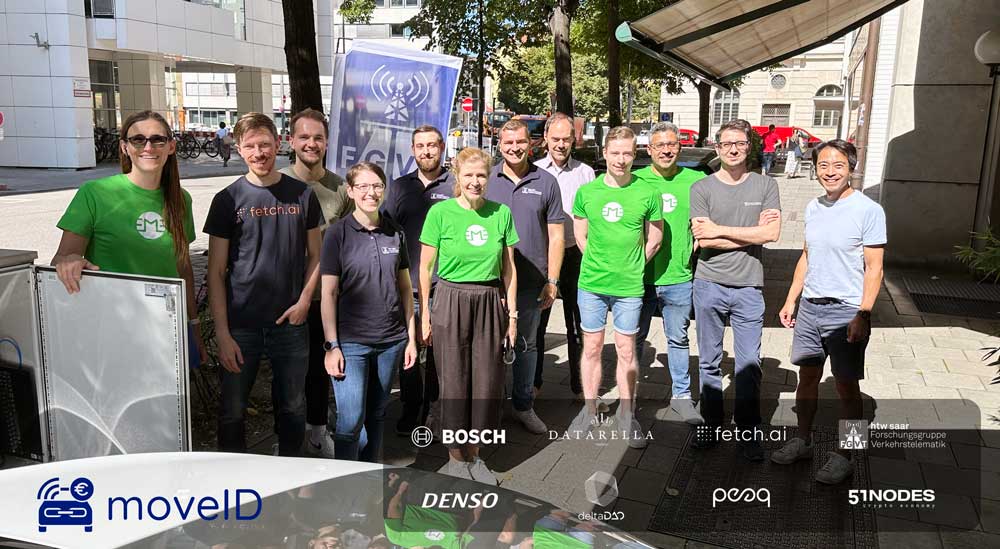
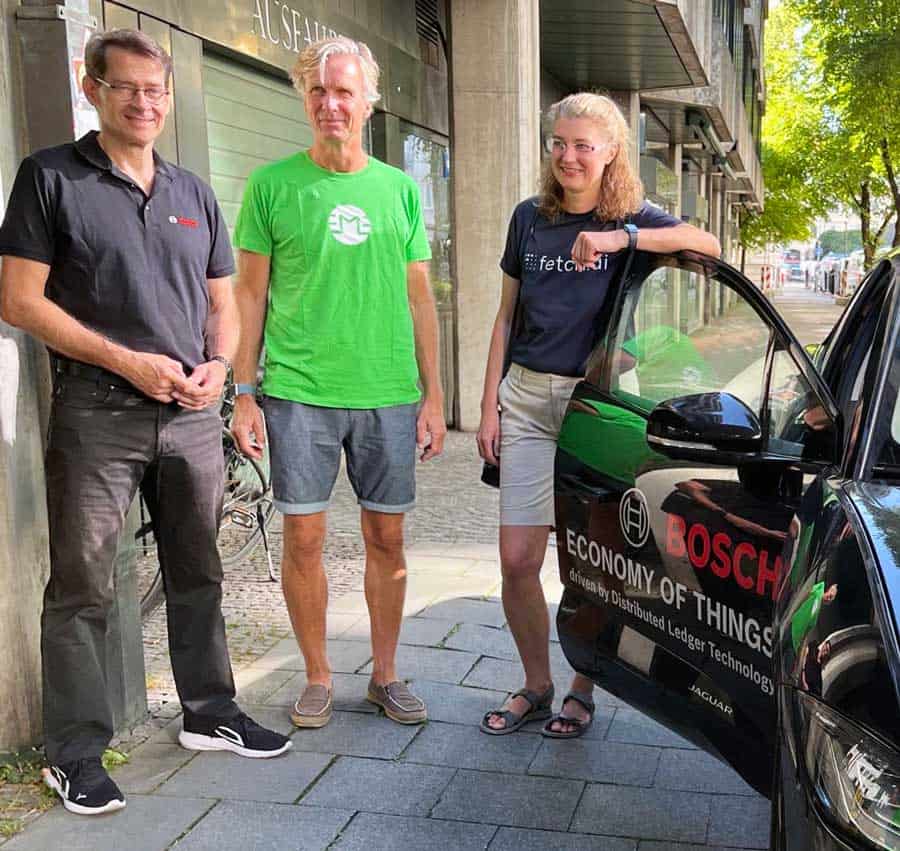
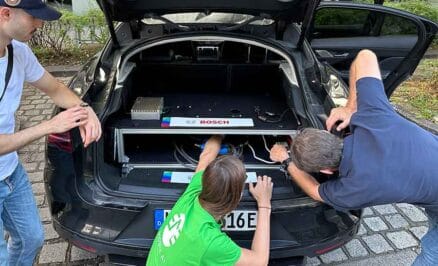
After three years of intense collaboration, innovation, and field testing, the moveID project—part of the Gaia‑X 4 Future Mobility initiative—has made significant strides toward redefining how mobility ecosystems work. At its core, moveID aimed to create a decentralized, user-centric infrastructure where vehicles, infrastructure, and service providers interact seamlessly using Self-sovereign Identity (SSI) and AI agents.
Building the Foundation for Trusted Machine Communication
Working alongside industry leaders such as Bosch, Airbus, Continental, and leading Web3 projects, we contributed to building the technical and conceptual foundation for trusted machine-to-machine communication in the mobility sector. This included the secure exchange of credentials, decentralized data marketplaces, and AI-powered autonomous service interactions—all compliant with European data and privacy standards.
Demonstrating Real-World Impact: MOBIX Park & Charge
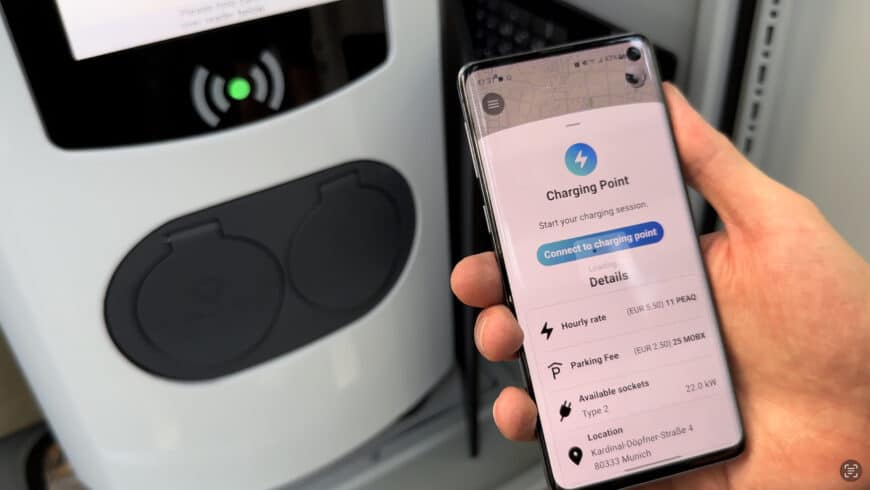
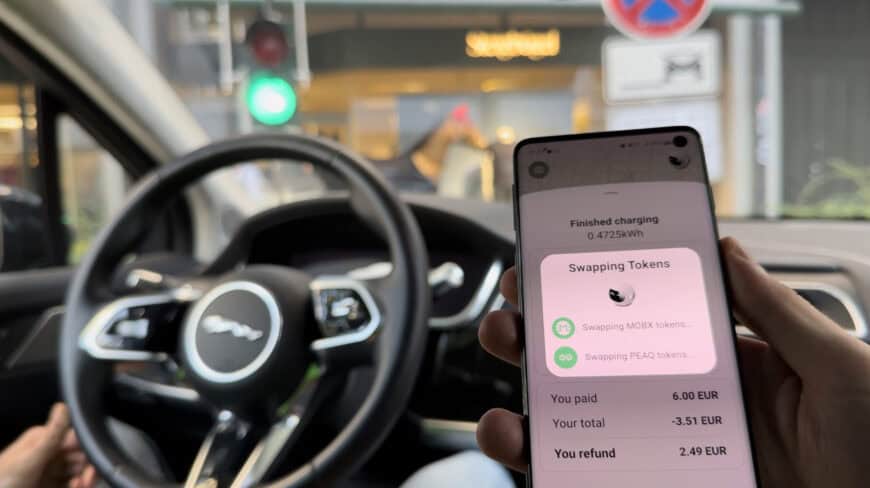
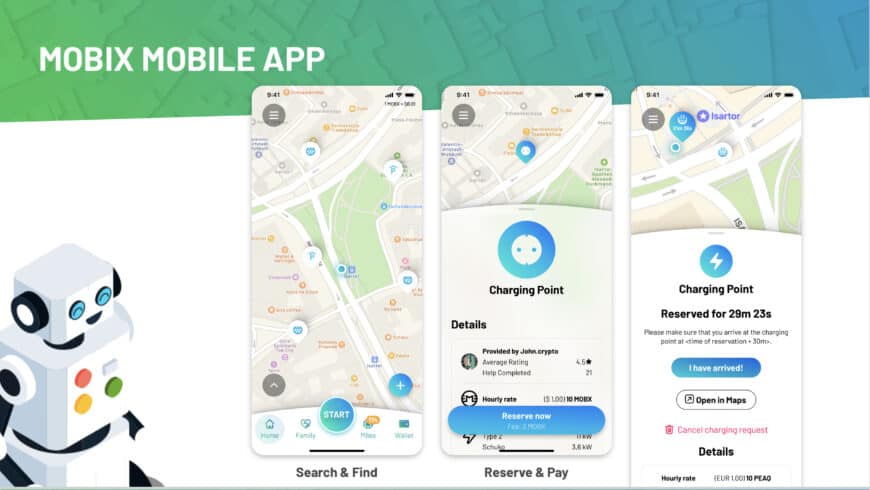
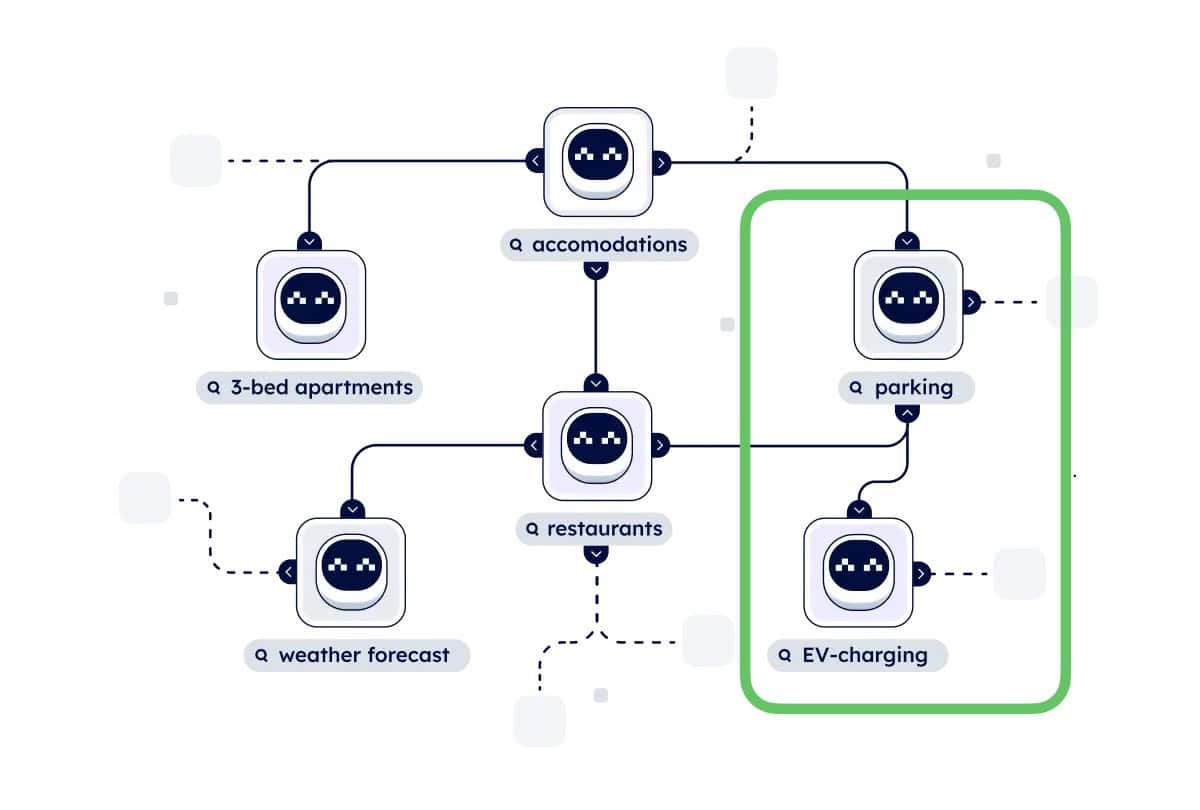
A standout achievement was the development and public demonstration of MOBIX Park & Charge, a fully operational system enabling electric vehicles (EV) to autonomously find parking spots, access charging stations, and handle payments. First showcased at IAA Mobility 2023, the system integrated SSI, blockchain-based payments, and AI agents in a live, real-world environment.
Scaling Toward Smart Cities
Beyond the demo, MOBIX has evolved into a scalable smart-city solution. By turning private EV chargers and parking spots into publicly accessible assets, we’re addressing key challenges in urban congestion and infrastructure scalability, while opening up new economic opportunities for individuals and municipalities.
Where Web3 Meets AI
The project also served as a powerful example of the convergence between AI and Web3. By combining intelligent agents with decentralized infrastructure, we demonstrated how machines can not only interact but also negotiate, transact, and self-optimize—laying the groundwork for more ethical and transparent digital ecosystems.
A Foundation for the Future
In sum, moveID wasn’t just about mobility. It showcased how decentralized identity, autonomous agents, and AI can reshape how devices, services, and users interact—not just in cities, but across industries. As the project concludes, its outcomes provide a strong foundation for future applications in smart infrastructure, data sovereignty, and the broader digital economy.
Datarella’s Blockchain Solutions for Supply Chain Management: Streamlining CSDDD Compliance
Datarella has been at the forefront of deploying blockchain solutions for supply chain management. The introduction of the European Union’s Corporate Supply Chain Due Diligence Directive (CSDDD, or CS3D) presents a significant regulatory milestone. This article examines the directive’s implications and showcases how Datarella’s blockchain technology offers a streamlined path to compliance for businesses.
What is the EU Corporate Supply Chain Due Diligence Directive (CSDDD)?
The CSDDD is a critical component of the EU’s strategy to enhance supply chain sustainability and ethics. It mandates companies to actively prevent human rights and environmental abuses within their supply chains. The directive sets forth a phased compliance timeline, with larger corporations facing earlier deadlines. By 2028, entities with over 1,000 employees and a net worldwide turnover exceeding 450 million EUR must adhere to the directive. Non-compliance penalties could reach up to 5% of global turnover.
Navigating CSDDD Compliance with Blockchain Technology
Many companies are uncertain about how to address these new requirements. The answer lies in robust reporting, backed by verifiable data. Traditional compliance methods might overwhelm businesses with paperwork and lead to inefficiencies. However, blockchain technology presents a solution: by digitizing and securely logging every transaction and document in the supply chain, blockchain can simplify the compliance process.
How Blockchain Simplifies Compliance
Unlike traditional methods reliant on paperwork, blockchain ensures secure, transparent tracking of transactions. This technology can reduce the compliance burden by offering secure data storage and easy accessibility. Since records on the blockchain cannot be modified, it ensures data integrity and accurate documentation for compliance purposes. Integrating blockchain with digital identity solutions like the vLEI and the EU Digital Identity Regulation further strengthens this process. Companies can easily verify responsibilities and transactions, making blockchain an essential tool for CSDDD compliance.
Datarella’s Expertise in Blockchain for Supply Chain Management
Datarella has an impressive track record in implementing blockchain solutions to address complex supply chain challenges. From facilitating blockchain-based document handovers in humanitarian contexts to ensuring the integrity of 3D-printed parts for global suppliers, Datarella’s innovative projects demonstrate our expertise. Our involvement in initiatives like the Gaia-X consortia (ESCOM and Cosmic-X) and the European Space Agency’s Track & Trust initiative shows our commitment to advancing blockchain technology for supply chain management.
Partnering with Datarella for CSDDD Compliance
As the EU moves toward greater supply chain accountability, partnering with Datarella can help businesses navigate the complexities of CSDDD compliance. With our blockchain solutions, we not only help companies meet regulatory requirements but also drive efficiency and transparency. Choosing Datarella means collaborating with a leader in blockchain innovation, ready to transform today’s challenges into tomorrow’s successes.
The Future of Supply Chain Management with Blockchain
The CSDDD represents a pivotal shift towards responsible supply chain practices within the EU. For companies aiming to align with these new regulations, Datarella’s blockchain solutions offer a practical and efficient path to compliance. As the regulatory and business landscapes evolve, Datarella remains dedicated to empowering companies with the technology and expertise they need to thrive in this new era of supply chain management.
Interested in simplifying your CSDDD compliance with blockchain technology? Contact us to learn more.
Datarella GmbH, a Web3 company builder, is joining forces with deltaDAO AG, a Web3 engineering and integration company, to expand the open data economy in the mobility and identity sectors. Both companies leverage their extensive experience in creating Web3 solutions for real-world use cases. The partners aim to allow corporate and individual users to monetize data while preserving their privacy. The first project is inspired by the partners’ collaboration in moveID, a Gaia-X 4 Future Mobility project. It will allow the monetization of mobility service provider data.
Datarella and deltaDAO will use their enterprise Web3 tools and consumer apps to jointly build solutions for the monetization of data featuring Fetch.AI and Ocean Protocol technologies. This combined tech stack serves as the foundational underlying protocol for digital business transformation with converging technologies, s.a. AI, and autonomous machines. Given the natural synergies between Datarella and deltaDAO, this cooperation will drive enterprise adoption across the partners’ client bases.
For Datarella, the purpose of technology is to increase the quality of living, by supporting human beings in professional activities and private lifestyles. The growing complexity and diversity of our ecosystem require technological infrastructures that facilitate collaboration and cooperation. By creating Web3 solutions for a global user base, Datarella illustrates the real-world benefits of its Web3 technology stack, and with deltaDAO, we will show how individual and professional users can turn the table and monetize their data, instead of “being the product”, .
Michael Reuter, CEO of Datarella
deltaDAO has become a trusted advisor for building sovereign, privacy-preserving, and secure data economy solutions. We seek to give freedom of choice and control back to data owners. As a DAO we create a new kind of data economy that is owned by no one – and open to everyone. Our partnership with Datarella will lead to many impactful real-world use cases and is a great example of how two companies can leverage each other’s strengths and experience to create real-world solutions for both individual and professional users alike. We are excited about building towards a decentralized data economy together with Datarella!
Frederic Schwill, Co–Founder of deltaDAO
About Datarella
Datarella GmbH is a Web3 company builder. Leveraging its technology stack of Blockchains, Self-Sovereign Identity SSI, Autonomous Agents, and Artificial Intelligence AI, as the tech hub for Web3 projects and companies like MOBIX, MOBIX family, IMMOBIX, or NOMIX, Datarella creates applications with real-world benefits. The Munich-based company was founded in 2013. With its decentralized teams in Munich, Gdansk (Poland), and Skopje (North Macedonia), Datarella develops bespoke Web3 innovations for their partners and clients, s.a. United Nations, World Food Programme, UKAid, ESA, Siemens, BMW, BOSCH, and Airbus.
About deltaDAO
deltaDAO AG is a software development, integration, and consulting company based in Hamburg, Germany. Its focus is to enable a transparent, secure, and decentralized data economy in which enterprises, SMEs, and public institutions can keep full technical control over their private data. As specialists in distributed ledger technologies (DLT) we are engaged in Gaia-X and built the first Minimal Viable Gaia-X (https://minimal-gaia-x.eu/) in 2021, based on open-source software and Web3 technology.
As one of the selected parties in the current eSSIF program, Datarella aims to bring Anoncreds based on CL-Signatures to the Aries Framework Go. In this blogpost, we provide a progress report on the Aries Bridge from the project we are working on in the eSSIF-Lab and where we are heading next.
There are currently two major types of Verifiable Credentials used in the SSI world that implement different cryptography schemes and have different capabilities. However, both are perfectly fine to implement working SSI use cases.
The first type is based on the “Camenisch-Lysyanskaya ZKP” signature scheme, or short CL-Signatures, to issue so-called Anoncreds. It is used in SSI projects that implement Hyperledger Indy, a DLT with an SDK that was created specifically for SSI use cases and with support of the Aries Protocol. The popular Aries Cloud Agent Python is implementing these kinds of Verifiable Credentials and therefore a lot of existing SSI use cases are using Anoncreds.
The second type are JSON-LD credentials which is recommended as a standard by the W3C. It comes from an ledger independent approach and relies more on semantics which allow for a broader ecosystem interoperability. This approach is preferred among the Aries Framework Go ecosystem.
One major problem is that these two types of Verifiable Credentials are not compatible with each other as they are using different cryptography determined by the ecosystem they are residing in. Therefore, Datarella aims to make Anoncreds available to the Aries Framework Go to get the best of both worlds. This allows for deploying agents on non-mobile edge devices while being compatible with solutions built on the Aries Cloud Agent Python or Hyperledger Indy, respectively.
We decided to write a wrapper of the indy-credx library in Go. This allows us to call the indy-credx functions for credential management from a Go environment, such as a vehicle or a mobile device. Our pull request was successfully merged in the shared rust libraries and is now openly accessible by others. However, this was just the first step. In the next step, we will integrate the wrapper with the Aries Framework Go to simplify the integration from that side.
Stay tuned for when we are giving a progress report on the Aries Bridge again in our News section; e.g. leveraging it for the mobility space in our moveID Gaia-X project.
This project has received funding from the European Union’s Horizon 2020 research and innovation programme within the framework of the eSSIF-Lab Project funded under grant agreement No 871932.
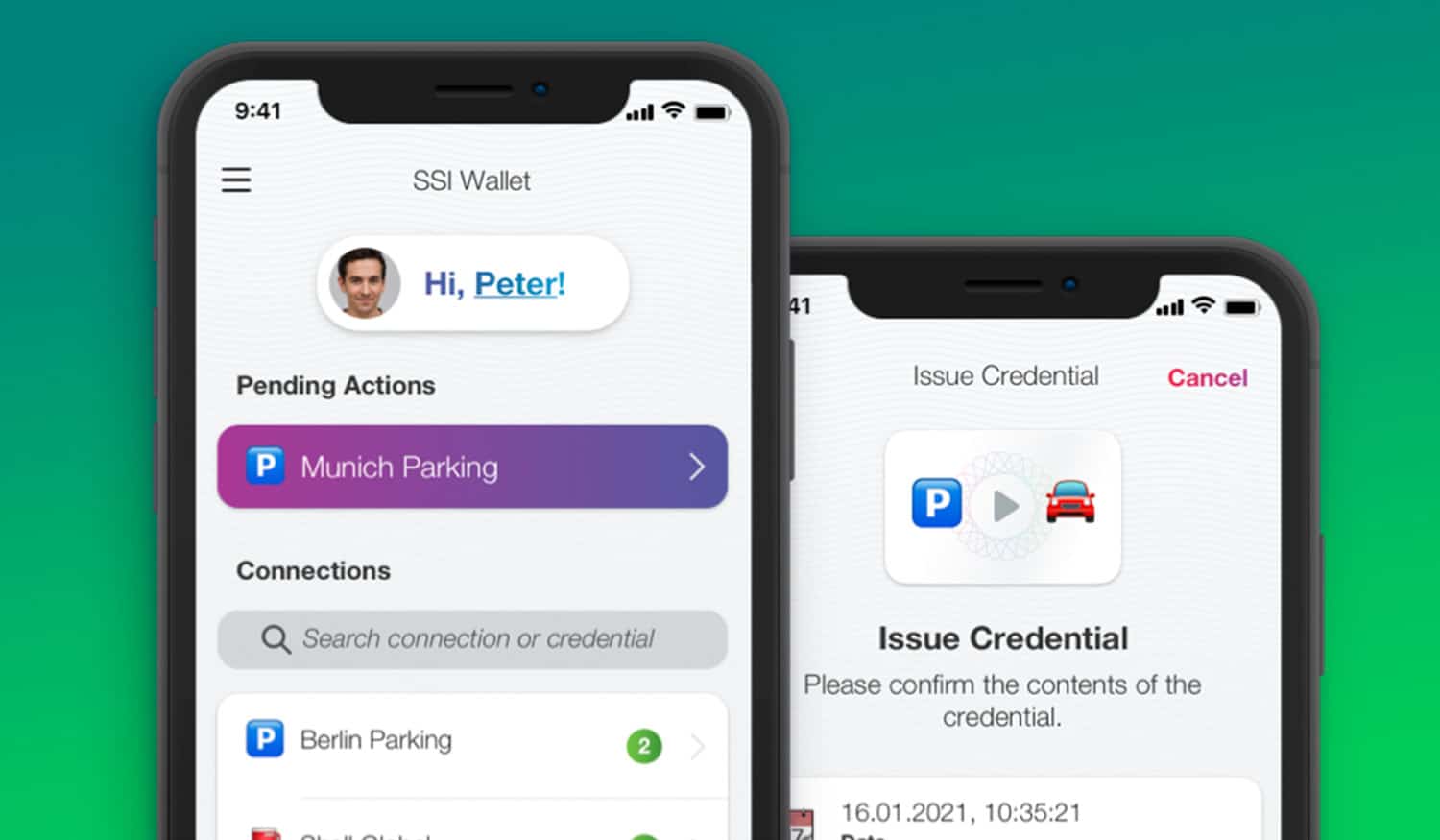
Datarella is offering its customers state-of-the-art Self-Sovereign Identity infrastructure with its SSI Wallet for innovative identity management. It can be integrated into new or existing ecosystems and provide fundamental decentralized identity infrastructure for users to authenticate, issue and receive Verifiable Credentials or transfer data. This allows for many innovative use cases like credential-based access management, automatic credential verification or trusted data transfer.
The Wallet
Having full control over an own digital identity is one of the fundamental principles for Self-Sovereign Identities. This includes that private keys and verifiable credentials are not stored on a centralized exchange or platform, but on the user’s very own devices in a decentralized manner. From this device, the user can issue or receive credentials and authenticate themselves by connecting with other SSI agents.
Like in the physical world where an identity is represented by an ID document which is often kept in a physical wallet, digital private keys and verifiable credentials are stored in a digital wallet. From here, the user can decide with whom the user interacts and shares information from its wallet. The user can ensure that private information is stored only on authorized devices and not in centralized databases which reduces the risk of data breaches tremendously. A wallet can have various forms, a browser extension, a hardware wallet or an entire app like Datarella’s SSI Wallet.
Technology
The SSI Wallet is meant to be deployed in ecosystems that allow users to interact with each other, with SSI compatible websites and IoT edge devices like micromobility vehicles. This is enabled by the Aries Framework Go, which supports a broad variety of edge- and cloud environments.
The wallet further provides a high level of privacy as it natively supports did:peer methods which creates pairwise pseudonymous DIDs for each individual connection and therefore avoids correlation by design. Even though did:peer does not require a ledger, the Aries-Framework Go supports public DID methods like did:web or DIF’s Sidetree protocol. It further allows selective disclosure of credentials thanks to its support for BBS+ signatures. The SSI wallet is therefore perfectly suited for public adoption as well.
It will soon also contain SDKR – a decentralized key backup and recovery mechanism that allows you to backup and recover your secrets with only your official eID. No need to remember passwords or the location of your backups thanks to eIDAS and decentralized and opaque storage capabilities from StorJ.
Conclusion
With our SSI Wallet, we are confident to demonstrate the benefits of Self-Sovereign Identity perfectly in a privacy-preserving and intuitive manner. By using the Aries-Framework Go, we can ensure that it works on web applications and mobile solutions as well as on proprietary IoT devices either without a ledger entirely (only P2P) or by using did:web or the Sidetree protocol.
Datarella is joining forces with Ocean Protocol to expand the Open Data Economy. moveID, our first project will be under the umbrella of GAIA-X, the European Association for Data & Cloud, as part of the GAIA-X 4 Future Mobility Project, which aims at bringing cloud applications to autonomous & networked vehicles.
The project’s overall goal will be the creation of a decentralized ecosystem of data & services that allows autonomous & networked vehicles to integrate into smart infrastructures and third-party services, following GAIA-X’s design principles. With mutual trust as its core concept, its stated goal will be achieving data sovereignty.
For Datarella, technology is an instrument to increase the quality of living, by supporting human beings in all kinds of professional and private activities. The growing complexity and diversity of our ecosystem require technological infrastructures that facilitate collaboration and cooperation. By planning, developing and implementing blockchain solutions worldwide, Datarella meets this requirement: in the fields of Finance, Supply Chain, and Mobility, we enable industry participants to join forces and create sustainable, crisis-proof business models. GAIA-X is the perfect environment for true collaboration. – Michael Reuter, CEO of Datarella
Data generated by network actors or Autonomous Economic Agents (AEAs) in the ecosystem can be useful to 3rd parties, and thus has value as an asset. Ocean Market unlocks the value of these by enabling every authenticated user to put their data up for sale and to monetize it. Vehicle data, for example, could be (re)used for traffic analysis for the generation of better traffic models such as optimized traffic light switching.
Different market actors will price data differently, depending on the method of data generation, data quality, and its utility to the potential buyer. Ocean Market allows for dynamic pricing and thus for optimal value generation for data generators and data curators, in a privacy-preserving manner.
This project will use Datarella’s Enterprise Blockchain Solutions, which serve as the foundational, underlying protocol for digital business transformation with converging technologies such as AI and autonomous machines. Datarella’s future mobility solutions are fueled by blockchain technology, real-time decentralized data management, transparency and GDPR compliance. Given the natural synergies between Ocean and Datarella, this partnership is the first of many that will drive enterprise adoption of Ocean Protocol technology in Datarella’s client base.
Our mission is for data to be treated as an asset. By tapping into underutilized data from mobility IoT sensors, AI can uncover mobility patterns and optimize services / reduce waste. Machines can speak to each other and algorithms can make optimizations – all in real-time. Ocean can tokenize mobility data from devices, thereby creating an opportunity for these tokens to be used as instruments in DeFi projects. This is one of the many ways in which we enable data owners to share in the value their data creates. – Razvan Olteanu, COO of Ocean Protocol
Ocean Protocol is a Day 1 Member of GAIA-X Association AISBL, an international non-profit organisation established to achieve the GAIA-X project goals for the development of an efficient, competitive, secure and trustworthy federation of data infrastructure and service providers for Europe – fostering digital sovereignty of European cloud service users.
—-
About Ocean Protocol Ocean Protocol’s mission is to kickstart a Web3 Data Economy that reaches the world, giving power back to data owners and enabling people to capture value from data to better our world. Data is a new asset class; Ocean Protocol unlocks its value. Data owners and consumers use the Ocean Market app to publish, discover, and consume data assets in a secure, privacy-preserving fashion. Ocean datatokens turn data into data assets. This enables data wallets, data exchanges, and data co-ops by leveraging crypto wallets, exchanges, and other DeFi tools. Projects use Ocean libraries and OCEAN in their own apps to help drive the Web3 Data Economy. The Ocean token is used to stake on data, to govern Ocean Protocol’s community funding, and to buy & sell data. Its supply is disbursed over time to drive near-term growth and long-term sustainability. OCEAN is designed to increase with a rise in usage volume.
We are happy to announce that Datarella is now an Associate Partner of the IDunion consortium. As an established blockchain solution provider Datarella adds expertise in blockchain development, system design and identity management.
IDunion develops a basic infrastructure for the verification of identity data. For this purpose, a distributed database will be jointly operated by a European cooperative. The network will be set up and managed by various actors consisting of private companies, associations, cooperatives, government institutions, educational institutions and other legal entities.
IDunion’s infrastructure is based on open standards and open source technology for Self-Sovereign Identity (SSI) and is particularly characterized by data economy and transparency. The solution gives users the opportunity to manage their identity information themselves and to decide when and with whom they want to share it.
Today, the long-awaited Covid-19 tracing app will be released in Germany, which should help to detect infection chains and warn potentially infected people that they were in contact with someone infected with the virus at some point recently. The decentralized approach of the app raises some questions: Are there parallels to the concept of Self-Sovereign Identity? And if so, are we witnessing the first broadly useable application for SSI in Germany? I will face these questions in this blog post.
Even though the app is already delayed, as it was promised to be released almost two months earlier, it still comes at the right time since life in Germany is getting back to normal again. The app was released in Germany so long after other countries due to many reasons, one of them being privacy. There should be no possibility that this app holds any form of personal information for anything beyond its actual purpose. In fact, the developed app is overall pretty solid. It respects the users’ privacy, it is simple to use, and no central institution has too much control over the data. Let’s analyze some criteria from an SSI point of view to determine if it is a self-sovereign identity:
Control
To begin with, we need to look at who has control over the identifiers. These are designed to be self-creating on the user’s device and frequently automatically changing. The user doesn’t have to create and register them manually. In fact, the user has no control over how the identifiers are being created or exchanged with others. Therefore, randomly created ids violate the principle of control over the identifier since the user does not influence it.
Forming of Connections
As the next criteria, I want to take a look at how connections are established. In the SSI ecosystem, connections with others are formed via the DID Auth protocol, which verifies that the user holds valid keys for a DID. In the tracing app, this is done via Bluetooth. The device automatically recognizes other devices in Bluetooth-range and stores their ID, timestamp, and signal-strength for 14 days. If an infected person was later identified, all the IDs would be sent to a central server from which the user’s devices are frequently polling. If the IDs match up, the app warns the user that he or she might be infected. This is also contrary to an SSI approach were connections are formed with explicit consent, and exists for as long as one party terminates the connection.
Even though more criteria help to determine if the tracing app is a Self-Sovereign Identity, it is already clear that it is not a Self-Sovereign Identity, even if it is much closer than a centralized approach. However, it would be possible to align it more with SSI principles.
Tracing App with Blockchain Integration?
Let’s say the user downloads an app that has the functionality of creating compatible key pairs for an underlying blockchain or DLT. These would also not be human-readable and would further allow interactions with the underlying blockchain. If a person was diagnosed with Covid-19, the device could perform a transaction to the ledger and its IDs would be stored in a central revocation registry that the devices pull from. Therefore, there would be no need for a centralized server that is run by a single institution. Using a blockchain here would bring some benefits as well as it could work across borders and probably for less than what SAP and T-Systems, a subsidiary from the Deutsche Telekom, charge.
In short, I hope that this app has the most success and that people will use it to combat this pandemic and end it as soon as possible. I further hope that decentralized approaches, where the privacy of the user is the main priority, are becoming more popular and allows people to see that we don’t always have to provide sensitive personal information to anyone that offers an online service. And last but not least, I hope to see more people are aware of the benefits of Self-Sovereign Identity so that its public adoption is achieved earlier than expected. The concept of this app is a step in the right direction, and I hope there will be more to come!
Do you want to know more about Self-Sovereign Identity? Read my series, watch a webinar I held recently, or contact me!
Last week, Martin Schäffner gave an introduction to blockchain-enabled Self-Sovereign Identity at the Crypto and Blockchain Meetup bdvb HG Bayreuth. Did you miss it? No problem! Re-watch his webinar on YouTube (link below).
Self-Sovereign Identity is a trending topic in the blockchain-scene. It aims to take away dependency on classic online identity providers such as Google, Facebook, or common online services that require to create an account to use it. This is achieved by letting the user create and manage its own identifiers through independently creating decentralized identifiers (DID), that don’t require a centralized institution. Information can be asserted to these identifiers by issuing Verifiable Credentials to the identity owner, which can then be presented with third parties in a privacy-preserving and fully automated manner.
In the webinar, Martin speaks about the differences between conventional online- and self-sovereign identities. He further introduces key elements in relation to Self-Sovereign Identity and reflects an overall picture of the SSI architecture and process flows for issuing and presenting verifiable credentials. He also gives an outlook on which use cases can benefit from implementing SSI.
Are you hooked? Watch it here again on YouTube:
For more content about Self-Sovereign Identity, I can recommend reading my series about Self-Sovereign Identity, starting with the first part.
Do you have questions about SSI or just want to leave feedback? Contact me!