by Martin Schäffner | 20 September 2019 | Blockchain
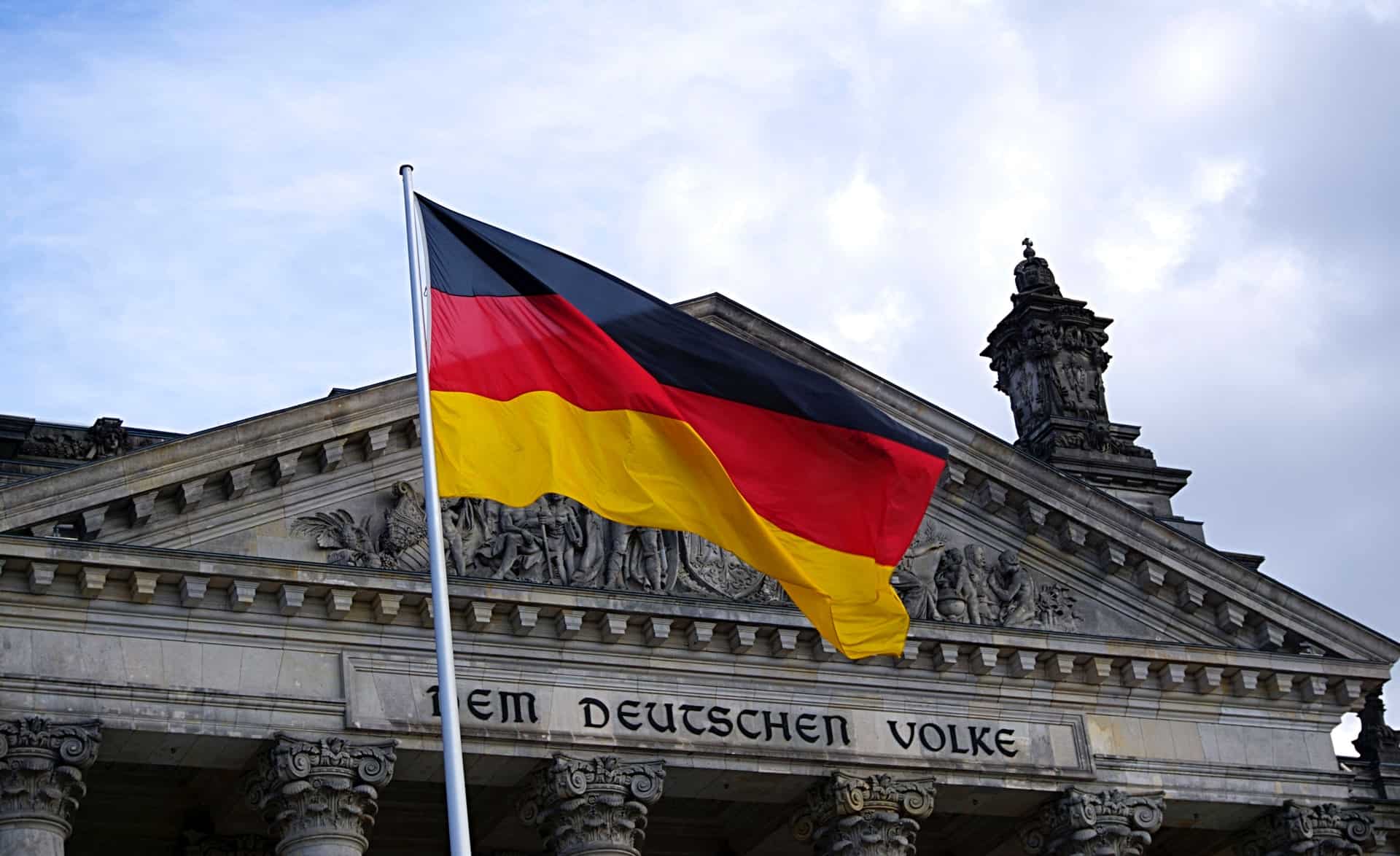
On 18 September 2019, the German government issued a 24-page strategy paper called “Blockchain-Strategie der Bundesregierung”, an official statement outlining the initiatives Germany together with other EU states plan to support Blockchain-technology. This paper was published shortly after the EU published its “Blockchain Now and Tomorrow” paper, which summarizes the EU initiatives regarding Blockchain application. It is worth mentioning, that the paper by Germany is much more extensive and specific when comparing both statements.
Blockchain is one of the most discussed technological topics within the German Cabinet. This is due to the fact that this technology will impact many different areas including economy, society, international trade and environment. The Cabinet states that Blockchain is “one of the technologies which is anticipated to have a profound impact over the next 10-15 years.”, mainly due to an increase of Blockchain activities within startups but also established companies. Therefore, the Germany government reached out to 168 prestigious experts with different backgrounds to elaborate the potential of Blockchain. The outcome of this initiative was the base for this strategy paper. The very good news is that in general the German government fully supports Blockchain technology. However, there are some limitations. The paper outlines that the Cabinet will not support private stablecoins as an alternative to sovereign currency. This implies that initiatives like Facebook’s Libra will be clearly blocked.
So, what are the key initiatives according to this paper?
Ensuring stability and stimulating innovation with Blockchain in the financial sector
The German Government plans to open German law for electronic securities as early as this year. In its first iteration, only digital bonds will be covered. If this turns well, electronic shares and investment funds on the Blockchain will be considered as a next step. The paper outlines “The regulation of electronic securities should be technology-neutral, so that future electronic value papers can also be issued on a Blockchain.”. That’s great, in particular for our new company RAAY Real Estate, which supports the issuance of digital tokens for the real estate industry.
Establishing a token exchange
The Cabinet will work on laws on the regulation for exchange for non-traditional securities, i.e. security tokens and cryptocurrencies. A new “BaFin” permit for exchanges will allow the trading of crypto-assets on German exchanges.
Enhancing and supporting Blockchain innovations
The German Government will promote and financially support Blockchain projects. As an example they plan to pilot a Blockchain-based energy system connected to a public database. Also, they mention that they will promote the testing of Blockchain-based verification of higher education certificates.
Applying Blockchain in digital ID
Germany will seriously explore the use of Blockchain for digital identity. Timing is unclear, but the Cabinet announced that they plan to explore the benefits of Blockchain in use cases like maintaining the records of civil status, document registration, passports and ID cards.
Blocking private stablecoins
The strategy paper clearly states that the German Government will not support the establishment of any private stablecoin to get dominance in the country, as well as in the EU.
Overall, the Blockchain strategy paper published by the German government clearly proves that Germany is very serious about becoming the leading state for Blockchain technology. Surprisingly, the paper is very extensive and covers a broad range starting from finance to industrial applications. According to CoinDesk, the German parliament member Thomas Heilmann stated: “The home of the emerging token economy will be in Germany, just as Silicon Valley became a hotspot for previous innovations.”
This is great to hear – let Germany become the Silicon Valley for Blockchain in Europe!
by Martin Schäffner | 1 August 2019 | Blockchain
We are proud to announce that Datarella, WERTGRUND and Hammer have established the Munich-based PropTech Joint Venture RAAY Real Estate. Our objective is to develop and sell blockchain-based products and services to the real estate industry.
RAAY Real Estate, a 33/33/33 Joint Venture between Datarella, WERTGRUND and Hammer is headquartered in Munich, Germany. Through this partnership, the three partners deliver innovative solutions for the European real estate market. Both WERTGRUND and Hammer are well-established and Munich-based real estate companies with strong financial backgrounds. We are starting the venture off with a tokenization product for one of our Joint Venture partners. RAAY Real Estate will design the token, build a platform for the sale of the tokens and add other products and services, allowing for new business models and streamlining complex inefficient processes in the real estate industry. RAAY Real Estate is legally supported by CMS, one of the leading commercial law firms in Germany.
We are very excited and proud to be part of this Joint Venture. We will keep you updated about the progress. Stay tuned!

About Wertgrund: WERTGRUND Immobilien AG is an investment and management company for residential real estate in Germany. WERTGRUND offers its institutional and private clients the entire range of services in the field of residential real estate – from investments through the accompanying of transactions and project development to asset management, property management, leasing, as well as privatization.
About Hammer: Hammer AG is a family-run property business based in Munich. Since 1951 the company is an active player in the development and management of commercial real estate within their own portfolio and for third party investors. As of to date, Hammer AG has ongoing developments with an investment volume of 1.2 billion euros and currently 220.000 m2 under management.
by Michael Reuter | 16 July 2018 | Blockchain
Blockchain is a foundational technology, an underlying technology layer for applications built on top of it, allowing them to share a joint database and a ledger. It provides realtime access to an immutable and consistent data set. Based on our experiences launching the Building Blocks project on behalf of the United Nation’s World Food Programme (WFP) in May 2017, we launched its RAAY project in early 2018.
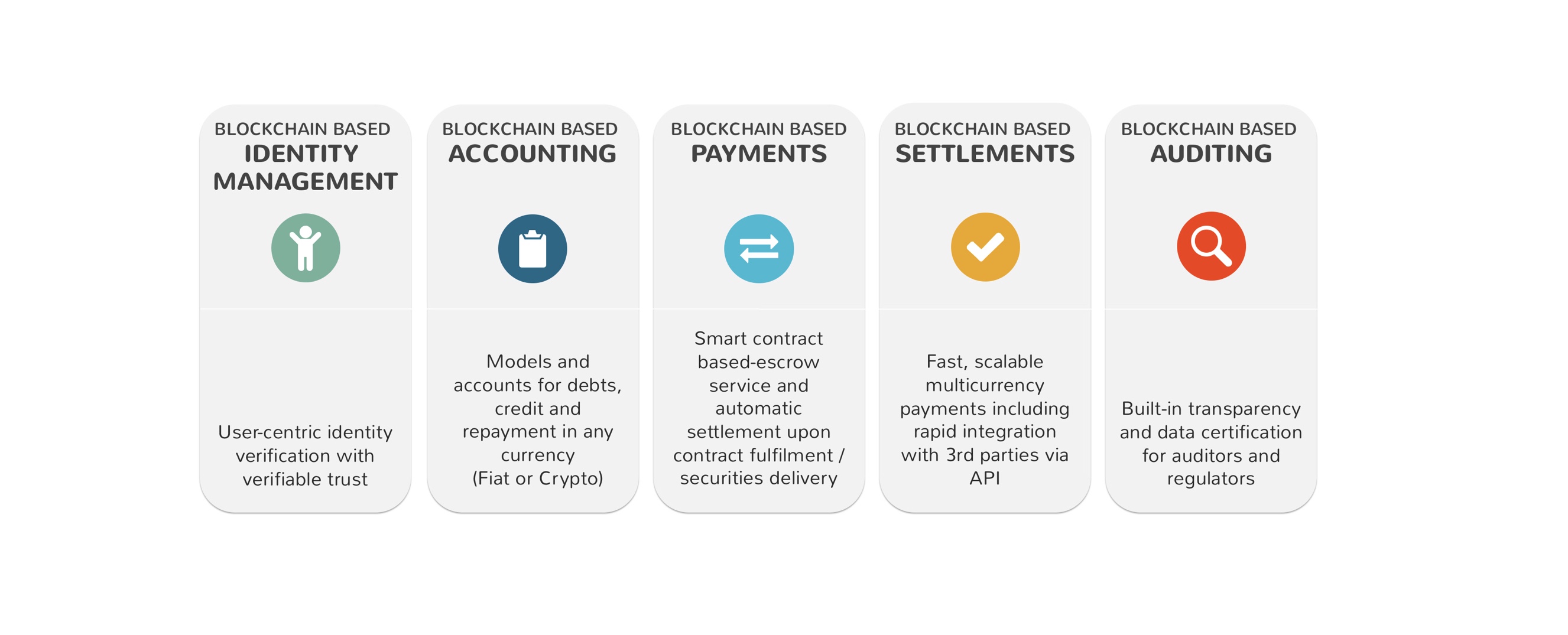
RAAY’s goal is to become a new operating system for banking. Since the finance industry hasn’t changed much during the last decades, and financial crises followed by new stern regulatory frameworks have made banking even harder, banks are faced with a multitude of challenges, from a degenerated trust to inflexible and overcharged IT infrastructures and processes. For the RAAY team, blockchain provides the ideal basis for renewing trust and making IT more efficient for banking. Therefore, RAAY has been working on a new operating system to enable players of the finance industry with a blockchain-based technology layer to build lean, efficient, trust-less applications on top of it.
RAAY is partnering with a German bank to create a blockchain-based token representing the ownership of a German real estate fund. The token is part of an immutable, trust-less and decentralised system built specifically for the new RAAY operating system for banking. The token and the auxiliary system achieves an improved model for ownership of real estate by applying blockchain technology, secure and scalable identification solutions and tried-and-tested account management software.
The token is characterised by a smart contract defining key functionality (transfers, rights, etc.) and listing properties (ownership, price, fund information, etc.). The token smart contract is linked to another smart contract which manages the different tokens and allows users to interact with various tokens in a simple way. Ownership of a token is proven by the possession of a private key. The corresponding public key is publicly listed in the smart contract. Building on the immutability and security of blockchain technology allows any token holder to prove ownership to anyone, in real-time, without doubt.
The auxiliary system contains three main components:
- Identification,
- Application for Tokens and
- Fund-Connection.
The Identification takes place according to applicable KYC-regulations with the addition of the creation of a blockchain identity, in effect a public-private key pair. The secret private key is much like a password and can be either downloaded to a secure offline-storage by the client or can be stored in a so-called cold wallet managed by a future RAAY-bank entity. If investment amounts exceed a certain limit, tokens are stored in a multi-signature wallet for additional security.
The Application for Tokens is a protocol for converting any type of funds (fiat or cryptocurrency) into tangible asset tokens. It requires an account with a depository bank for fiat currencies.
The Fund-Connection is the direct correspondence between existing tokens and shares of the fund in question. This ensures the validity of each claim that a token holder may have, on any ownership/access to dividends from the fund.
This is the first step in RAAY’s strategy to create the new operating system for banking. It is a needed use case that will be operational and reduce costs for the fund deploying it. By going stepwise from one application area to another, RAAY will build a modular and configurable OS for banking that removes inefficiencies regardless whether the partner is a fund, a bank or a fintech-company.
