News

Stay tuned with Datarella

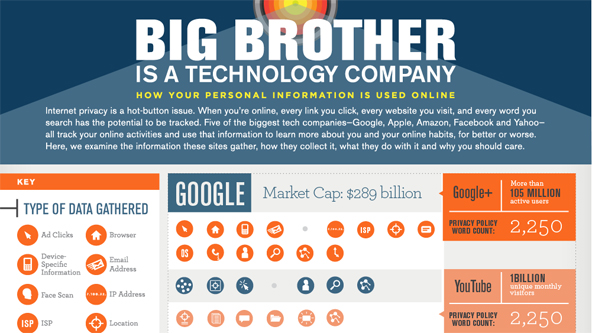
Was Google, Facebook, Yahoo, Amazon und Apple über Sie wissen

Was Google, Facebook, Yahoo, Amazon und Apple über Sie wissen

Seitdem das Wissen um das US-amerikanische Überwachungsprogramm PRISM in der amerikanischen Bevölkerung angekommen ist, fangen auch die Amerikaner an, sich ernsthafte Gedanken zum Thema Datenschutz zu machen. Welche Daten aber können die Techgiganten Google, Facebook,...

Big Data’s Top PE Investoren

Big Data’s Top PE Investoren

Ich habe mich schon lange gefragt, wer die aktivsten PE Investoren im Bereich Big Data sind und wie viel Kapital bereits von professionellen Investoren für diesen Bereich zur Verfügung gestellt wurden. In einem etwas älteren Beitrag aus März 2013 auf CN Insights wurde...

Open Data bei der UNO

Open Data bei der UNO

Die Vereinten Nationen haben unter http://esa.un.org/unpd/wpp/Excel-Data/Interpolated.htm ein Portal eröffnet, auf dem die Rohdaten und Analysen der Bevölkerungsstatistik für jedermann zum Download zur Verfügung stehen - ein wichtiger Schritt zu...

Daten kartographiert: iPhone dominiert deutsche Großstädte

Daten kartographiert: iPhone dominiert deutsche Großstädte

Gemeinsam mit Data Visualization Artist Eric Fischer hat das US-amerikanische Unternehmen MapBox eine Serie an interaktiven Karten veröffentlicht, welche auf der Nutzung von Twitter auf Smartphones basiert. Aus den Daten werden Smartphone-System und Standort zum...

Mobile Shopping – die unberührte Daten Goldmine

Mobile Shopping – die unberührte Daten Goldmine

44% aller Konsumenten nutzt das Smartphone beim Einkaufen, über ein Drittel für Preisvergleiche. Der Einfluss mobiler Suche auf den Konsum ist enorm: 90% aller Konsumenten geben an, dass die Suche übers Smartphone ihr Kaufverhalten beeinflusst. Während erste spontane...

Amerikanischer Einzelhandel unterstützt Data Analytics

Daten und Daten Analytics werden immer relevanter für den US Einzelhandel. Mehr als 50% des Einzelhandels nutzen Datenanalysen für operative Entscheidungen. Laut einer Studie der Wirtschaftsprüfungsgesellschaft KPMG über den amerikanischen Einzelhandel 2013 nutzen...

Human API – Quantified Self für jedermann

Human API – Quantified Self für jedermann

Self Quantifizier wissen es schon lange: nicht nur das Sammeln und Analysieren der eigenen Daten, sondern gerade das Teilen der Daten mit anderen bringt hohe Erkenntnisgewinne. Was zunächst für weniger technologisch-affine Menschen undenkbar ist - das Teilen privater...

Animated Data Visualization: Die Foursquare Timemachine

Animated Data Visualization: Die Foursquare Timemachine

Foursquare hat mit Unterstützung von Samsung die "Foursquare Timemachine" ins Leben gerufen: Eine animierte Infografik, welche die Check-In Historie von Foursquare Nutzern schön visualisiert. Dabei kommen folgende Daten ins Spiel: GPS Position Name der Location Foto...

Apples iOS 7 deutet auf Boom für tragbare Technologie hin

Apples iOS 7 deutet auf Boom für tragbare Technologie hin

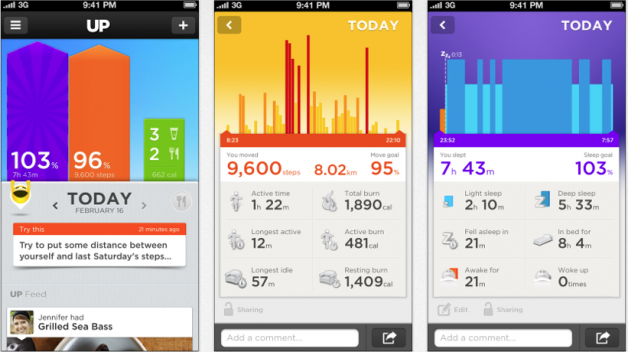
Wer Apples Keynote zur Entwicklerkonferenz WWDC mitverfolgt hat, der wird die vielfältigen Hinweise auf zukünftige Schnittstellen zu tragbarer Technologie im mobilen Betriebssystem iOS 7 bemerkt haben. Während bisher Gadgets wie das Nike Fuelband oder Jawbones Up...

Data Science – Die harte Realität

Derzeit wird viel über das interessante und spannende Leben eines Data Scientist bzw. Data Engineers geschrieben: scheinbar einer der gefragtesten Berufsbilder überhaupt: im Silicon Valley werden Traumgehälter bezahlt; alle reissen sich um die Datenwissenschaftler....

DATARELLA PREDICTION ENGINE

DATARELLA PREDICTION ENGINE

Datarella Prediction Engine Data provides researchers and companies with an in-depth view of aggregation states and the behavior of humans and things. In Big Data projects - as distinguished from classic market research - all data will be collected and stored...

WHO WE ARE

WHO WE ARE

DATARELLA - MAKING TECHNOLOGY SOCIALLY RELEVANT We think that technology should help to make the world a better place. Since this is a super challenging claim, we at Datarella drill it down to the individual - until we can meet that expectation: with our explore app,...

The State Of The Initial Coin Offering ICO

The State Of The Initial Coin Offering ICO

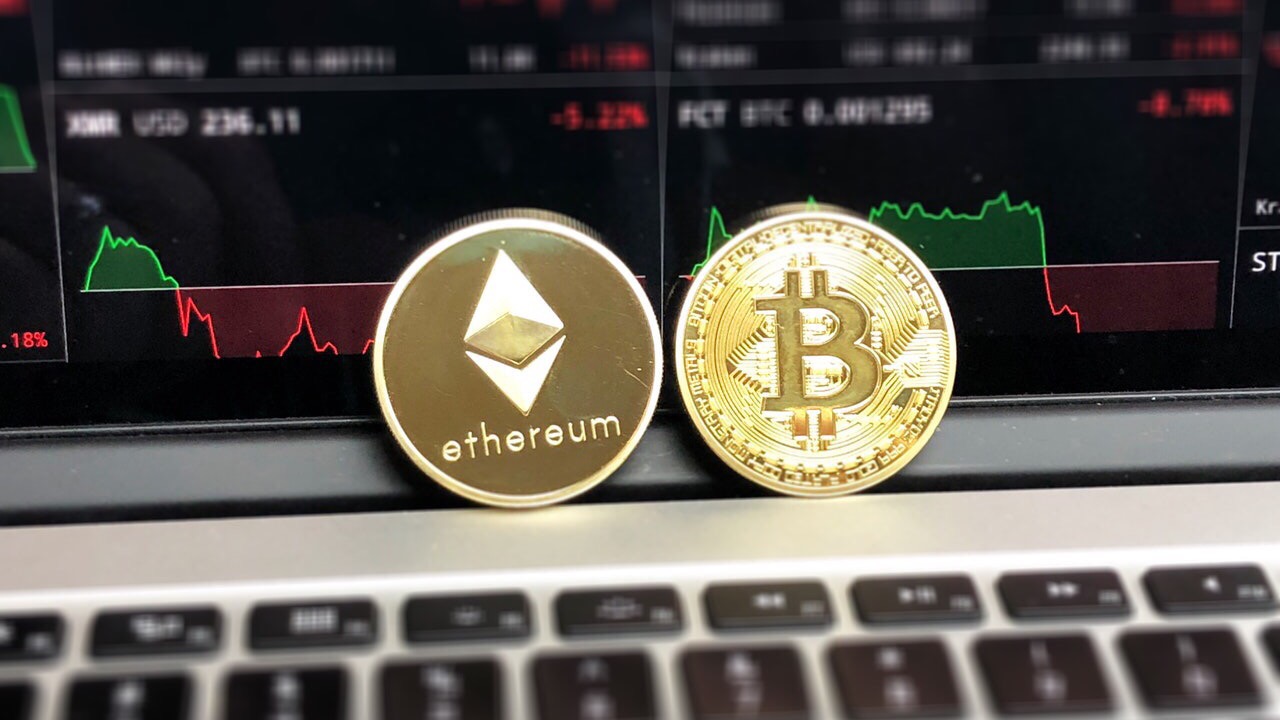
In our upcoming Ethereum Meetup we will discuss one of the hottest topics you can read about in the tech space: Initial Coin Offerings ICO, sometimes referred to as Initial Token Offerings ITOs or, more simply, as Token Sales.

In June 2017, blockchain project teams have raised more money through ICOs than through traditional venture capital firms. Has one of the key aspects of applied blockchains – the elimination of the middle-man – unexpectedly come upon the venture capital industry?

It might be too early to confirm this assumption but some VCs have supposedly decided not to wait any longer but to start using ICOs as an instrument to leverage their traditional businesses. Over at CrowdstartCapital, we have compiled a list of the world’s largest ICOs.

Jamie Burke, Dr. Nina Luise Siedler, Dr. Markus Kaulartz

In our meetup, we will approach the ICO from different perspectives, trying to get hold of this phenomenon:

  • Is an ICO the right moneyraising tool for your project?
  • What are the pitfalls of an ICO?

We are very happy to have one of the most prolific experts in the field of blockchain investing to present his perspective on ICOs: Jamie Burke, Founder and CEO of Outlier Ventures and Convergence VC. Jamie and bis team have analysed over 1,000 blockchain-related startups. He is quite critical when it comes to ICOs, That’s the reason we are very much looking forward to meeting Jamie on 25 July.

Right after Jamie introduced us to the actual ICO sphere, we are happy to have Dr. Nina Luise Siedler and Dr. Markus Kaulartz with their interactive take on the legal aspects of ICOs. Everybody has heard of Bitcoin and other crypographic coins or tokens, and most of us know what those are from a technical perspective. Markus and Nina will go beyond that and will explain what tokens are under applicable laws. They will give some practical insights to explain that there are different kinds of tokens which can be used for various business purposes. Depending on the kind of token, different regulatory frameworks apply to ICOs. Markus and Nina will share insights of what companies have to consider when running their own ICO.

We are very much looking forward to having exciting discussions! See you at our partner Deloitte’s  Munich offices on July, 25!

Blockchain Meetup 7: Building Blocks – A blockchain-based Payment and Accounting Solution for the United Nations‘ WFP

Blockchain Meetup 7: Building Blocks – A blockchain-based Payment and Accounting Solution for the United Nations‘ WFP

Together with a team of the World Food Program WFP, the Datarella team will showcase the Building Blocks project. And where to better discuss this exciting project than in WFP’s office in the heart of Munich?

What started with a Proof-of-Concept in Pakistan in early January this year, has been transformed in a fully functional Blockchain pilot being rolled out in Jordan in May, 2017. The Building Blocks project not only demonstrates the power and the impact of blockchain technology enhancing to potentially enhance the lives of millions but it is proof of the efficiency of a humanitarian agency, such as WFP.

(more…)

Medication Plans on The Blockchain – Building a Decentralised Application in Healthcare

Medication Plans on The Blockchain – Building a Decentralised Application in Healthcare

The theme of this post is easily generalised to other use cases and serves as an example of how blockchain technology can shift power and trust in a well-established system, in this case the one of health care.

TL;DR

Medical prescriptions should be unified and digitalised. They should be resilient and controlled by the real owner of the prescription (and thus of the personal data). This can be achieved by a blockchain-based solution. A system of smart contracts in Solidity is proposed which achieves this and furthermore is modular and update-able. Some general advice on designing a blockchain solution is given.

What’s the problem?

How many of you know what iatrogenic illness means? I confess that prior to writing my Master thesis upon which this post is based, I also had no idea. So, to not keep you waiting, here’s the definition from Merriam-Webster:

ioatrogenic: induced inadvertently by a physician or surgeon or by medical treatment or diagnostic procedures

from the Greek word for physician (iatros). Add an illness to that and you have an illness caused by a physician. Now, it sounds like an oxymoron, but it is in fact more common than we would of course like to be. You can divide the causes for iatrogenic illness into so-called Adverse Drug Events (ADE) and, to be completely MECE*, other reasons. Other reasons would include things such as rough examinations, surgical errors (there’s a reason they draw arrows on the limb to be amputated) and so on. ADE includes all injuries or complications caused be medication, be it the wrong medication, drugs interacting in unintended ways and so on. [1] ADE has shown to be the most common cause of injury to hospitalised patients, and furthermore, the most preventable one.

Where is the problem coming from?

In fact, computer-based prescribing systems have been shown to decrease medication errors by 55% to 80% in a study from 2004. [2] It does not, however guarantee that the most severe of those medication errors are prevented by the usage of an IT solution. Among ADE’s, the most common form of avoidable medication errors are prescribing errors (i.e. an error made somewhere in the process of getting a drug to a patient). There is a list of sixteen classes of these prescribing errors, but basically they boil down to:

  • Knowledge deficiencies – among doctors, patients or pharmacist about drugs, other parties, et c.
  • Mistakes or memory lapses – e.g. a patient forgets what medication he/she is already on
  • Name-related errors – complicated-sounding substance gets mistaken for other complicated-sounding substance
  • Transferring errors – information is missing or incorrect once the order arrives at the pharmacist
  • ID checks – patient, doctor or pharmacist ID isn’t properly verified
  • Illegible handwriting (!)
  • Wrong type of document filled out

These errors all illustrate why prescribing errors are so common, but also why they should, to a large extent, be avoidable. [3] The thing is that, considering the current rate of prescribing errors causing damage or danger to patients being relatively low (ca. 2% [2]), its importance is overshadowed by more clinical research in medicine and is thus being overlooked by the research community and public in general. One reason for this could be the wide-ranging competencies required to implement a system for decreasing the rate of prescribing errors to zero. To do such a thing, one would require technical expertise within security and privacy as well as all the various skills for application development, one would also require medical and pharmacological knowledge, and essentially, one would need to have experience within information systems management.

A step in the right (digital) direction

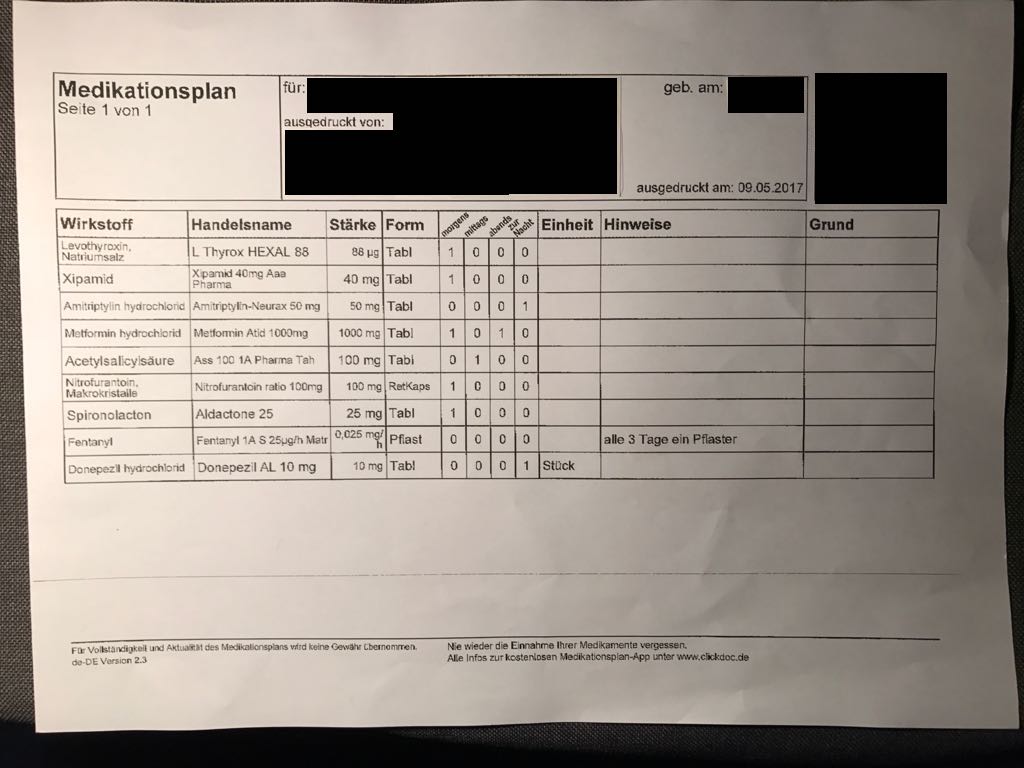
To combat prescribing errors, many public health systems require or recommend that patients with more than three different prescribed medications have a unified medication plan which should theoretically contain all prescriptions. The effectiveness and quality of medication plans was examined in 2015 by a group of German researchers. The results were scary. 6.5% of all medication plans examined did not contain discrepancies! Where discrepancies means differences in drug names, additional or missing drugs, deviations in dosage, et c. In spite of this, or perhaps to improve the quality of medication plans, a law was passed in Germany three months after the publication of the medication plan review, which makes it mandatory for all patients with three or more medications to have a medication plan. In order to cope with the slowness of technology adoption in healthcare, up until January 2018, there is no requirement that the medication plans should be digital. Thereafter they should be available on an electronic health card (eGK). [4]

Considering the different types of prescribing errors we’ve identified, it is not difficult to translate those into some type of requirements for a system to solve those errors. The resulting requirements happen to fit very well to a blockchain system with smart contracts, therefore we’ll propose a design of a system of smart contracts to function as medication plan. Let’s look at the errors one by one and explain which requirements fit to them:

Knowledge deficiencies

To resolve this error, data regarding patients and their medications needs to be unified, available and guaranteed correct. There shouldn’t be multiple versions with equal or uncertain amounts of validity. Additionally, there should be little chance of the data getting lost or not available when it is needed.

Mistakes or memory lapses

It is completely human and expectable that a patient taking many different medication can’t remember the details of complicated names of each substance. This can be solved, however, by the unification of medication plans and assurance that all prescriptions are correct and active.

Name-related errors

See point Knowledge deficiencies.

Transferring errors

Through the unification of the various systems available currently, the process of transferring prescriptions would be simplified.

ID checks

Through the digitalisation and implementation of a permissions management system patients would only need some type of identification (could be biometric) to collect their medication.

Illegible handwriting

Assuming the doctor enters the prescription into a digital system and doesn’t write with pen and paper, this problem is practically eliminated.

Wrong type of document filled out

Again, through the unification of the different possibilities to prescribe a medication, there would be no such things as the wrong type of document. At least not inside the system.

Design choices in the solution

So what are the technical details one needs to consider when designing a blockchain-based system for a medication plan? I’ll describe the three most important design choices in this blog post. The three questions are:

  • Who needs to participate in the network?

In this case, the only users are doctors, patients and pharmacies. So to not take on additional risk regarding data exposure, only those who are on-boarded and verified through some separate process should be allowed to participate in the network. There are however some negative aspects of choosing a private or permissioned blockchain, one point being that there might not be enough active nodes to keep the consensus building at an acceptable fault-tolerance level at all times. This can be solve by some type of incentive or requirement that for example doctors keep a running node at all times. Another risk of running a private blockchain is that, when the amount of nodes isn’t very large, and the users consists of a specific group of people (such as doctors in Germany), then the risk of collusion becomes considerable. To combat this, the consensus-making should be well-spread geographically and demographically.

  • What data and functions need to be on the blockchain and what should definitely not be there?

In the case of a medication plan, the data which is required to be on the blockchain consists of three parts; user IDs, prescriptions and doctor/pharmacy permissions to prescribe/sell medications. Naturally, we can’t have plaintext information about patients and their prescriptions, even if it is a private network. Therefore, IDs are formed from a public/private key-pair (similar to bitcoin or ethereum), which should be generated by the user, on a user device. Prescriptions are only ever published on the blockchain as hashes, because even though the users theoretically are anonymous, it has been shown that Bitcoin transactions can be traced back to a person. [5] The permissions of doctors and pharmacies also need to be stored on the blockchain, in a smart contract to ensure that they aren’t manipulated or somehow overruled. Including permissions and sensitive data in smart contract means that extreme caution needs to be taken when programming them, to ensure that no syntactic or logical mistakes are made. The functionality needed on the blockchain is basically complimentary to the data pieces, getters and setters. But additionally, permissions needs to be handled on-chain.

    • How should the smart contracts be written?

There are relatively few resources by experienced smart contracts developers on best practices for building smart contracts, but mostly the general advice for writing good code (failing loudly and as early as possible, commenting, etc.) should be followed. There is however, so much to say about specific smart contract programming that it will be more explained in another blog post. Here, I’ll just talk about architecture of the system of smart contracts briefly.

In order to be able to keep an overview of the smart contracts and functionality used in the application, they should be as small and simple as possible, thus facilitating analysis. Ok, so say that you have a fairly complicated (not in a computational way) functionality to begin with, then you separate it into multiple smart contracts and end up with maybe five to ten of them. How are you supposed to keep track of them and increase the modularity of you system? Enter the contract managing contract. [6] It is basically a contract to keep track of (and manage) the different contracts in your system, it logs the addresses and names of each separate contract and provides another contract, the endpoint of the user-facing application, with the possibility to access them.

Conclusion

Designing an application for managing sensitive personal information needs to be resistant to failure, privacy-preserving and provide accountability so that any changes to the information can be traced. A very relevant use case for such an application is a medication plan. A suitable system for building the application back-end, is a blockchain-based system of smart contracts. Smart contracts programming is a fairly new phenomenon and is based on decentralisation, therefore much thought should be given to how such a system should be designed. A possible solution was drafted above.

*MECE stands for Mutually Exclusive, Collectively Exhaustive

References

1. Tierney LM. Iatrogenic Illness. Western Journal of Medicine. 1989;151(5):536-541.
2. The Epidemiology of Prescribing Errors, The Potential Impact of Computerized Prescriber Order Entry. Anne Bobb; Kristine Gleason; Marla Husch; et al, Arch Intern Med. 2004;164(7):785-792. doi:10.1001/archinte.164.7.785
3. Prescription errors in the National Health Services, time to change practice,
Hamid, Harper and Cushley et al., Scottish Medical Journal. Vol 61, issue 1, pp. 1-6. 21.04.2016
4. Full legal text available at: http://www.bgbl.de/xaver/bgbl/start.xav?startbk=Bundesanzeiger_BGBl&jumpTo=bgbl115s2408.pdf
5. Deanonymisation of Clients in Bitcoin P2P Network. Alex Biryukov, Dmitry Khovratovic, Ivan Pustogarov. Proceeding
CCS ’14, Proceedings of the 2014 ACM SIGSAC Conference on Computer and Communications Security, Pages 15-29, November 03 – 07, 2014
6. Monax – Solidity tutorials, https://monax.io/docs/solidity/solidity_1_the_five_types_model/, Accessed on 15/05/2017.
Building Blocks –  How the World Food Programme is harnessing Blockchain technology to deliver humanitarian assistance

Building Blocks – How the World Food Programme is harnessing Blockchain technology to deliver humanitarian assistance

What started with a Proof-of-Concept in Pakistan in early January this year, has been transformed in a fully functional Blockchain pilot being rolled out in Jordan in May, 2017. The Building Blocks project not only demonstrates the power and the impact of blockchain technology and its potential to enhance the lives of millions  but it is proof of the technology’s potential for efficiency gains for a humanitarian agency, such as WFP.

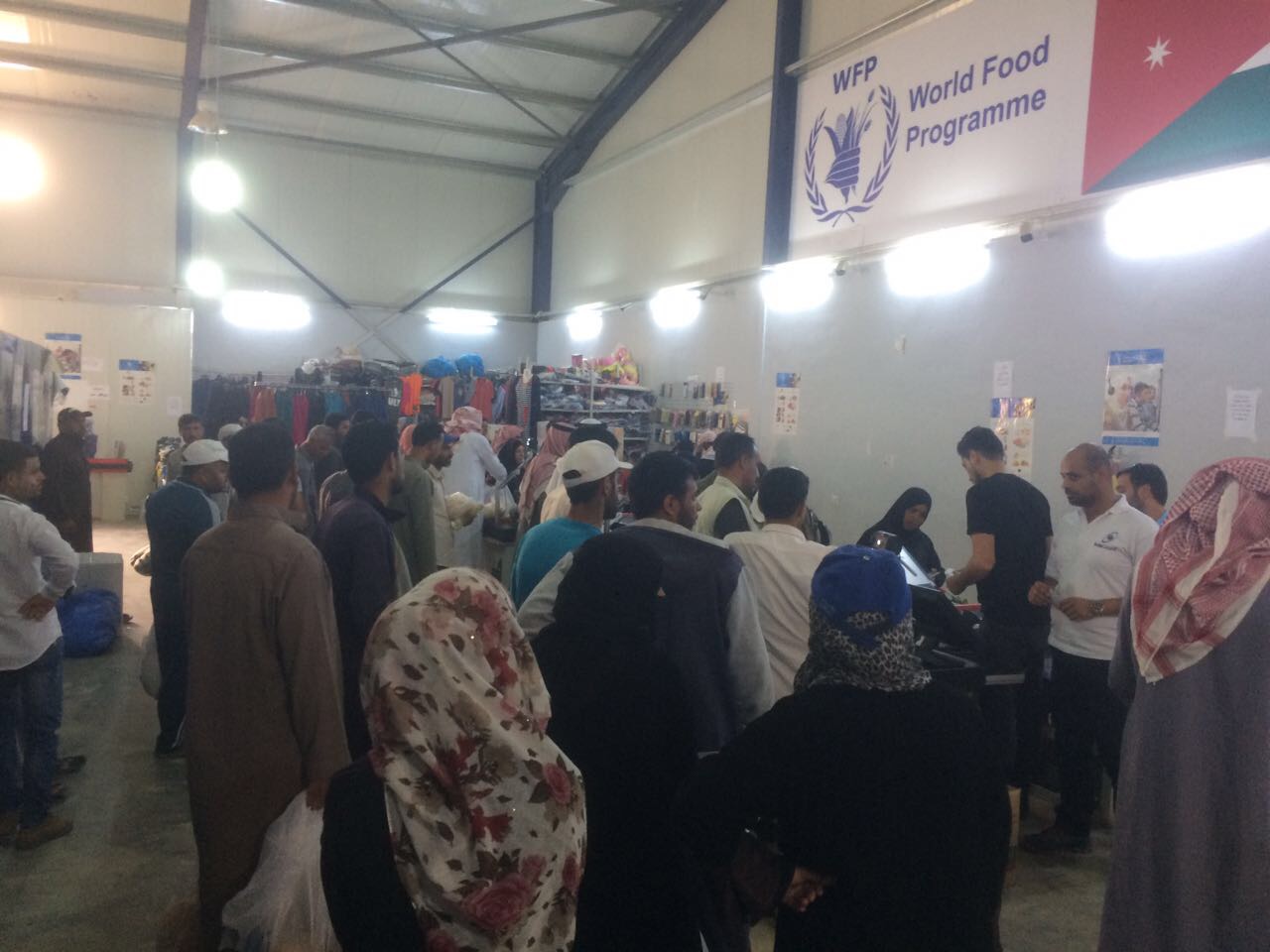
Based on the early, however robust prototype field tested in Pakistan, the Building Blocks pilot in Jordan now serves thousands of households in a Jordanian refugee camp Tazweed village. The inhabitants receive food vouchers that can be used in the village’s supermarket. The seamless integration of the existing iris scan identification technology into Building Blocks system allows the  existing processes to stay in place without any need for changes for the beneficiaries,  the supermarket nor WFP personnel. The only visible differences are a higher transparency of aid accounts for beneficiaries and easier bookkeeping for supermarket managers. The biggest, however invisible, advantage is a minimized risk of fraud or data mismanagement.

The economic benefits of harnessing Blockchain technology can amount to several million US-Dollars for the Jordanien refugee camp population, alone. The goal of the Building Blocks pilot is to demonstrate a fully-functional Blockchain solution that can serve as a role model and architecture for similar humanitarian projects worldwide and a base to develop other use cases.

The Datarella team wants to thank the WFP team, the IrisGuard team and our partners over at Parity Technologies for the great cooperation: from the beginning, we felt being one big team with everybody helping the others out when they needed it. Other than with this collaborative effort a project like Building Blocks would not have succeeded: Blockchain technology still is in its infancy and basic conditions in the field have proven to be challenging. Again: thank you very much for the opportunity to demonstrate the power and the real impact of Blockchain.

If you are interested in the Building Blocks project you might consider visiting our Ethereum Meetup on May, 16 .Here we will present more details and especially share our experiences gained in Tazweed village, Jordan

Find some more information on Coindesk or you contact us directly.

Foto by Houman Haddad, WFP:  Opening scene, 1 May, 9:00 am, in the Tazweed Village supermarket, Jordan

The Blockchain Killer App

The Blockchain Killer App

At yesterday’s Blockshow Europe , a one day blockchain conference by Cointelegraph, I’ve seen the blockchain killer app. At least, these were the words on the first slide of a startup pitch. Oh Lord, won’t you build me a blockchain killer app? My friends all build features, I must make amends. Really?

Man wants to populate Mars, to live forever and to create unicorned products. That’s true especially in the field of blockchain: a modern wild west scenario enabling anyone with either a computer becoming a blockchain node or using some change money to participate in the latest ICO to make a fortune. Some do and bet on the right horse, most don’t. And that’s perfectly fine – no new foundational technolgy ever came without some supersized creativity at the beginning.

Investing in crypto currencies seems to be a relatively sure bet these days, since the crypto market has been steadily growing in its entirety. Just check the numbers from time to time and you will see an amazing growth of the crypto market capitalization of $10bn in the last 6 months alone.. Still: you easily lose all your money due to a very high volatility even of the Top 10 currencies adding or losing billions of value from one week to another.

However, the currency aspect of digital tokens is just one perspective of the field of blockchain, and a quite non-technological one. Another aspect is the use of the blockchain as a foundational technology layer on top of the internet. Most experts agree that blockchain will significantly change conventional transactions. And nearly everybody is looking for the holy blockchain grail – the killer app, or – as we should say – the killer Dapp – since it would be a distributed app. Quibbling aside, my feeling is that there won’t be a killer dapp. I’m totally with Benedict Evans of A16Z, who stated:

Looking at a strategy doc I worked on in 2006. All the ‘next big things’ weren’t. Then they came back as check-box features in every app

Having worked in the blockchain space with industrial, financial services and media clients for two years now, I’d suggest not to look for or believe someone telling you that she had built a killer app. What the market really needs isn’t the fancy disruption but rather the boring evolutionary approach: hundreds, thousands, if not hundreds of thousands of incremental optimizations. Sure, these little improvements are based on a completely different technology, that means you do have a certain disruptive aspect here: the “getting rid of the middleman” stories could be sold as some kind of disruption – but middlemen have been an endangered species for a long time already – that’s not to be credited to blockchain.

Most people don’t like changes. Most managers don’t like changes. So, why not throwing away the sword of Damocles like disruption talk and start collaborating, inventing and creating useful products and services that are relevant to many more people than to founding team of a startup only? The old world, the not-yet-familiar-with-blockchain world, is ready for blockchain. Most companies are more open and willing to embrace this new technology than the typical crypto nerd might imagine. The thing is – nobody wants to be laughed at, because he isn’t familiar with the game theory assumptions of PoW. There is plenty of room for collaboration between the crypto blockchain nerds and the old world.

In 2017, corporations are ready to embrace blockchain. And that’s why, in my opinion, clever startups analyze the needs of the market, come up with blockchain solutions for the real world and will then be rewared with great collaboration opportunities. We see that already happening and i hope we’ll see even more startups jumping on that train.

That’s it.

BYOD – Bring your own device to the car

BYOD – Bring your own device to the car

BYOD – “Bring your own device” has recently become one of the most debated IT topics. BYOD means that employees use their private computers, smartphones, or tablets at their everyday workplaces and office desks, instead of getting seperate hardware, administrated by the company’s IT department.

More and more people want to use the same technology at work that they have chosen to use for their private purposes. In particular for younger professionals it becomes less and less accepted not to have all their tools at hand. Why would they let themselved get restricted to outdated operation systems, cheep hardware, and crippled internet access? Although some companies set up rules for their employees to use the devices of their choice, for most businesses the concerns outweigh any potential advantages.

What about cars? Some manufactorers provide rudimentary interfaces via bluetooth to connect some functionality of our smartphones with the car’s entertainment system. Most however seam to believe that people would still want to rely solely on the car’s onboard systems. Hardly any model has a proper place to put your device while driving. With our phone stored away in the usual bowl or compartment next to the driver’s seat, we couldn’t use it directly. We would have to access it via the car’s system that support only a tiny fraction of the phone’s functionality. To really use the smartphone, we still have to install cheep third party hands-free car kits.

Using our own mobile devices while driving is not just owed to our lazyness. While our own gadgets are up-to-date, the car’s technology will be totally outdated already when it first hits the road due to the long development cycles that are unavoidable in car construction.
Furthermore our apps have optimized user interfaces, continuously adjusted to users’ behavior. We might drive various cars, some we might not even own. How convenient would it be, could we use the same interface, no matter what model we would use?

Cars should support the technology of our choice. They should become agnostic to the way, people would want to navigate, listen to music, or even control the climate. Instead of forcing us to rely on their propriatory interfaces, they should give us as much freedom as reasonably possible to control the car with our mobiles. There might be limits due to security concerns.

Just last week, Jeep had to recall millions of their vehicles due to a vulnerability in the car’s computer system. System critical function could be accessed wirelessly. BYOD might be a good way to rethinking the architecture of the electronic systems. Accessing entertainment, air condition, and other passenger support systems is not as dangerous as controling acceleration, airbags, or the breaks. The different systems should be seperated physically. While the core of the car should be protected and not accessable without proper authorization, the peripherals should be as easy to connect as possible.

I have seen people taping their phones atop the car’s dashboard after loosing patience with the clumsy user interface of the built-in navigation system. Does anyone use these dinosaurs of consumer electronics anymore, at all? It is high time to change the way we, car companies treat their drivers. BYOD is a good first step.

Blockchain Meetup 6: IoT Blockchained

Blockchain Meetup 6: IoT Blockchained

We are very happy to have Dr. Dirk Siegel, Partner of Deloitte, to discuss the question: Blockchain and IoT – A promising model?

Dirk is Partner with Deloitte and leads the Deloitte Blockchain Institute in Germany. He has 25 years of consulting experience in Financial Services, both Banking and Insurance. Throughout his career he has been exploring the interplay between business processes and technology. Dirk holds a PhD in Applied Mathematics from Cambridge University.

(more…)

Blockchain Meetup 5: Is Code Law?

Blockchain Meetup 5: Is Code Law?

We’re happy to combine technological and legal aspects of the blockchain, and of Ethereum based smart contracts in particular, in this meetup. With Jutta and Markus, we have two veritable experts in their respective fields speaking.

Dr. Jutta Steiner, co-founder Parity Technologies Ltd, will join us and present the latest release of the Parity Ethereum browser. So, beside the fascinating legal aspects of smart contracts, this meetup will feature some hardcore blockchain tech, too!

After the Parity 1.5 briefing, we’ll move over to the legal aspects of smart contracts:

(more…)
Blockchain Meetup 4: Finance Industry Blockchain Use Cases

Blockchain Meetup 4: Finance Industry Blockchain Use Cases

Dr. Markus Hablizel

After our deep dives into Ethereum Solidity, some Ethereum showcases in the energy sector with RWE and last meetup’s cultural shock with Meredith L. Patterson facing us with major security issues of Turing-complete machines, we want to focus on the finance industry and its respective blockchain use cases in this meetup.

We are very happy to have Dr. Markus Hablizel, blockchain evangelist (the organizer’s wording) of Allianz, an insurance company, presenting some perspectives of corporate blockchain use cases.

(more…)