by Rebecca Johnson | 4 December 2024 | Blockchain, Track and Trust
This article is the sixth and final article in a series about our probabilistic 360° supply chain tracking product, Track & Trust. Our previous articles described how the system works. Now, we dive into the results of our pilot operations. TLDR – We successfully tracked all the goods to their final delivery locations despite serious challenges!
The Track & Trust Mission in Southern Lebanon
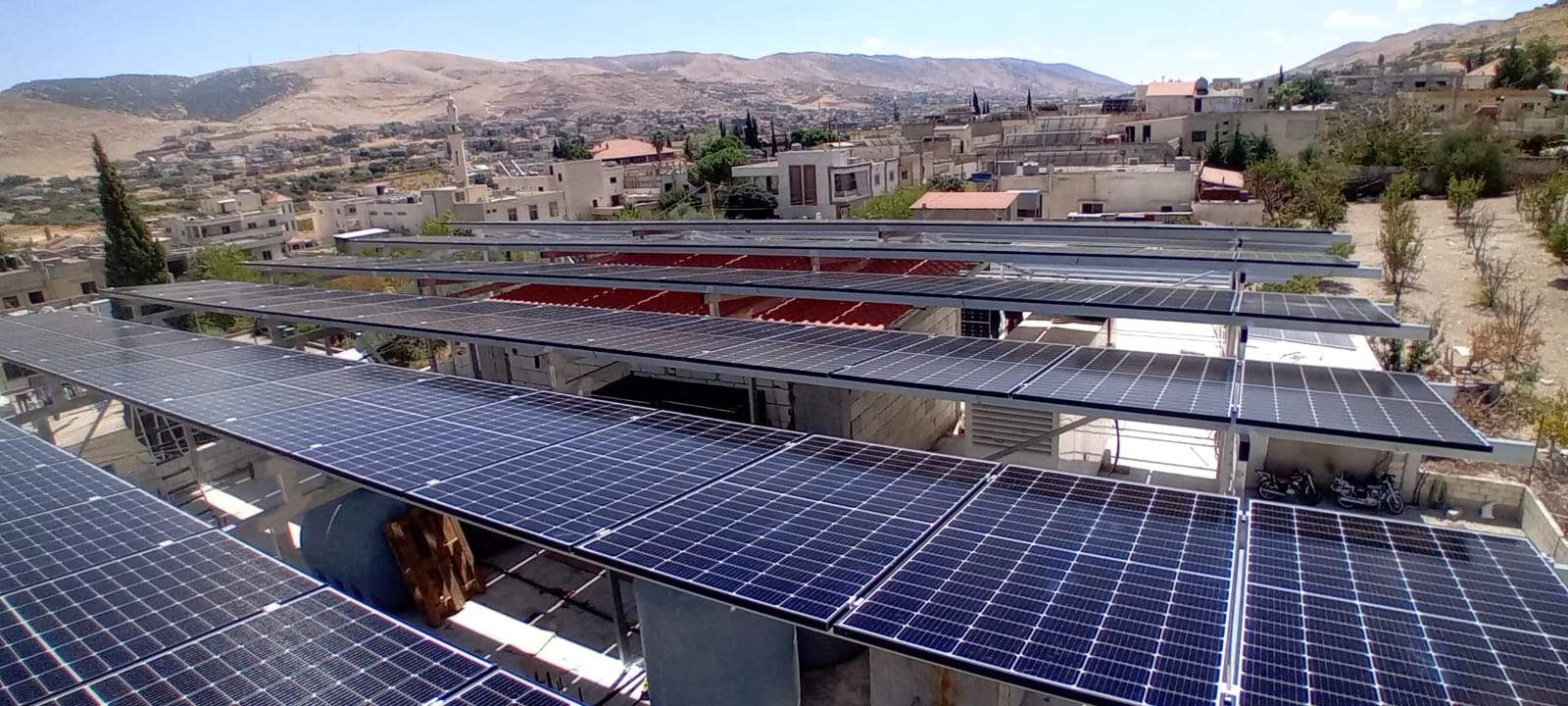
We chose to track shipments of solar equipment for the Track & Trust Pilot. Destined for clinics and schools serving refugees in Beqaa Valley, Lebanon, these shipments were critical to the region. The area is home to over 300,000 Syrian refugees, according to UNHCR, and they all need medical care. Our partners, Aid Pioneers, Multi Aid Programs, and Al-Manhaj, collaborate to provide logistics, education, and medical care on the ground.
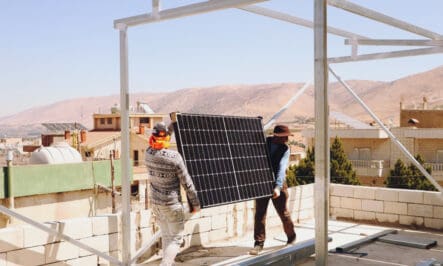
The clinics and schools require continuous a continuous electrical power supply. Due to Lebanon’s severe energy crisis, the public grid provides only about two hours of electricity per day, making the delivery of efficient healthcare services an immense challenge. In absence of a stable grid, most of the region’s essential services rely on generators, leaving the financial stability of operations at the whim of the ever-increasing price of diesel. Typical health clinics have thousands of dollars in monthly operating costs due to the need to purchase this fuel. To address this, Aid Pioneers is replacing diesel power systems with clean, abundant solar energy, one clinic at a time. By reliably shipping the equipment from Tripoli to Beqaa Valley, they achieve this goal with our help. Specifically the shipments we’ve tracked during the pilot contained all the equipment needed to outfit two clinics with enough solar power to cover all their needs. Aid Pioneers partner, Multi Aid Programs runs the clinics which received the solar and medical equipment we tracked.
Tracking Impact
Using Track & Trust, Aid Pioneers and their partners gained a clear view of what was happening to the parts in their shipment. As a result, they avoided extra trips, saving work and potential exposure to danger. Our team planned this deployment long before the recent conflict broke out, and our system performed well in the midst of a very difficult situation. Effective management of the challenges that arose was crucial to the success of the project.
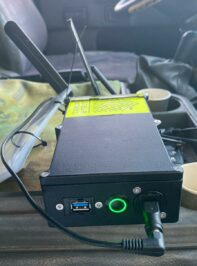
During the shipments, ground personnel encountered outages of critical infrastructure, losing power and 4G connectivity several times. Fortunately, our Track & Trust mesh node infrastructure filled the gap, and our battery backup system enabled the system to run despite the power grid being down. The system’s design allowed it to handle such outages.
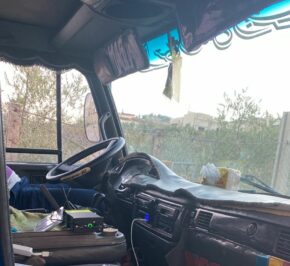
When 4G connectivity was lost, our mesh nodes cached delivery data until it could be passed between nodes. Utilizing technologies developed with our partner, Weaver Labs, we ensured the data was secure. Next, we used a satellite-enabled mesh node to post data that would have otherwise been lost via Iridium satellite uplink, developed by our partner Ororatech.
Aid Pioneers received hundreds of updates about the status of the goods from us. To ensure the integrity of the data, we cryptographically signed and anchored these updates to the ASI Alliance blockchain, making them highly trustworthy. This extra step was crucial to the project’s success. Together the result is highly trustable probabilistic 360° supply chain tracking.
Energy Independence One Clinic at a Time

Two major sets of shipments were completed under the watchful eye of Track & Trust, and a third set is currently being shipped to Lebanon. With 110 kWp of power, the solar systems make two entire clinics energy independent for the next twenty years. Additionally, we tracked a container of medical goods, which Al-Manhaj and Multi Aid Programs are using to save lives and provide medical treatment in Tripoli and the Beqaa Valley.
Track & Trust Proof of Resilience
The design of Track & Trust allows it to work in various contexts, providing resilience and probabilistic 360° supply chain tracking. Adaptable to different scenarios, our system is highly versatile. As we continue to develop and refine our system, we will meet the changing needs of our partners.
Next Steps
Following this piloting success, we will examine plans to make the system more user-friendly. Logistics organizations that could use more resilience in their field operations are also being contacted. If this series of blog posts has piqued your interest, please reach out, and we will schedule a call or demo.
<<< Previous Post

by Kira Nezu | 8 April 2024 | Blockchain, Featured, Gaia-X, Partnerships, SSI, Track and Trust
Datarella’s Blockchain Solutions for Supply Chain Management: Streamlining CSDDD Compliance
Datarella has been at the forefront of deploying blockchain solutions for supply chain management. The introduction of the European Union’s Corporate Supply Chain Due Diligence Directive (CSDDD, or CS3D) presents a significant regulatory milestone. This article examines the directive’s implications and showcases how Datarella’s blockchain technology offers a streamlined path to compliance for businesses.
What is the EU Corporate Supply Chain Due Diligence Directive (CSDDD)?
The CSDDD is a critical component of the EU’s strategy to enhance supply chain sustainability and ethics. It mandates companies to actively prevent human rights and environmental abuses within their supply chains. The directive sets forth a phased compliance timeline, with larger corporations facing earlier deadlines. By 2028, entities with over 1,000 employees and a net worldwide turnover exceeding 450 million EUR must adhere to the directive. Non-compliance penalties could reach up to 5% of global turnover.
Navigating CSDDD Compliance with Blockchain Technology
Many companies are uncertain about how to address these new requirements. The answer lies in robust reporting, backed by verifiable data. Traditional compliance methods might overwhelm businesses with paperwork and lead to inefficiencies. However, blockchain technology presents a solution: by digitizing and securely logging every transaction and document in the supply chain, blockchain can simplify the compliance process.
How Blockchain Simplifies Compliance
Unlike traditional methods reliant on paperwork, blockchain ensures secure, transparent tracking of transactions. This technology can reduce the compliance burden by offering secure data storage and easy accessibility. Since records on the blockchain cannot be modified, it ensures data integrity and accurate documentation for compliance purposes. Integrating blockchain with digital identity solutions like the vLEI and the EU Digital Identity Regulation further strengthens this process. Companies can easily verify responsibilities and transactions, making blockchain an essential tool for CSDDD compliance.
Datarella’s Expertise in Blockchain for Supply Chain Management
Datarella has an impressive track record in implementing blockchain solutions to address complex supply chain challenges. From facilitating blockchain-based document handovers in humanitarian contexts to ensuring the integrity of 3D-printed parts for global suppliers, Datarella’s innovative projects demonstrate our expertise. Our involvement in initiatives like the Gaia-X consortia (ESCOM and Cosmic-X) and the European Space Agency’s Track & Trust initiative shows our commitment to advancing blockchain technology for supply chain management.
Partnering with Datarella for CSDDD Compliance
As the EU moves toward greater supply chain accountability, partnering with Datarella can help businesses navigate the complexities of CSDDD compliance. With our blockchain solutions, we not only help companies meet regulatory requirements but also drive efficiency and transparency. Choosing Datarella means collaborating with a leader in blockchain innovation, ready to transform today’s challenges into tomorrow’s successes.
The Future of Supply Chain Management with Blockchain
The CSDDD represents a pivotal shift towards responsible supply chain practices within the EU. For companies aiming to align with these new regulations, Datarella’s blockchain solutions offer a practical and efficient path to compliance. As the regulatory and business landscapes evolve, Datarella remains dedicated to empowering companies with the technology and expertise they need to thrive in this new era of supply chain management.
Interested in simplifying your CSDDD compliance with blockchain technology?
Contact us to learn more.
*On Feb. 29, 2024, the EU voted positive on the Digital Identity Regulation, paving way for EU citizens to truly own and control their data – a step towards secure, decentralized applications within the EU.

by Rebecca Johnson | 16 May 2023 | Blockchain, Featured, SmartAid, Track and Trust, Web3 Company Builder
Track & Trust is ready to launch soon! Here’s what’s new: Unlike many other supply chain solutions, it offers a probabilistic rather than a deterministic approach to tracking goods. In short, this means the solution captures tons of data that logistics firms are currently missing out on, with Track & Trust – Probabilistic 360° Supply Chain Tracking.
Track & Trust combines a set of modern Web3, communication, and satellite technologies and aims to address significant unsolved challenges of today’s supply chains. Combining various communication systems creates a network for the supply chain even in the most remote areas of the world.
Any kind of shipment information from such areas is highly valuable for all actors along the supply chain, such as logistic firms, their clients, the end consumer, and the operating teams on the ground. One of the current challenges is the accessibility of information in fast-changing and remote areas – an issue the Track & Trust team seeks to facilitate. While other supply chain systems deterministically produce output information by requiring a specific input, Track & Trust does not rely on standardized initial input, minimizing hurdles in gaining knowledge. Our probabilistic approach, in contrast, allows maximum flexibility. Any kind of slightest interaction with the shipment, even if it is only the scanning of a T&T QR code with a smartphone, leads to the submission of a status update. And it doesn’t matter whether logistical staff or anyone else has carried out this scan or someone not related to it.
Additionally, users are free to report on the status of the shipment or their own circumstances, meaning they can communicate through a text field and provide any extra information on the shipment on their terms, e.g. “flooded route. Took a different route, delivery delayed by two hours”. It is ultimately at the discretion of the logistics operators to multiply the effectiveness of their tracking tools to decide how and what data they use.
Leveraging Data to Drive Process Innovation
Data from the operational area is the actual raw material – logisticians can use them to complement or expand their services in a new way. This leaves room for extensions in the future, for example, on a basis of such a broad database, AI models could be trained to ultimately make predictions about the shrinkage of deliveries, stock levels, and route recommendations. Doing so creates added value for logistic companies’ customers and new competitive advantages for the company itself. Thereby, while increasing efficiency and transparency, Track & Trust holds the potential to change the logistics industry. Lastly, we feel grateful that by investing in this project, the European Space Agency underscores the overall potential of our tracking tool.
As things are beginning to take shape, stay tuned for updates on Track & Trust as it is ready for deployment by 2023!

by Rebecca Johnson | 13 February 2023 | Blockchain, Featured, Track and Trust
Track & Trust – the satellite-powered supply chain solution by Datarella is coming! Track & Trust combines a set of modern Web3, communication, and satellite technologies and aims to address major unsolved challenges of today’s supply chains. Once completed, it seeks to prove its reliability in the most challenging regions of the world.
The supply chain industry is facing massive changes through technological evolution. Led by Datarella, a consortium with our partners Weaver Labs and OroraTech has realized the opportunity to merge blockchain, network and satellite technologies to create a unique supply chain solution that meets the actual needs of its users. With its investment in Track & Trust, the European Space Agency (ESA) underlines the potential of this unique project. We at Datarella are proud of the progress the project has made since its kick-off in 2021. Track & Trust is currently in its late development phase and is scheduled to be ready for deployment by 2023!
What makes Track & Trust so innovative?
Today’s delivery processes face complex challenges – especially when dealing with crisis scenarios involving aid supplies and when the technical conditions on the ground are poor, but the demands for reliability and accountability are high. Logistics companies and humanitarian organizations, like our partner Aid Pioneers, are then faced with the challenge of coordinating aid supplies in regions where the communications infrastructure has most likely been destroyed. To ensure that goods arrive where they are supposed to, sufficient transparency, especially in these remote and disconnected areas, is required. Ultimately, it is not only a matter of transmitting information about the aid supplies but also of ensuring authentic undistorted data that reflects the actual facts on the ground.
What impact can Track & Trust have?
With the help of satellite technology and network technology, we intend to span the Internet over those separate areas that have no or insufficient Internet connection due to the crisis. In other words, we are putting a lot of effort into tracking deliveries right down to the last mile, which is unique in this way. Emerging from such a challenging demonstration, Track & Trust ultimately proves its suitability for any commercial application. Track & Trust holds the potential to change the logistics industry by increasing efficiency, transparency, and security.
So, it stays exciting! Stay tuned for updates on Track & Trust!

by Martin Schäffner | 18 October 2021 | Blockchain, Featured, Track and Trust
Datarella is proud to announce the signing of a two-year contract with the European Space Agency (ESA) to further work on the space-linked supply chain product Track & Trust (T&T). As the main contractor to ESA, Datarella is supported by Weaver Labs and OroraTech.
The consortium will jointly work on a Blockchain-based enterprise solution to tackle complex supply chain challenges that humanitarian agencies across the world face in order to track aid in locations that lack access to reliable communications infrastructure.
At the end of two years of development and commercial trials, Track & Trust aims to deliver a scalable cost-efficient communications platform & network combining satellite, IoT mesh and blockchain components serving mostly supply chain use cases. The end solution will be a modular product that will provide a plug and play communication network that allows for end-to-end tracking of the supply chain. This will start from the initial supply of humanitarian aid goods, and extend all the way to the last-mile shipments even when limited or no telecommunication infrastructure is available.
Track and Trust is a unique opportunity to combine Blockchain technology with SatCom and telecom technology to expand the range of offerings for a supply chain monitoring system. With Weaver Labs and OroraTech as our consortium partners and with the technical and financial support by ESA, we have a strong setup to make a success story out of Track and Trust.
Yukitaka Nezu, Co-Founder and CFO at Datarella.
We are thrilled to expand our work with the European Space Agency and play a vital role in the Track and Trust project with our product Cell-Stack. Our innovative telecoms solution will ensure connectivity across the supply chain, making it possible for goods to be tracked in a trusted way.
Maria Lema, Co-Founder at Weaver Labs
We are looking forward to bringing in our satellite technology expertise in Track and Trust. With our IoT communication modules we will connect the products developed by the consortium via satellite networks. This allows the global tracking of deliveries, even in very remote areas.
Rupert Amann, Co-Founder and Head of Satellite Development at OroraTech
We are very excited to be backed by the ESA Business Applications and Space Solutions Program and are very much looking forward to the successful integration of blockchain, space and network infrastructure technology into our product Track & Trust.
About Datarella’s Consortium Partners
About Weaver Labs
At Weaver Labs, we are creating an open and shared marketplace of connectivity assets, with an extensive focus on security, to accelerate innovation by enabling connectivity. Our innovative software layer called Cell-Stack aggregates and digitises all the necessary assets to build Networks and access connectivity on-demand.
Weaver Labs believes that an open marketplace of connectivity assets can truly democratise access to reliable networks and stimulate innovative applications, making networks accessible to new industries and citizens that require reliable connectivity. Through prioritising security in a diverse supply chain and building trust with an open infrastructure model, we believe that these are the fundamental foundations needed to foster innovation and thus, create a positive impact on society. More about Weaver Labs: https://weaverlabs.io/
About OroraTech
OroraTech is a NewSpace start-up headquartered in Munich, Germany, providing a global satellite-based wildfire detection and monitoring service by processing data from various available satellite sources. In parallel, the company is developing its own nanosatellite constellation specialized in wildfire detection, with the first satellite launching at the end of 2021. Founded in 2018 by Thomas Grübler, Björn Stoffers, Florian Mauracher, and Rupert Amann as a spin-off from the Technical University of Munich (TUM), the company has grown to an international team of 50 employees. OroraTech has been supported by research grants from the Bavarian and German government, the European Space Agency and the European Commission, and graduated accelerator programs at Google, Samsung, Plug&Play, ESA BIC, and the German Accelerator Silicon Valley. More about OroraTech: https://ororatech.com/
by Kira Nezu | 9 October 2019 | Blockchain
October last year in London, we kicked off the Humanitarian Supply Blockchain Proof of Technology with members of Britain’s Department for International Development (DFID) and their Frontier Technology Livestreaming (FTL) programme. The technology to be “proven” in this case was blockchain, specifically within the setting of humanitarian supply chain management. Over the last months, we have developed this system, named it “Track & Trust”, and successfully tracked the first shipment from Pakistan to Dubai.
The project essentially was concluded in three phases:
- Concept
- Development
- Live shipment
In the concept phase we tried to figure out the actors and their common denominator within the humanitarian supply chain. For this we identified and interviewed the actors involved in the DFID’s supply chain. As a result, we identified four actors: Humanitarian organization (in this case DFID), the supplier (SUP), the logistics service provider (LSP) and the implementing partner (IP – who also acted as consignee). The system was to be able to track the actor accountable for the shipped goods:

Process: Tracking accountability of a shipment.
After the development phase was completed, all we needed was: a shipment. Since the Mozambique flooding had just happened a few weeks earlier, a first potential candidate was tracking a special vehicle used for loading and unloading aircrafts freight during the event. Unfortunately the time was too short for onboarding the involved actors. So the choice fell on a far calmer event: We were to track a delivery from a supplier located in Pakistan to a warehouse in Dubai. The warehouse serves as stock and enables fast distribution to disaster areas in the region.
This last chapter took place this summer, with a DFID-scheduled shipment of goods. An amount of 304 DFID family tents were to be sent to the warehouse. The logistics organization was done by the domain experts and officers at DFID, who also had managed to source the parties involved. Before the shipment took place, the actors had to be onboarded to the system. For this we created user manuals and scheduled screencasts (varying from 20 to 60 minutes) for each participating party where questions could be clarified.
As expected, the most difficult part for the users was the ones where interaction with blockchain was required. In our case, that meant uploading a key-file and entering the password to unlock the key-file into the user interface. We received most questions on this aspect during the demos, and in the follow-up survey this was the source of the most uncertainty with respect to the usability.
The actual shipment started with us learning about something we could improve, which was the whole purpose of the testing phase! Luckily it was a rather minor detail, namely that goods to be shipped need to be inspected before they can be marked as ready for pick-up. The implementation of this was nothing more than adding an option in a drop-down menu, but the time the goods were waiting to be inspected was significant. As the goods were handed over from the supplier to the logistics service provider we received our first question on how to use the key-file. However, even before we could respond to the email, they figured it out themselves, so no intervention was necessary.

Screenshot from the Track & Trust shipment overview – status: Completed
From there on the shipment flowed like expected, the last handover was frictionless and all goods arrived safely. But since one of the goals was that we learn as much as possible and try to get our partners to share as much of their insider knowledge about the supply chain as possible, we decided to issue a survey to them. There we collected impressions and scores on usability, perception of blockchain in the system and general feedback. All of the partners responded to the survey, including the logistics officer from DFID. All of the respondents found the briefing beforehand to have been relevant, sufficient, clear and precise. Although, one could say we should have put more focus on the key-file and it’s importance.
The usability overall was rated highly with an average score of 4.2/5. Potential improvements noted as comments were mainly about added information points such as ETA and increased visibility. Additionally, the relatively high security was perceived by one respondent as confusing. However, not a single party found that any necessary functionality was missing, which meant that we’d set the level of prototype-abstraction correctly.
According to the survey, it was clear to all actors how the blockchain improved accountability across the supply chain, which meant that we’d achieved one of our goals: to have blockchain only where needed and empower the user.
As a technical partner, creating Track & Trust has been a great experience and learning process – applying the blockchain to an important pain point of the humanitarian supply chain. Working with the participants in this project has been delightful – everyone was extremely helpful in discussions (on- and offline) as well as workshops.
For Track & Trust, the ending of this phase is the beginning of a new one: Tracking the last mile in the humanitarian supply chain has been described by leading humanitarian organizations as the most murky. Therefor we decided to tackle this next pain point as we applied for a grant by the European Space Agency. We are continuing the development of Track & Trust and taking it to the next level – literally.
