Image above: Our olfactory sense and our long-term memories are tied together. To track places lost, I have collected boxes; the smell inside triggers my memory. Cats are more attached to places than to their masters, so people say. Although I doubt that this is...
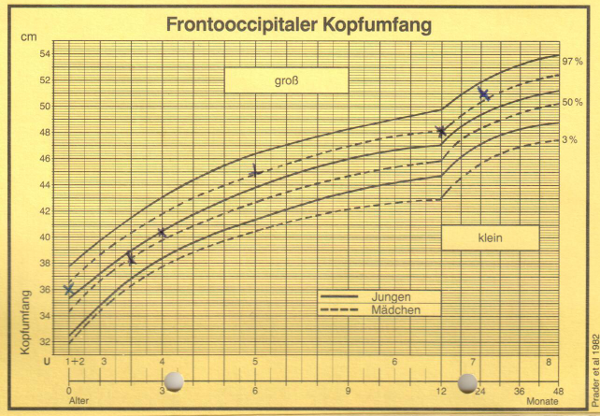
The diagram above shows the development of the frontooccipital circumference of a child's head. We measure the growth of our children to track their healthy development. Only with the context of benchmarks does the data become meaningful. Without sharing, it is...
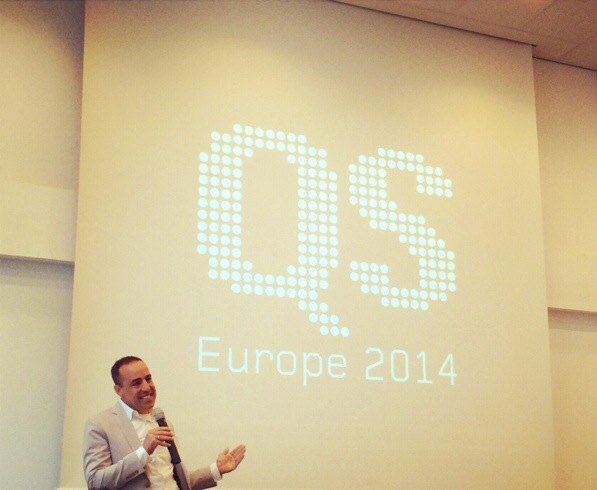
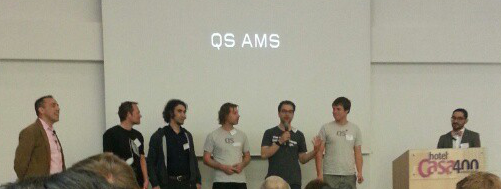
During the weekend of May 10-12, 250 students, scientists, artists, venture capitalists and entrepreneurs gathered at the Quantified Self Conference #qseu14 in Amsterdam, the fifth conference of its kind and the second one taking place in Europe. First timers, not...
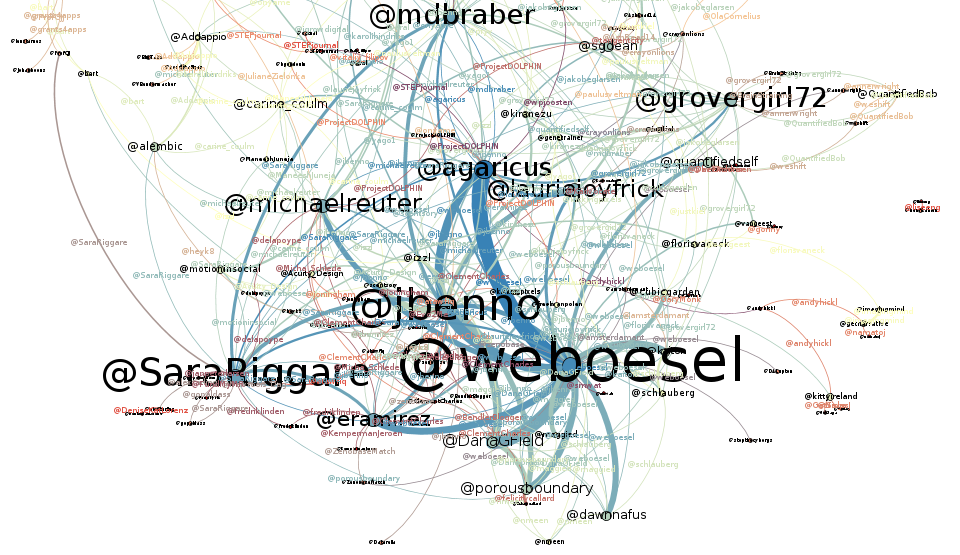
The Quantified Self Europe Conference 2014 had shown some activity on Twitter, as expected. 156 different people twittered using the #qseu14 tag. Nevertheless the absolute number of #qseu14-tweets slightly declined to ~1100 in 2014 from ~1700 in 2013. The...
Here is the transcript of the Datarella (DR) interview with Maximilian 'Max' Gotzler at the Quantified Self Conference 2014 in Amsterdam. DR At the Quantified Self Conference 2014 in Amsterdam, we're together with Maximilian Gotzler, semi-professional basketballer and...
Here's the transcript of the Datarella (DR) interview with Dan Berglund of Stockholm-based life-logging startup Narrative. DR At the Quantified Self Conference 2014 in Amsterdam, we're together with Dan Berglund from Swedish startup Narrative. Dan, could you introduce...
At the Quantified Self Europe Conference 2014, which took place on May 10th and 11th, we hosted a session to discuss philosophical, and especially ethical aspects of self-tracking. Here are our slides with comments: Quantified Self and Philosophy from Joerg Blumtritt...
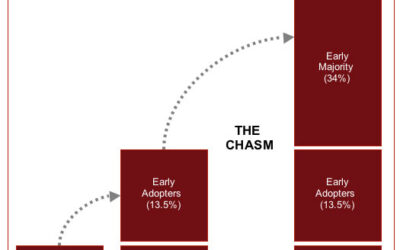
Bring cutting-edge technologies and products to larger markets, making them mainstream - that's what Moore's Crossing the Chasm is all about. Where is this specific point in a technology's adoption lifecycle that transforms a nerd toy into a quite natural product of...
"The future is already there, it is just not evenly distributed" as William Gibson said. At re:publica 2014 conference in Berlin we will demonstrate methods and tools to make good predictions and foresighting from sources found on the Net. "With Big Data comes the end...
[Opening the QS Europe Conference 2013: Gery Wolf (left) and Ernesto Ramirez (right)] The Quantified Self Europe Conference will take place May 10th to May 11th in Amsterdam. This year we are excited to not only visit but also take an active part in the conference. We...
Here's the transcript of this Datarella (DR) interview with Klaus Bscheid: DR Klaus, can you tell us a little bit about ambiotex Klaus Sure! ambiotex has developed a textile with integrated sensors. With these sensors we can track a genuine one-lead ECG. Based on that...
Tracking your life can mean any form of recording: some body measures like weight, your workout, your food intake, your sleep patterns - this is the "classic" Quantified Self. One of the most intrusive, yet intriguing ways of tracking your life, however is actually...
In this post, I will make some predictions on the nearer and farther end of the Quantified Self movement. Using McLuhan's Tetrad, I will argue that Quantified Self will get huge incentives from enhancing healthcare, crowdsourcing science, and support a strong common...
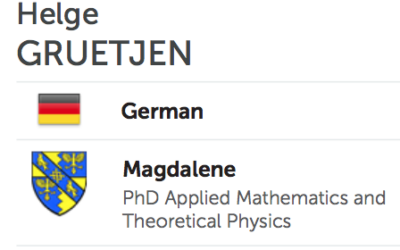
Cambridge PhD student Helge Gruetjen was a chain-smoker, weighting 120 kilograms, who started to row for the Cambridge University Boat Club in 2010 to become one of a team of five trying to beat the Oxford squad. He had set himself an "unrealistic goal": to lose more...
A lot of entrepreneurs hire fast and fire slow. In particular when new coders are required to develop a software. A bias towards speed and quick growth drives many leaders to be quick to hire new personnel and strategic cooperation partners. Hiring fast is absolutely...
Location detection with full privacy on Blockchain.
Q: What problem does your project solve?
A:All data in Blockchain open, so personal data (e.g. location data) can’t be stored on blockchain. With homomorphic encryption the data are computably stored on blockchain.
Q: What expertise and roles do your team members have?
A: Back-End Developer, App-Developer, Business Innovation
Q: Which technologies do you use for which purposes?
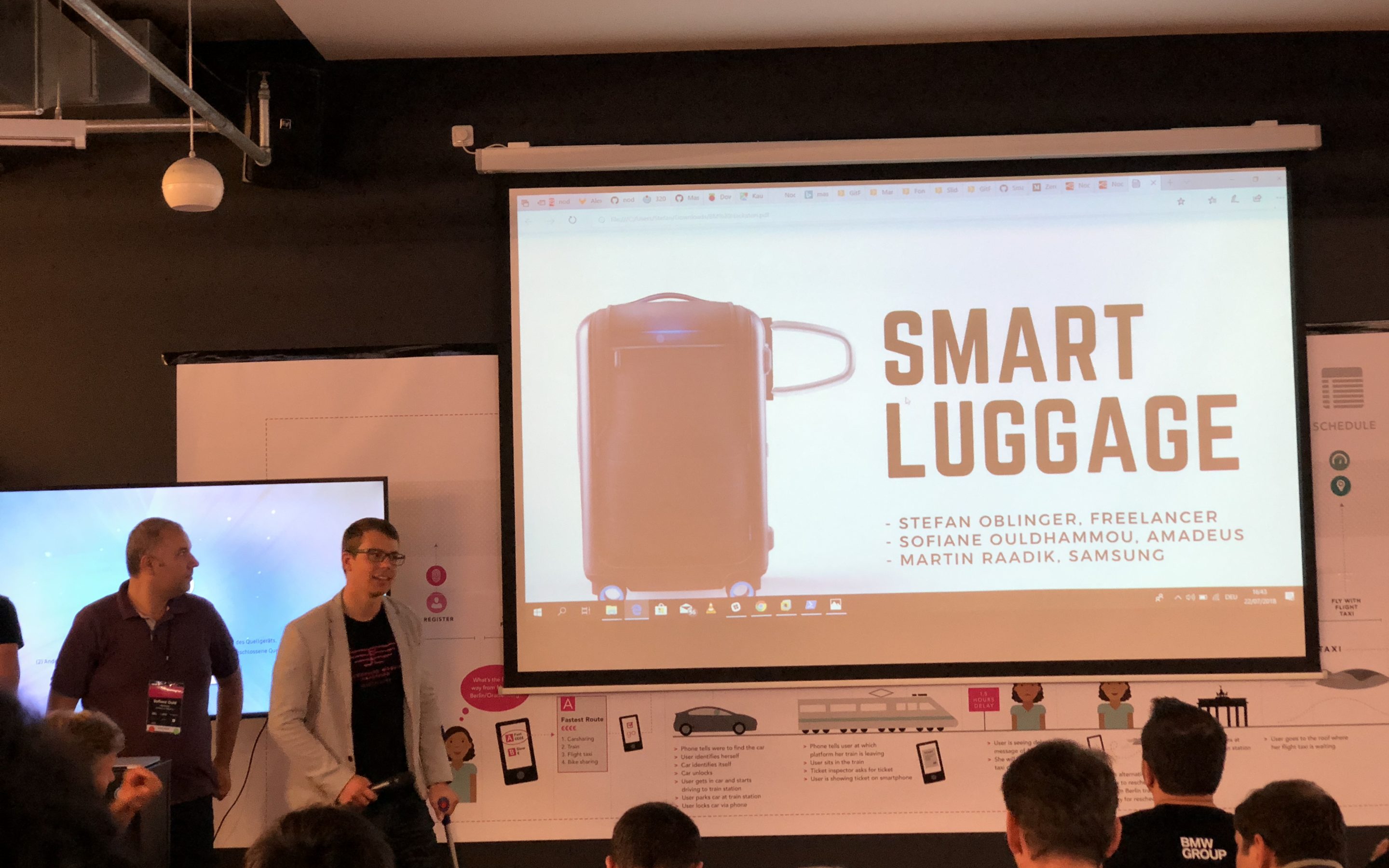
A: We free travellers from the burden of caring for their luggage. Therefore the luggage will autonomously determine the optimal route and transport mode while always taking the owner’s schedules and directions into account.
Q: What expertise and roles do your team members have?
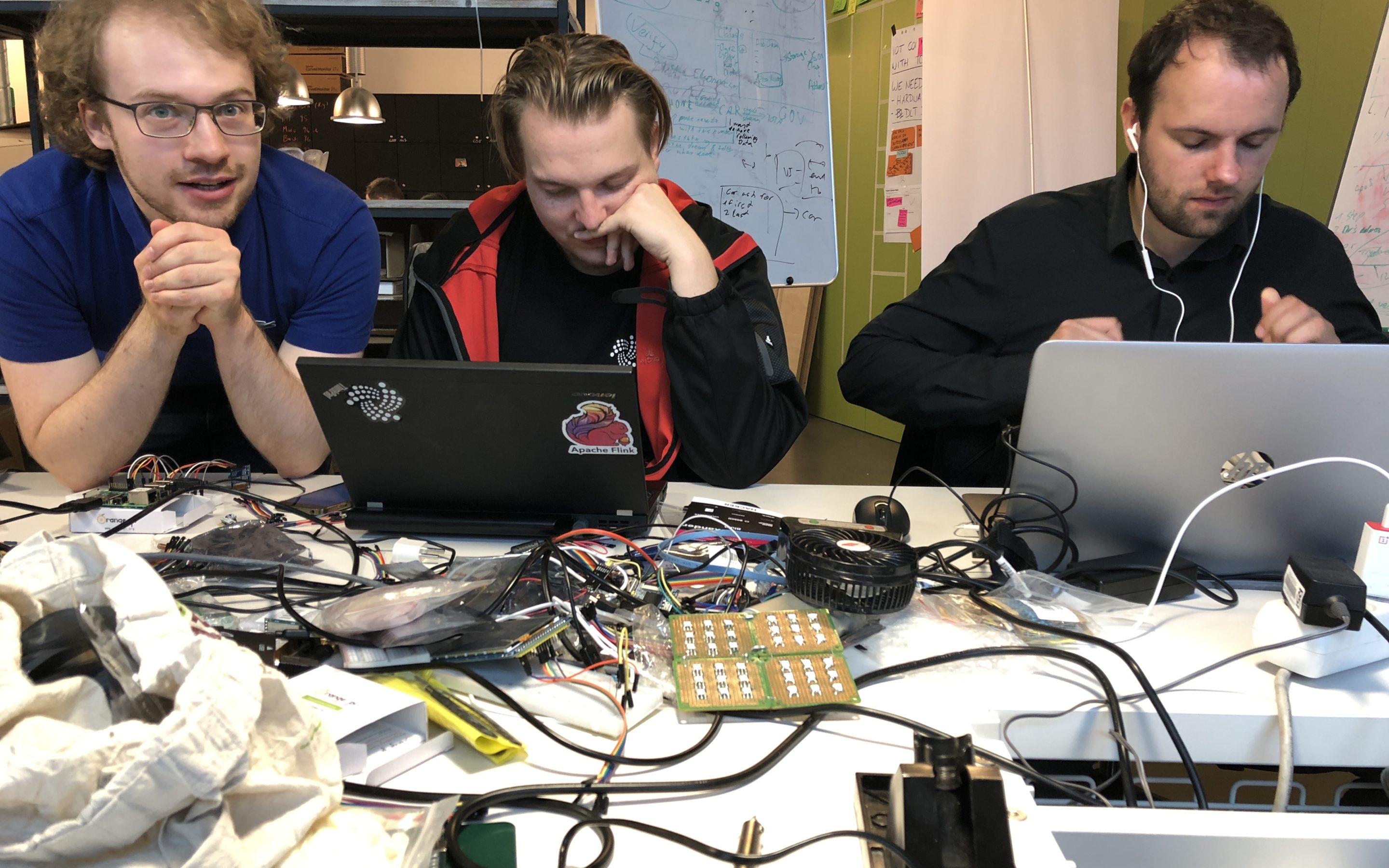
A: We had little hands-on experience with IOTA. Our roles were Designer, Backend Developer, Tinkerer.
Q: Which technologies do you use for which purposes?
A: We decided on Node-RED on Raspberry Pi for prototyping of the “smart Infrastructure” part and chose IOTA as backend network for secure communication and payment.
Q: Which technologies do you use for which purposes?
A: MAM for claims streams, Android for an example App, Bluetooth for communication between Raspberrry Pi and Smartphone, IOTA as persistence layer, Raspberrry Pi as a car’s board computer.
Pac-Man on Wheels, the winners of third place (for USD 1 000 + 15 000 XSC tokens)
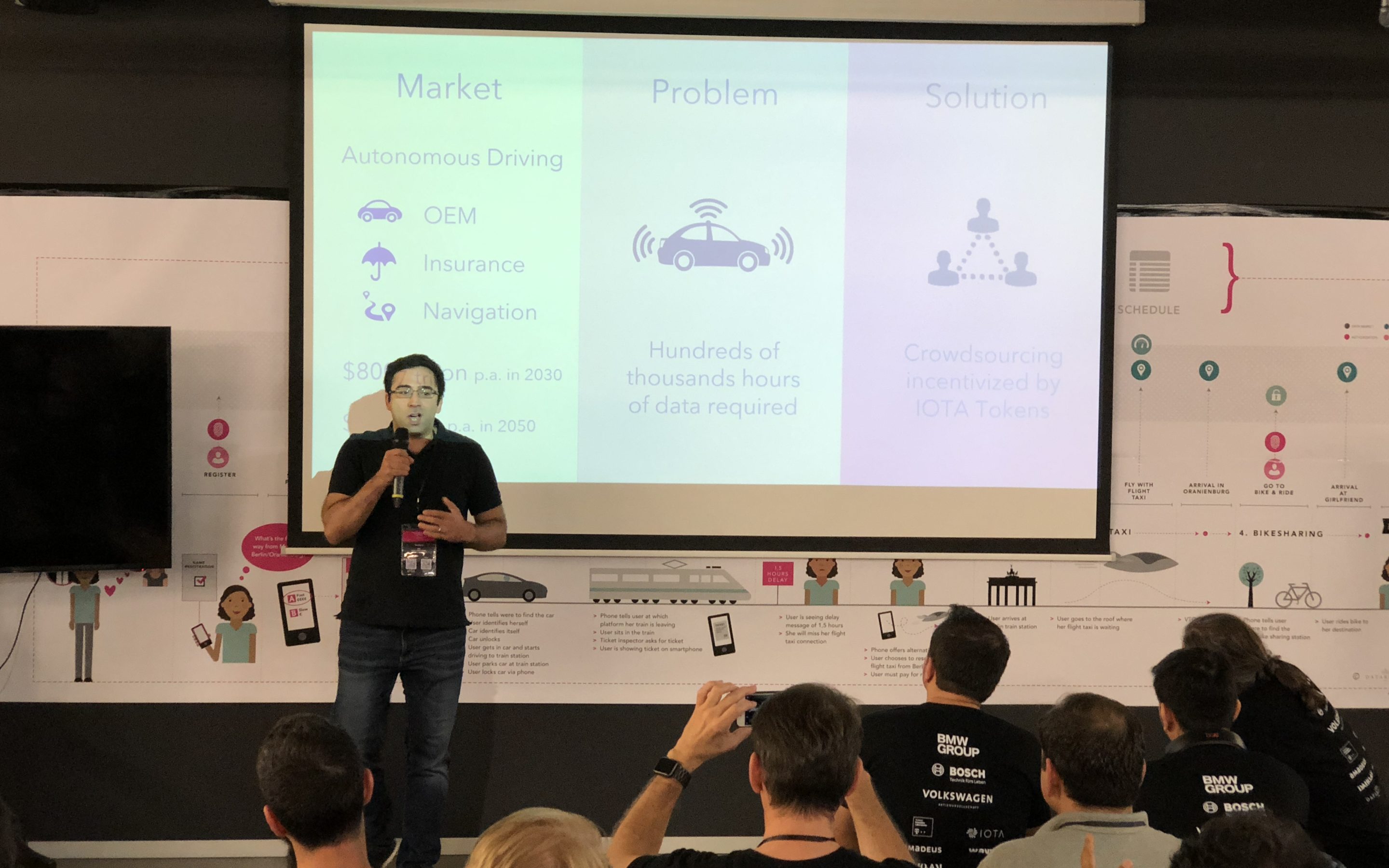
Democratize autonomous driving by crowdsourcing and gamifying the data collection via IOTA Tokens
Q: What problem does your project solve?
A: In order to empower autonomous driving hundreds of thousands hours of sensor data are required. Individual data acquisition without merging possibility is never able to gain the appropiate amount of data needed to secure all driving scenarios. This can only be achieved by crowdsourcing the data by incentivizing road users with IOTA Tokens. A decentralized market place ensures the complete data availability.
Q: What expertise and roles did you have on your team?
Dr. Simon Hassannia: Head of Business Innovation and Automotive Industry Expert
Martin Mihaylov: Computer Vision & AI Engineer, Entrepreneur, Designer, All things tech enthusiast
David Hawig: Iota, Ipfs and Ntru C# Developer
Dr. Simon Hassannia: Head of Business Innovation and Automotive Industry Expert
Martin Mihaylov: Computer Vision & AI Engineer, Entrepreneur, Designer, All things tech enthusiast
David Hawig: Iota, Ipfs and Ntru C# Developer
Q: Which technologies and tools did you use in your project?
A: NTRU for encryption, IPFS for decentralized file storage, IOTA for immutable decentralized data exchange and monetization, Xamarin for multi-platform application development
After we finished the Blockchained Mobility Hackathon with the 3rd place our team quickly set up communication channels to stay connected. Although our team has just found itself on the Hackathon we have a very strong attitude our project will successful be enhanced and implemented now. Because of the perfect mix between software and business developers and the seamless collaboration inside the team we have a strong starting point now. By attending at the DAHO.AM conference right after the Hackathon we received positive feedback from several attendees and company representative to have found a well-fitted business case here. The strong interest in “Pac-Man on Wheels” strengthened us once more to proceed with the project. We already spoke to interested companies and investors at the DAHO.AM and figured out some approaches how to get going. We are still in negotiations if the project will be kicked off as a start-up or, which is actually more likely, integrated into a project of an existing company. Since nothing is settled yet, we appreciate and want to encourage any interested party to get in touch with us to discuss common realization possibilities.
The winning team received USD 5 000 + 50 000 XSC tokens and the opportunity to pitch their project to the IOTA Ecosystem Fund for 50.000 USD.
“In our vision we created the first Open Mobility Marketplace for IOTA – by enabling mobility provider companies (B2B) to publish mobility services offers (B2C), customers to search for them and conclude contracts in an easie way.”
Q: What problem does your project solve?
A: The API reduces hurdles to assimilate IOTA in existing architecture and facilitates mirroring of services and physical offer’s digital twins into an IOTA-based open marketplace.
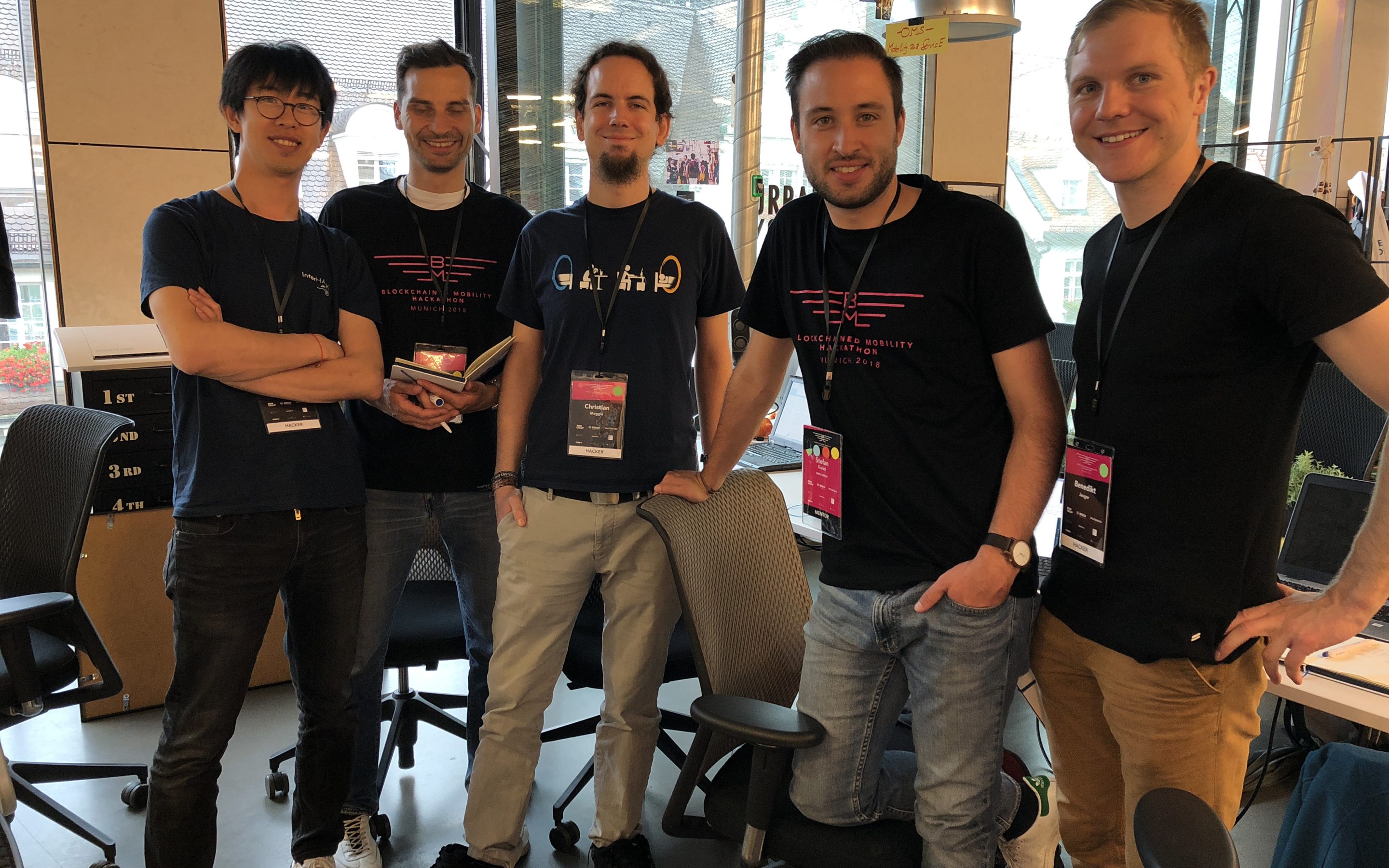
Q: What expertise and roles do your team members have? Alexander: Experience: Business Practioneer & Innovation Specialist, IT educated, working experience in Automobility, Finance, E-Commerce Role in team: Scrum Master, Platform- and Business-Strategist, Product-Development
Benedikt:
Experience: Reseacher in engineering, focused on smart mobility solutions
Role in team: Reviewing solution space, creating backup strategies
Christian:
Experience: Web Services, API architecture and design, JVM
Role in team: Backend/Middleware Development
Fei:
Experience: Backend & Fronted Senior Developer
Role in team: App Development, IOTA-Interface
Stefan:
Experience: Bridgebuilder between business & development, with mobility business and FrontEnd, Backend, IOTA & Ethereum development experience
Role in team: Mentor, Product-Development, Website FrontEnd, IOTA-Logic
Q: Which technologies do you use for which purposes?
A: Java: Backend/Middleware Technology Spring Boot: Server Environment Swagger: Automation and Infrastructure NodeJS: IOTA APIs (publishing mobility offers, retrieve receiver address from Tangle, and send transactions requests) JavaScript: Website Frontend IOTA: DLT
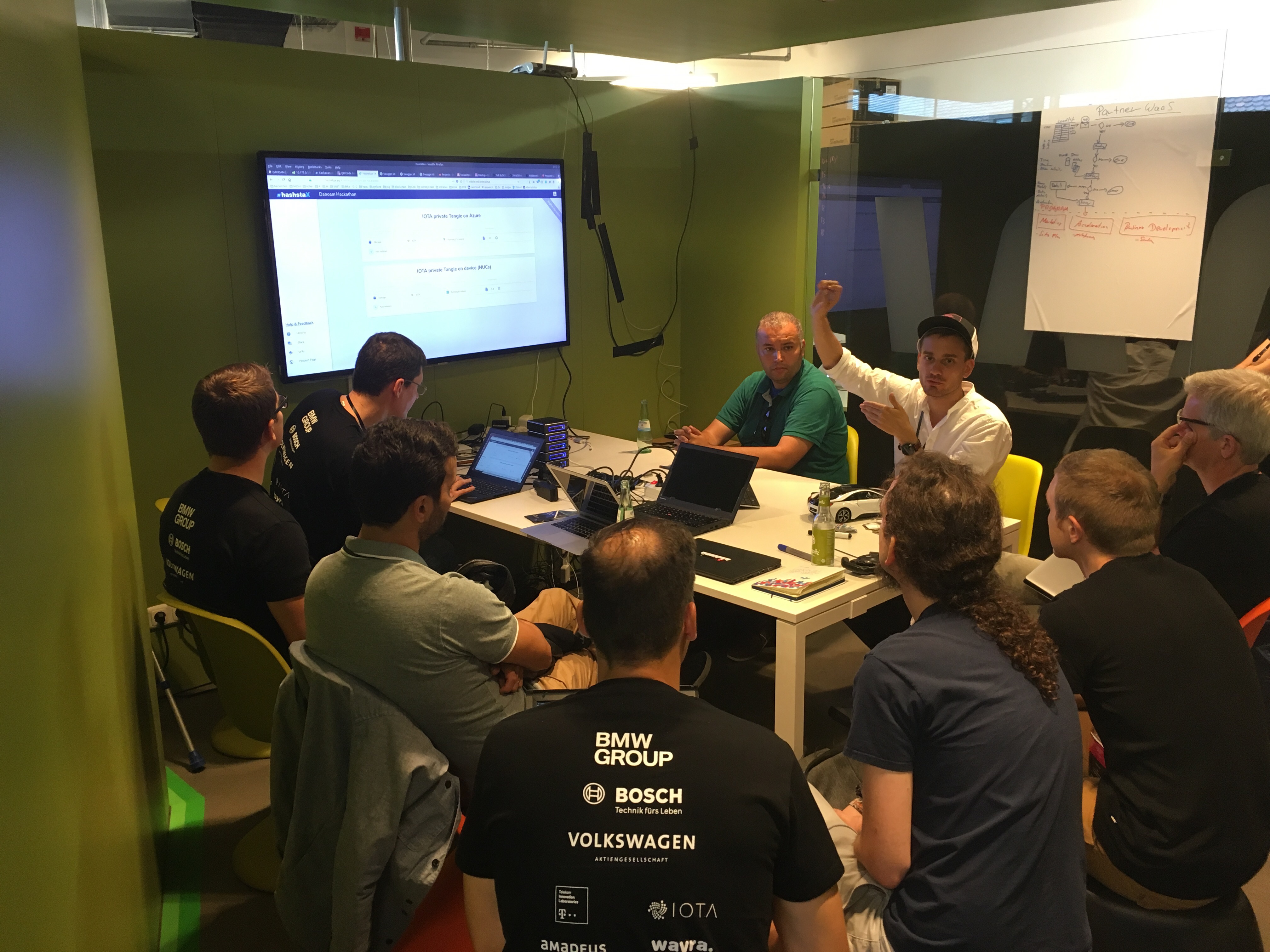
Over the weekend of 20-22 July, heavy rain poured on the streets of Munich. Which did not prevent 20,000 people to demonstrate against xenophobia at Königsplatz, also went more or less unnotced by the 150 participants of the BlockchainedMobility hackathon who met to create blockchain-based mobility solutions.
Hacker teams of leading European mobility players, such as BMW, Volkswagen Group, Bosch, Deutsche Bahn, Deutsche Telekom, Amadeus, and others mixed with freelance developers, designers and business experts to work on IOTA and Ethereum. On Sunday afternoon, the jury saw 18 project teams presenting a broad variety of mobility solutions, from specific applications, such as a EV charging station finder, to more generic solutions like a mobility API to match offerings of mobility providers with the needs of the end user.
Georg Eisenreich, Minister of the State of Bavaria
The hackathon started on Friday with a keynote by the Minister of State for Digital, Media and Europe, Georg Eisenreich, who highlighted the importance for collaboration of the State of Bavaria with on the one hand corporations, such as the hackathon‘s sponsors, on the other hand with the technology – or more specifically – the blockchain community. Minister Eisenreich emphasised the role of the State of Bavaria in providing a sound economical framework for blockchain startups and projects. He encouraged the participants to be creative and dare to found companies in order to foster Bavaria‘s and Europe‘s competitive advantage in the area of blockchain.
Michael Reuter (Datarella), Peter Busch (Bosch), Dominik Pietsch (BMW) Alisa Maas (IOTA) Klaus Schaaf (Volkswagen Group), Herbert Mangesius (Vito Ventures)
After the keynote, the representatives of the main sponsors Dominik Pietsch (BMW), Klaus Schaaf (Volkswagen Group), Peter Busch (Bosch), and Alisa Maas (IOTA) discussed the state of mobility and the expectations of the mobility players for the hackathon with Herbert Mangesius (Vito Ventures) and Michael Reuter (Datarella). At BMW, Volkswagen Group and Bosch, blockchain has obtained an important role within the areas of technology to work on. Dominik Pietsch, Klaus Schaaf and Peter Busch all agreed upon the importance their companies put in blockchain as a foundational layer for mobility solutions. Particularly in regard to the complex regulatory requirements for large corporations in any case of collaboration, blockchain serves as a neutral technological layer that allows for a joint use of mobility data provided by different players within the ecosystem.
Deutsche Telekom. Breakout Session
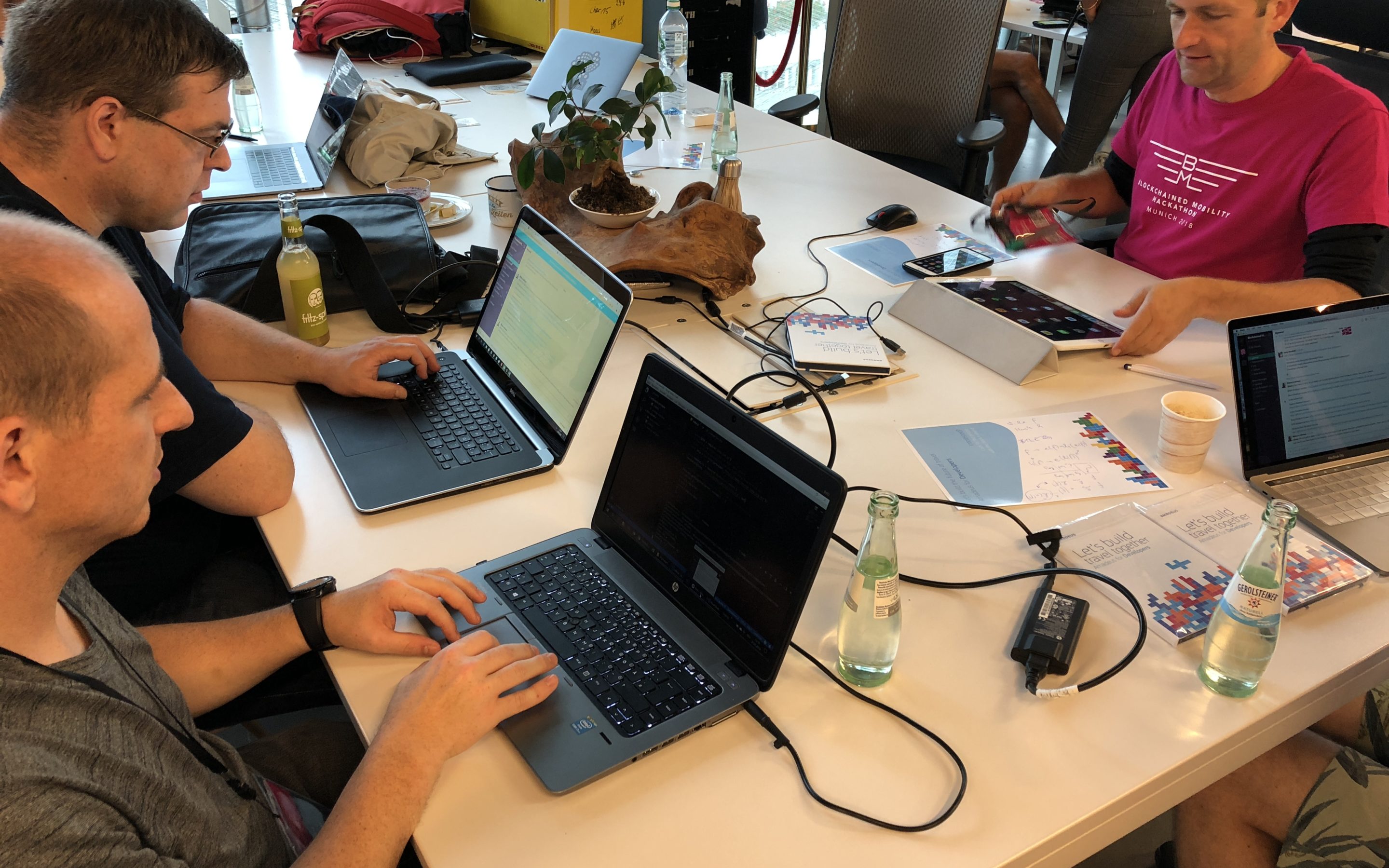
During Saturday and Sunday, hackers worked highly concentrated and steadily to create their applications they had to present towards the jury. Breakout sessions by the sponsor teams and Yoga interludes gave variety in the workflows. Some teams, e.g. Bosch and Deutsche Telekom, provided not only APIs but sensor-driven hardware the hackers could integrate into their projects.
Sunday evening, the jury announced 3 winners out of 18 projects, who received IOTA’s in worth of USD 5,000 (#1), USD 2,000 (#2) and USD 1,000 (#3) as well as 50,000 XSC (#1), 30,000 XSC (#2) and 15,000 XSC (#3). Additionally, Lewis Freiberg of the IOTA Foundation announced a special prize: the opportunity to receive USD 50,000 in IOTA tokens provided by the IOTA ecosystem fund for the best open-source project.The hackathon‘s winners were:
#1 OMS – Open Mobility API: USD 5,000+ 50,000 XSC + the opportunity to receive USD 50,000 from the IOTA ecosystem fund
OMS – Open Mobility API
#2 AgentFinder – EV Charging Station Finder USD 2,000 + 30,000 XSC
AgentFinder – EV Charging Station Finder
#3 Pac-Man On Wheels – Crowdsourced Incentive Scheme For Privately Collected Driving Data USD 1,000 + 15,000 XSC
Pac-Man On Wheels
We will publish short interviews with each project team over the next few days.
After the jury‘s decision, the hacker crowd gathered for a few more hours to get themselves the last drinks and discuss next steps: since everybody enjoyed this weekend and we received so much positive feedback from the community, we have already started thinking about how to build upon the success of the BlockchainedMobility hackathon. Hopefully we – and new sponsors and participants– will meet again, soon!
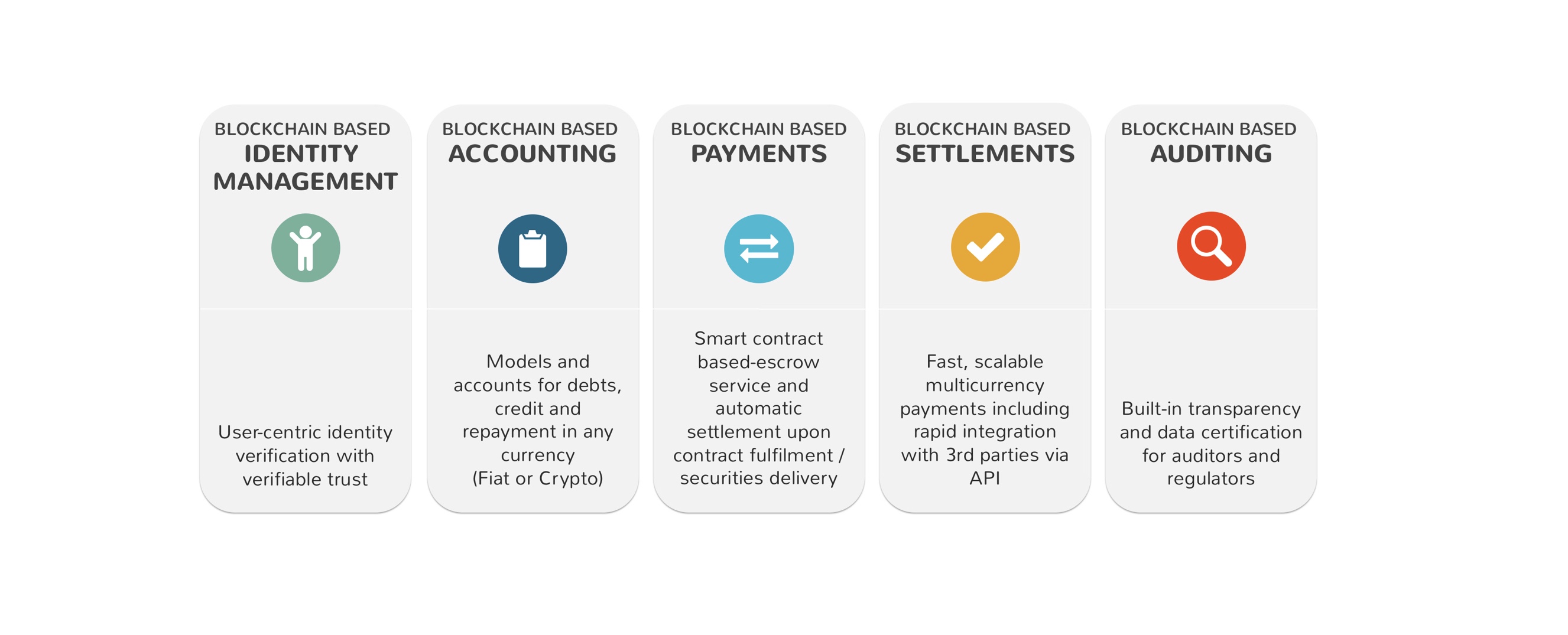
Blockchain is a foundational technology, an underlying technology layer for applications built on top of it, allowing them to share a joint database and a ledger. It provides realtime access to an immutable and consistent data set. Based on our experiences launching the Building Blocks project on behalf of the United Nation’s World Food Programme (WFP) in May 2017, we launched its RAAY project in early 2018.
RAAY’s goal is to become a new operating system for banking. Since the finance industry hasn’t changed much during the last decades, and financial crises followed by new stern regulatory frameworks have made banking even harder, banks are faced with a multitude of challenges, from a degenerated trust to inflexible and overcharged IT infrastructures and processes. For the RAAY team, blockchain provides the ideal basis for renewing trust and making IT more efficient for banking. Therefore, RAAY has been working on a new operating system to enable players of the finance industry with a blockchain-based technology layer to build lean, efficient, trust-less applications on top of it.
RAAY is partnering with a German bank to create a blockchain-based token representing the ownership of a German real estate fund. The token is part of an immutable, trust-less and decentralised system built specifically for the new RAAY operating system for banking. The token and the auxiliary system achieves an improved model for ownership of real estate by applying blockchain technology, secure and scalable identification solutions and tried-and-tested account management software.
The token is characterised by a smart contract defining key functionality (transfers, rights, etc.) and listing properties (ownership, price, fund information, etc.). The token smart contract is linked to another smart contract which manages the different tokens and allows users to interact with various tokens in a simple way. Ownership of a token is proven by the possession of a private key. The corresponding public key is publicly listed in the smart contract. Building on the immutability and security of blockchain technology allows any token holder to prove ownership to anyone, in real-time, without doubt.
The auxiliary system contains three main components:
Identification,
Application for Tokens and
Fund-Connection.
The Identification takes place according to applicable KYC-regulations with the addition of the creation of a blockchain identity, in effect a public-private key pair. The secret private key is much like a password and can be either downloaded to a secure offline-storage by the client or can be stored in a so-called cold wallet managed by a future RAAY-bank entity. If investment amounts exceed a certain limit, tokens are stored in a multi-signature wallet for additional security.
The Application for Tokens is a protocol for converting any type of funds (fiat or cryptocurrency) into tangible asset tokens. It requires an account with a depository bank for fiat currencies.
The Fund-Connection is the direct correspondence between existing tokens and shares of the fund in question. This ensures the validity of each claim that a token holder may have, on any ownership/access to dividends from the fund.
This is the first step in RAAY’s strategy to create the new operating system for banking. It is a needed use case that will be operational and reduce costs for the fund deploying it. By going stepwise from one application area to another, RAAY will build a modular and configurable OS for banking that removes inefficiencies regardless whether the partner is a fund, a bank or a fintech-company.
Compete and collaborate: The Blockchained Mobility Hackathon brings together the biggest players in Europe’s mobility ecosystem with the brightest independent developer teams for 2.5 days of blockchain mobility hacking! You’ll use bleeding edge blockchain tech to imagine and build prototype solutions for a sustainable mobility ecosystem. Network and innovate in an open sandbox with industry peers! All participants will get free tickets to the DAHO.AM Tech Conference in Munich on July, 24th2018 and the hackathon winner will receive prizes to be announced at the event. (more…)