
by Admin | 30 March 2026 | Blockchain
At Datarella, we specialize in building secure, production-ready AI agents and decentralized systems. Our work with RAAY RE – the AI operating system for real estate developers, asset managers, and funds – applies these capabilities directly to property management. Here’s a technical breakdown of how agentic AI transforms operations, with emphasis on architecture, data handling, and system integration.
What Agentic AI Really Means Technically
Traditional AI in real estate typically stops at analytics dashboards or chat-based query answering. Agentic AI goes further: agents are goal-directed autonomous systems that perceive their environment (via data streams and APIs), reason over multiple steps, plan action sequences, interact with external tools and services, and execute tasks end-to-end while maintaining state and handling exceptions.
In practice, these agents use:
- Orchestration frameworks such as LangGraph for building bounded, controllable multi-agent workflows.
- Tool-calling and function execution to interface with databases, property management software, accounting platforms, IoT gateways, and third-party APIs.
- Memory and state management to track long-running processes (e.g., a maintenance ticket from detection to closure).
- Planning and reasoning loops (often powered by large language models combined with rule-based safeguards) to break down high-level goals into executable sub-tasks.
The result is systems that don’t just suggest actions – they carry them out reliably within defined guardrails.
Core Technical Capabilities in RAAY RE
RAAY RE’s Workflow module deploys AI-driven agents that operate across fragmented, decentralized data landscapes typical in property portfolios. Here’s how the technology addresses real challenges:
- Decentralized Data Synchronization
Property data rarely lives in a single monolithic database. Agents autonomously query and reconcile information from multiple sources — PMS platforms, ERP/accounting systems, IoT sensor networks, external credit bureaus, and document repositories. They perform real-time integrity checks, detect anomalies or conflicts, and orchestrate secure updates while preserving audit trails. This reduces manual reconciliation errors and supports GDPR-compliant data flows through controlled access and logging.
- Multi-Step Workflow Automation
Agents handle complex, conditional processes by chaining actions: perceive → reason → act → verify → iterate. Examples include:
- Maintenance Operations: Ingest IoT sensor readings and image data → apply predictive models for anomaly detection → evaluate repair options against budget rules and vendor SLAs → dispatch approved contractors via API → monitor progress through status updates → confirm completion and trigger invoice validation.
- Financial Processes: Automate rent collection reminders with probabilistic dunning (adjusting based on payment likelihood models), perform transaction matching across bank feeds and ledgers, flag discrepancies, and generate compliance-ready reports.
- Document Intelligence: Use extraction models to pull structured data from unstructured leases, inspection reports, and invoices → abstract key clauses and obligations → populate downstream systems → enforce regulatory checks.
- Tenant-Facing and Leasing Agents
24/7 communication agents integrate with chat, email, and voice channels to handle routine inquiries, schedule viewings, and route escalations. Leasing agents combine multi-source data (credit history, behavioral signals, references) to evaluate applicants and score risk, accelerating approvals while maintaining explainability for compliance.
Security and Reliability Engineering
Datarella places strong emphasis on making agents enterprise-ready:
- Bounded agent orchestration (using patterns like LangGraph and Inngest) to prevent uncontrolled autonomy and keep agents within predefined scopes.
- Autonomous agent hardening and isolation — including threat modeling, MCP server security, API security layers, and multi-agent interaction safeguards.
- Compliance-by-design features for data protection regulations, with transparent logging and human-in-the-loop options for sensitive decisions.
- Web3 foundations where appropriate: leveraging blockchain for immutable audit trails, decentralized identity elements, or secure data marketplaces in multi-stakeholder scenarios (building on our experience with Fetch.ai and similar decentralized agent systems).
These measures ensure agents remain controllable, auditable, and resilient even when operating across distributed environments.
Technical Benefits and Scalability Considerations
From an engineering standpoint, agentic systems deliver:
- Reduced operational latency through parallel tool use and automated decision loops.
- Lower error rates via consistent execution paths and automated verification steps.
- Improved scalability: portfolios can grow without linear increases in administrative staff, as agents handle volume spikes in inquiries, maintenance tickets, or reporting cycles.
- Better data quality through continuous synchronization and anomaly detection across heterogeneous sources.
Integration typically involves secure API layers, event-driven architectures, and gradual rollout — starting with bounded pilots on specific workflows before expanding to full AI-native operations.
Looking Ahead: Toward Fully AI-Native Real Estate Operations
Agentic AI in property management is still evolving. Future iterations will likely incorporate more advanced multi-agent collaboration (where specialized agents negotiate or hand off subtasks), tighter integration with edge/IoT devices, and enhanced reasoning capabilities for strategic forecasting.
At Datarella, our focus remains on combining robust AI agent development with Web3 infrastructure and security-first design. Through RAAY RE, we help real estate organizations move from reactive, manual-heavy processes to proactive, autonomous systems that synchronize data intelligently and execute reliably at scale.
If you’re exploring agentic architectures for property management, whether for workflow automation, decentralized data orchestration, or secure multi-agent systems, we’d be happy to discuss the technical details.

by Michael Reuter | 26 June 2022 | Blockchain, Featured, MOBIX, SSI, Track and Trust, Web3 Company Builder
With Datarella, we have been building software, tools, and applications for Web3 since 2015. Our first truly global project has been the Building Blocks application which enables users to securely pay with their smartphones in refugee camps.
We‘ve developed Track & Trust, a tracking solution for humanitarian aid logistics that leverages satellite communication. In the mobility sector, we have created SSI apps and smart parking solutions to enable secure P2P communications, streamline traffic flows, and minimize CO2 emissions. With 16 other companies, we’re part of Gaia-X consortium moveID that will create the decentralized digital infrastructure for mobility in Europe. And much more! And, in 2020, we decided to leverage our tech stack and create the Datarella Web3 Company Builder Model.
RAAY Real Estate
In 2020, we have launched RAAY Real Estate (RAAY RE) as our first standalone project, together with two partners from the real estate industry. Our RAAY RE joint venture with Hammer AG and Wertgrund Immobilien AG was the first to tokenize a commercial property, fully licensed by German regulator BaFin – Connex Coin was a breakthrough! RAAY RE will become the legal framework of our future IMMOBIX project and token.
MOBIX Marketplace
In 2021, we launched our micromobility marketplace MOBIX. By using the MOBIX app, more than 350,000 daily active users in over 120 countries are earning MOBIX Miles while riding eco-friendly vehicles, such as scooters, bikes, eBikes, eMopeds, or cargo bikes. By incentivizing users to swap their combustion engines with zero-emission transportation, MOBIX helps to decrease CO2 emissions and to make cities more liveable. In the meantime, MOBIX has evolved into the MOBIX Marketplace GmbH, a Munich-based company owned by Datarella, and Fetch.ai.
MOBIX family
The latest brainchild of Datarella’s Web3 Company Builder Model is MOBIX family – a decentralized gig economy network. MOBIX family is the first project in the Company Builder Model that will be driven with the support of an external team. Whereas RAAY RE and MOBIX have been built by internal Datarella resources, a young team of aspiring entrepreneurs from the Technical University of Munich (TUM) has taken care of the Family’s first steps. The team has presented the first MOBiX family MVP during START Ideasprint 2022, a 4-day hackathon based out of Munich.
NOMIX
In 2023, the next project – NOMIX – will launch its BIOCLOCK app. Leveraging the same tech stack as other Datarella Web3 companies, NOMIX will help users around the world maximize their healthspans, i.e. living longer while staying healthy!
We at Datarella are very happy to see more and more teams using our Web3 tools and applications, and creating new ventures! Are you interested in joining an existing Web3 team or do you want to pitch your own idea? Do you want to become part of the Web3 world but prefer to participate from the sideline, you might be interested in owning DREX, our Datarella token which entitles the holder to receive tokens of Web3 projects. In either case, please contact us!
by Michael Reuter | 9 March 2020 | Blockchain
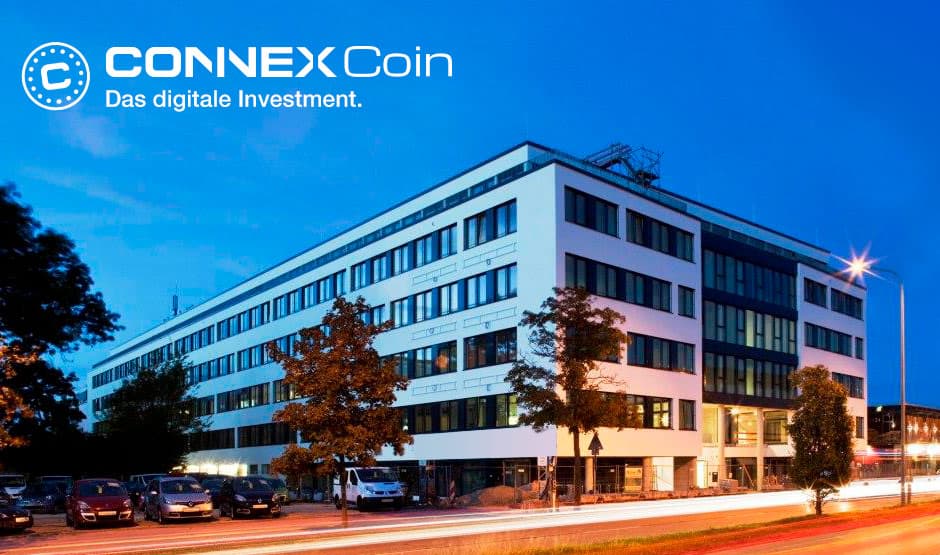
This week, our partner company RAAY Real Estate GmbH, launches Connex Coin, its first security token.Connex Coin is Germany‘s first security token that qualifies as a productive investment and is fully compliant with EU regulations.
At EXPO REAL 2019, Europe’s largest real estate fair, RAAY RE presented first details of this project. In February, the token received final approval by German financial regulatory body BaFin. The very first phase of the STO, the sale of Connex Coin, to friends and family, has already begun.
The idea of Connex Coin was born in 2018. Then, we discussed digitisation projects in the field of real estate funds with Thomas Meyer, founder and CEO of Wertgrund Immobilien AG, a residential real estate fund manager. Shortly afterwards, we started a similar conversation with Hans Hammer, founder and CEO of Hammer AG, a commercial real estate developer. It became clear within weeks: we should have these conversations together, as a team.
Fast forward: In July 2019, we founded our new partner company RAAY Real Estate (RAAY RE) as a joint venture of Hammer, Wertgrund and Datarella. The purpose of RAAY RE is to offer blockchain-based products and solutions to the real estate industry, which itself is a late adopter regarding digitisation efforts. We decided to start RAAY RE with the tokenisation of a Hammer-owned property, located in central Munich. With the Connex building, we have a first class property in one of the best real estate locations in Europe, with first class tenants — in short: the best product you can imagine for the start of a product category in your company!

By tokenising this property, we provide the perfect investment opportunity — especially for retail investors — since individuals can become real estate investors starting at 10 EUR. The Connex Coin token sale will take place from March to May 2020. Connex Coin owners will receive an interest of 3% on their investments and can sell Connex Coin back to the issuer. In the first phase, there will be no public trading of Connex Coin, since at the moment there are no EU-compliant cryptocurrency exchanges that offer trading security tokens. As soon as there is approval from financial regulators, Connex Coin will be one of the first security tokens listed on exchanges in Europe.
Connex Coin is the first token issued by RAAY RE, others will follow. RAAY RE is planning to launch more token sales for self-owned real estate properties in 2020. Additionally, tokenisation will be offered as a service to players on the real estate industry. This offering comprises the complete tokenisation process, including technical, legal and regulatory elements, based on an existing long-term real estate expertise.
In addition to tokenisation services RAAY RE offers a variety of tools and products that can be used by real estate developers, owners and funds, ranging from KYC onboarding processes, to smart digital (crypto) wallets. With the launch of Connex Coin, RAAY RE proves that blockchain technology can be leveraged to make payment and transaction processes within real estate more efficient, thus paving the way to a digitised future for the real estate industry.
The acquisition of this investment involves considerable risks and can lead to the complete loss of the invested assets.
Risk Disclosure § 12 VermAnlG
