Datarella Launches SSI Wallet For Innovative Identity Management
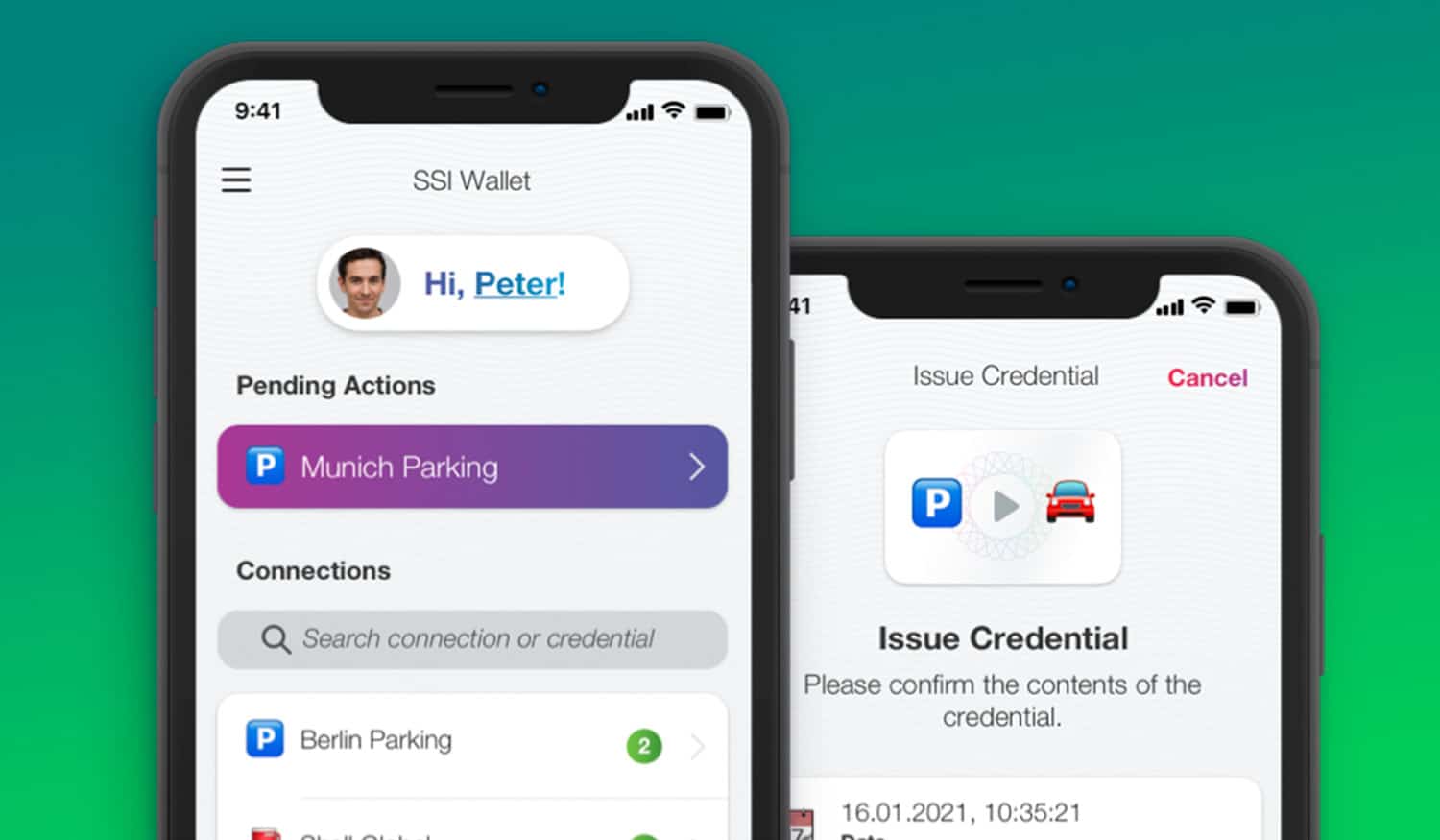
Datarella is offering its customers state-of-the-art Self-Sovereign Identity infrastructure with its SSI Wallet for innovative identity management. It can be integrated into new or existing ecosystems and provide fundamental decentralized identity infrastructure for users to authenticate, issue and receive Verifiable Credentials or transfer data. This allows for many innovative use cases like credential-based access management, automatic credential verification or trusted data transfer.
The Wallet
Having full control over an own digital identity is one of the fundamental principles for Self-Sovereign Identities. This includes that private keys and verifiable credentials are not stored on a centralized exchange or platform, but on the user’s very own devices in a decentralized manner. From this device, the user can issue or receive credentials and authenticate themselves by connecting with other SSI agents.
Like in the physical world where an identity is represented by an ID document which is often kept in a physical wallet, digital private keys and verifiable credentials are stored in a digital wallet. From here, the user can decide with whom the user interacts and shares information from its wallet. The user can ensure that private information is stored only on authorized devices and not in centralized databases which reduces the risk of data breaches tremendously. A wallet can have various forms, a browser extension, a hardware wallet or an entire app like Datarella’s SSI Wallet.
Technology
The SSI Wallet is meant to be deployed in ecosystems that allow users to interact with each other, with SSI compatible websites and IoT edge devices like micromobility vehicles. This is enabled by the Aries Framework Go, which supports a broad variety of edge- and cloud environments.
The wallet further provides a high level of privacy as it natively supports did:peer methods which creates pairwise pseudonymous DIDs for each individual connection and therefore avoids correlation by design. Even though did:peer does not require a ledger, the Aries-Framework Go supports public DID methods like did:web or DIF’s Sidetree protocol. It further allows selective disclosure of credentials thanks to its support for BBS+ signatures. The SSI wallet is therefore perfectly suited for public adoption as well.
It will soon also contain SDKR – a decentralized key backup and recovery mechanism that allows you to backup and recover your secrets with only your official eID. No need to remember passwords or the location of your backups thanks to eIDAS and decentralized and opaque storage capabilities from StorJ.
Conclusion
With our SSI Wallet, we are confident to demonstrate the benefits of Self-Sovereign Identity perfectly in a privacy-preserving and intuitive manner. By using the Aries-Framework Go, we can ensure that it works on web applications and mobile solutions as well as on proprietary IoT devices either without a ledger entirely (only P2P) or by using did:web or the Sidetree protocol.