by Rebecca Johnson | 14 October 2024 | Blockchain, Track and Trust
This is the third article in a series of technical posts about how Track & Trust works at a component level. The world today is full of fake news and dubious “facts.” Consequently, we face a significant challenge in verifying the accuracy of the data we receive. Moreover, a major part of this challenge is identifying the source of this data. We can’t predict who the end users of the Track & Trust system will be or exactly what they will want to communicate, which makes this task even more difficult. To address this issue, we must ensure that data entering our system are valid. This post explores how the “Trust” part of Track & Trust works. It explains exactly how we maintain the chain of data authenticity.
Quick navigation links to the follow-up articles will be provided at the bottom of each article once the series is complete. For now, let’s jump in.
Establishing a foundation for the data authenticity chain
We designed our system to accommodate key requirements that establish a foundation for data authenticity. Specifically, our goal was to create a flexible system. This system can work with any logistics company, regardless of their internal processes. Notably, we achieved this flexibility, which is a key benefit of Track and Trust. This allows us to collaborate with a wide range of partners. Furthermore, logistics companies can increase the number of data points they receive about their shipments from the field by using Track & Trust.
This, in turn, enables them to achieve probabilistic 360° supply chain tracking. Our team structured the Track & Trust data to integrate easily into any logistics database. In particular, we use a series of linked cryptographic signatures and blockchain transactions to create this data authenticity chain. Finally, this chain of custody has a specific purpose. It ensures that we can authenticate and validate offline events once they reach our servers.
How does the data authenticity chain work?
TLDR: We leverage APIs to take inputs from our customers (Logistics Firms) as well as to give them valuable probabilistic 360° supply chain tracking data back. For demonstration purposes we have built a front-end website to make the system tangible but the magic happens via our swagger API.
The processes surrounding our data authenticity chain are pretty technical. To make it easier to understand we’ve formated the workflow into a sequence diagram that anyone can understand.
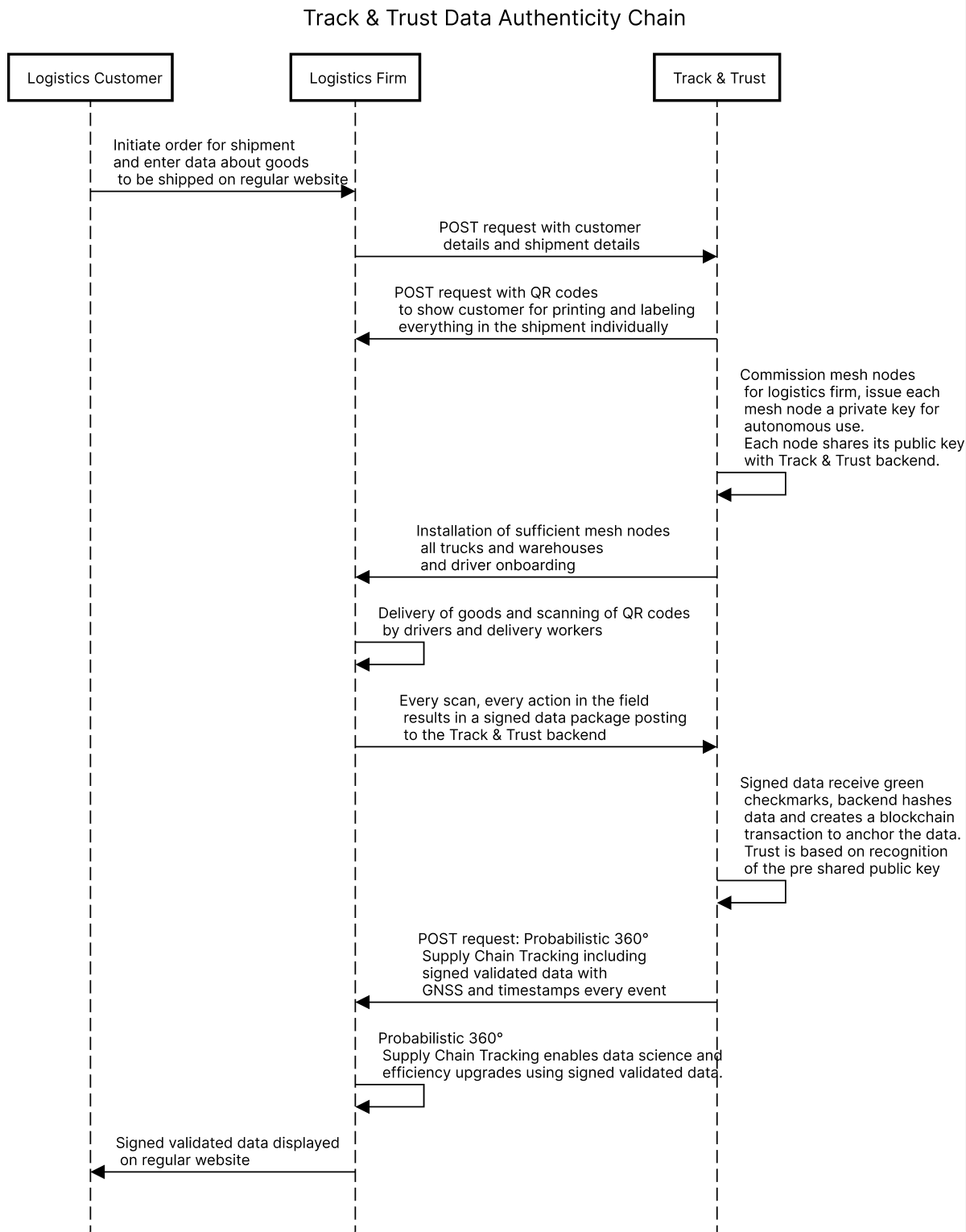
In summary, our data authenticity chain is simply a way of validating, recording and making messy data from the field trustworthy. Once that’s accomplished leverage our blockchain toolkit to make those data immutable and highly tamper resistant. It’s a chain of custody for that data that includes built-in proof of origin. This, in turn, enables traceability and trust beyond the current state of the art.
Our next post will cover all of the ways that we can view this information. We’ll also be covering the orchestration systems operating in the background that enable us to do over the air updates to the hardware. There will be dashboards, monitoring and CI/CD galore for your perusal.
<< Previous Post
Next Post >>
by Rebecca Johnson | 1 October 2024 | Blockchain
We’re excited today to reveal the hardware and a bit of software magic behind Track & Trust and announce a milestone achievement on our way to commercializing the product! Track & Trust is a logistics tracking and communication suite toolset. This post dives into basics of the hardware and the software that drives it as well as some of the unique capabilities of the system. We’ll be following up with a series of posts on the tech and also on the pilot in the field!

We’ve just passed our “Site Acceptance Test” with the European Space Agency. This test evaluates the entire technical range of functionalities expected for the Track & Trust system. Consequently, we’re proud to announce that we passed all the tests in the three-day site acceptance test inspection. We tested all thirty-four formal technical requirements of the system. Although the testing took place in June, we had to keep quiet about it for operational reasons. Meanwhile, our team has been working hard to prepare for the next phase.
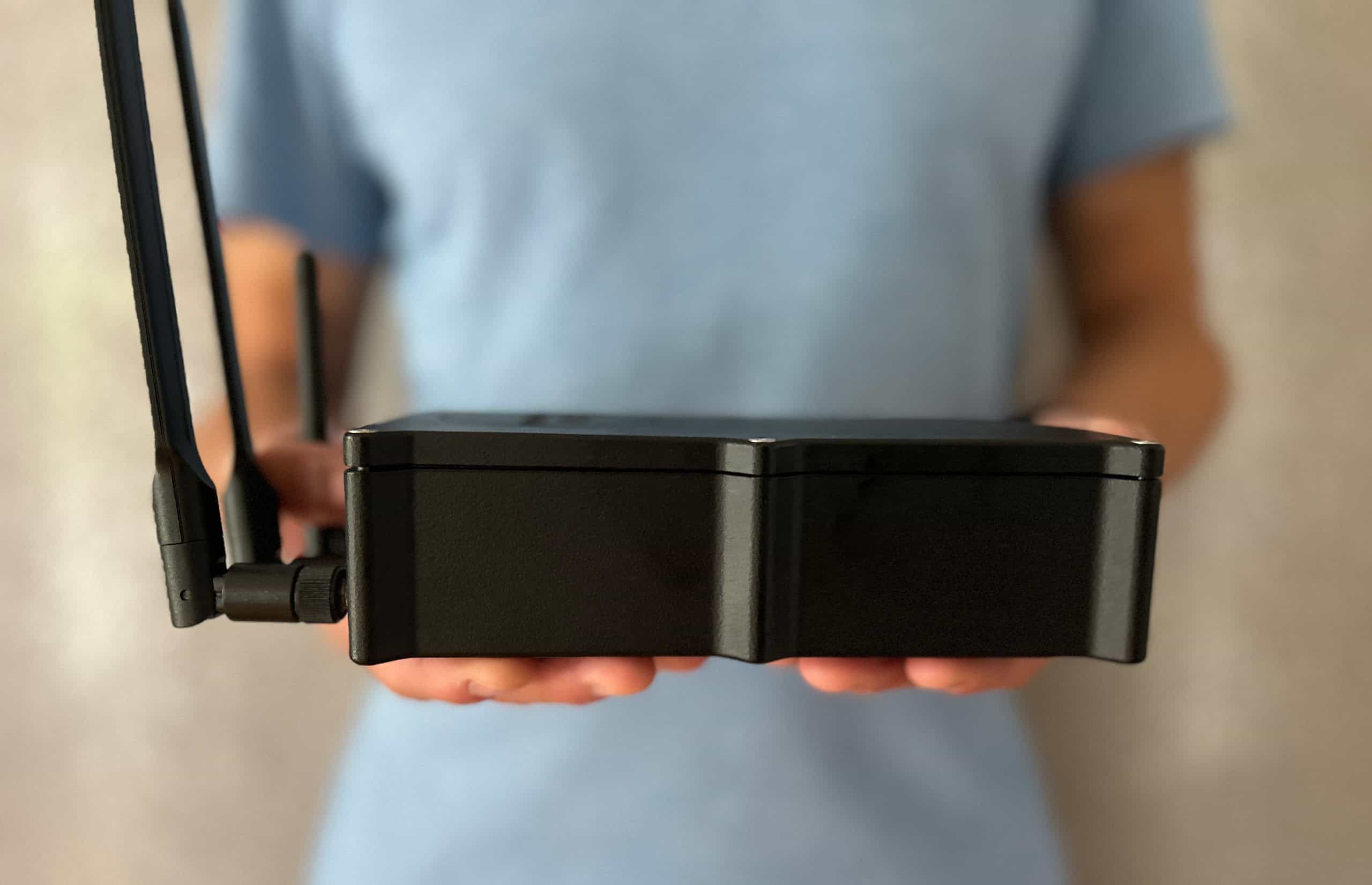
We’re building the ultimate communications system with our partners at Weaver Labs and Ororatech. Specifically, Track & Trust relies on “magical” black boxes that make logistics tracking and communication possible in the worst conditions. These boxes can withstand internet outages, power outages, and wet conditions. You can plug them into a truck and they’ll keep working. In addition, they’re designed to be user-friendly and easy to integrate with existing systems.
What’s in the black box?
Our partners at Weaver Labs built hardware with a Swiss Army knife of multi-bearer communications capabilities. It doesn’t need the internet to load the software. The boxes pack 4G radios, two WiFi radios, and Weaver Labs clever cellmesh software capabilities. These capabilities enable them to talk to each other offline, exchange information, and post when possible. They can post using traditional 4G or the included satcom uplink from Ororatech. Furthermore, this technology allows for seamless communication between devices, even in areas with limited connectivity.
We at Datarella have built a suite of interfaces into Track & Trust that any user can leverage to contribute cryptographically signed inputs about logistics events. Our system has real-time monitoring and CI/CD capabilities that enable us to fix issues on the fly. This is a plug-and-play solution for gathering more information about shipments. We can funnel this information directly into logistics service providers’ databases using our APIs. As a result, our customers can enjoy greater visibility and control over their supply chains.
Value for Logistics Tracking Organizations
Track & Trust generates secure, validated events with every user interaction. These events are geolocated with GNSS and timestamped. We anchor them to the fetch.ai blockchain via a hashing mechanism, resulting in a powerful combination of privacy and immutability. Moreover, this ensures that all data is tamper-proof and transparent.
We delayed posting about it publicly because we needed to move quickly and get the devices into our planned piloting environment in Lebanon. This required sensitive handling. Now we’re making progress on the pilot operations in the field, despite difficult conditions. Finally, we’re excited to share more details from the summer and look forward to continuing our work on this groundbreaking project.
