The social relevance of the explore app guides – The Datarella Interview
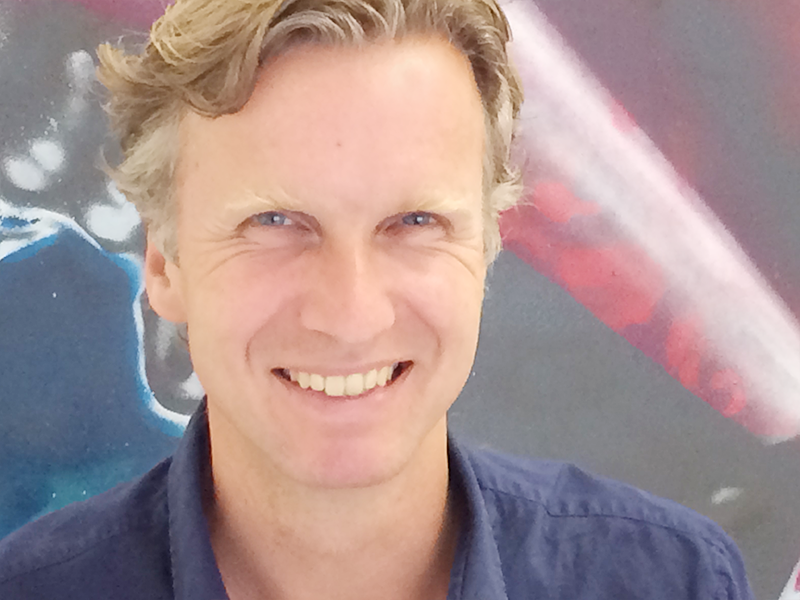
Today, we speak with Michael Reuter (KMR), Co-founder of Datarella, about the social relevance of the explore app guides.
Q
At Datarella, you offer different programs your users can participate in. Can you elaborate on the meaning behind these programs?
KMR
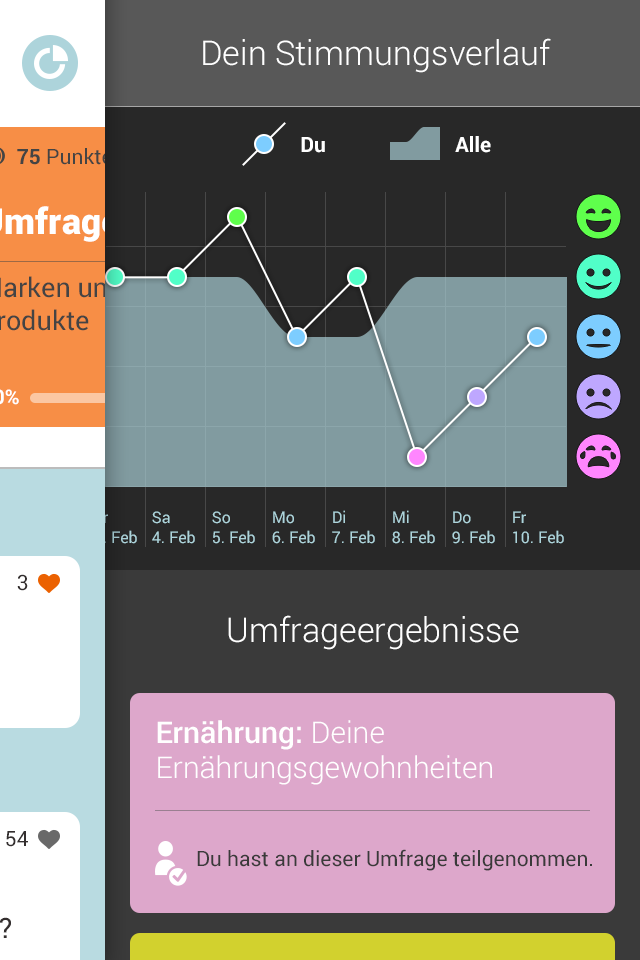
With our explore app, we provide a useful free tool for smartphone users to optimize their lives. There is a broad range of specific life situations in which the explore programs provide valuable and sustainable benefits. From lifestyle oriented programs as SMILE!, our guide to learn how to smile in 5 days, to specific health programs as our OsteoGuide which supports users suffering from Osteoporosis – we provide a broad range of programs. The most important aspect for Datarella is to always provide real benefits to our users: it’s not about technology, it’s about the social relevance of technology, its immediate impact on the user.
Q
Could you describe one of those programs and its impacts on your users in more detail?
KMR
Sure! Let’s take the OsteoGuide: in countries with populations with median ages of 45 and older, Osteoporosis has become a widespread disease. People suffer from Vitamin D shortage, move less and less during the day and, as a result, their bone structure becomes more fragile. If Osteoporosis is analyzed at an early stage it’s curable in most cases. To cure a patient from Osteoporosis you have to help her to regulate her Vitamin D level and to move more; i.e. to change her behavior: the patient should use the staircase instead of the escalator, or walk or go by bike instead of using the car or a taxi.
A change of human behavior is one of the toughest challenges you can think of. Ask yourself: how easy is it for you to quit smoking, stop taking the extra bar of chocolate, etc. The best method to support people in changing their behaviors is to provide them with instant feedback of their behavior and to give regular counsel in terms of notifications and recommendations. With the explore app and our programs, we cover these aspects perfectly. We accompany our users during a certain period of time and help them to change their behavior to the better, step by step, day by day. In case of the OsteoGuide, we cooperate with Prof. Dr. med. Reiner Bartl of the Bayerisches Osteoporosezentrum, an acknowleged expert in the field of Osteoporosis.
Q
That sounds fascinating: you say that people in need of medical care can get rid of their diseases by using the explore app?
KMR
To be very clear: the explore app cannot fully compensate a medical treatment. And Datarella is not a team of health professionals. We have to join forces with experts like Prof. Bartl to provide our share of a solution for a patient. But, in many cases, medication can only applied successfully if the patient herself contributes to her well-being. And, in most cases, this means that she has to change her behavior. We have string evidence that the explore app programs are perfect tools to achieve this goal.
Q
You mentioned that the explore programs are free. Where is your business model?
KMR
Yes, every smartphone user can download the explore app and apply for any of the explore programs. It’s free to participate on the basic program level which includes, tasks, notifications and recommendations during the complete program. If a user wants more, e.g. if she is looking for a personalized individual coaching, she would have to subscribe to the premium version of the corresponding program. With the premium version she would also get tasks, notifications and recommendations, but on an personalized level, customized to her individual needs. This coaching approach is mostly sought-after by users who must change their behavior in order to achieve a satisfying level of personal well-being. And if behavior change is a must, then you’ll look for the easiest way to reach your goal. The explore app programs fit very well into that requirement since the user will be coached in a soft, but equally demanding and rewarding way.
Q
Thank you very much for these insights!