by Kira Nezu | 4 August 2014 | Blockchain
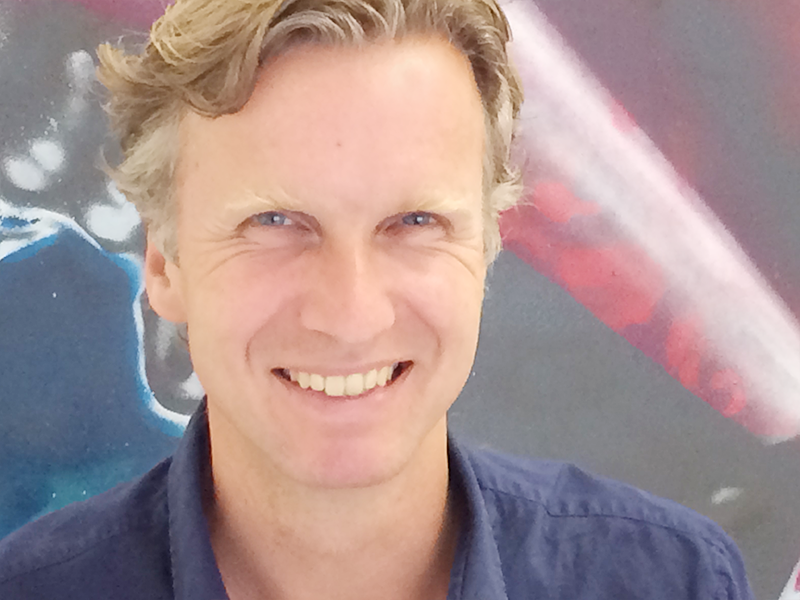
Today, we speak with Michael Reuter (KMR), Co-founder of Datarella, about the social relevance of the explore app guides.
Q
At Datarella, you offer different programs your users can participate in. Can you elaborate on the meaning behind these programs?
KMR
With our explore app, we provide a useful free tool for smartphone users to optimize their lives. There is a broad range of specific life situations in which the explore programs provide valuable and sustainable benefits. From lifestyle oriented programs as SMILE!, our guide to learn how to smile in 5 days, to specific health programs as our OsteoGuide which supports users suffering from Osteoporosis – we provide a broad range of programs. The most important aspect for Datarella is to always provide real benefits to our users: it’s not about technology, it’s about the social relevance of technology, its immediate impact on the user.
Q
Could you describe one of those programs and its impacts on your users in more detail?
KMR
Sure! Let’s take the OsteoGuide: in countries with populations with median ages of 45 and older, Osteoporosis has become a widespread disease. People suffer from Vitamin D shortage, move less and less during the day and, as a result, their bone structure becomes more fragile. If Osteoporosis is analyzed at an early stage it’s curable in most cases. To cure a patient from Osteoporosis you have to help her to regulate her Vitamin D level and to move more; i.e. to change her behavior: the patient should use the staircase instead of the escalator, or walk or go by bike instead of using the car or a taxi.
A change of human behavior is one of the toughest challenges you can think of. Ask yourself: how easy is it for you to quit smoking, stop taking the extra bar of chocolate, etc. The best method to support people in changing their behaviors is to provide them with instant feedback of their behavior and to give regular counsel in terms of notifications and recommendations. With the explore app and our programs, we cover these aspects perfectly. We accompany our users during a certain period of time and help them to change their behavior to the better, step by step, day by day. In case of the OsteoGuide, we cooperate with Prof. Dr. med. Reiner Bartl of the Bayerisches Osteoporosezentrum, an acknowleged expert in the field of Osteoporosis.
Q
That sounds fascinating: you say that people in need of medical care can get rid of their diseases by using the explore app?
KMR
To be very clear: the explore app cannot fully compensate a medical treatment. And Datarella is not a team of health professionals. We have to join forces with experts like Prof. Bartl to provide our share of a solution for a patient. But, in many cases, medication can only applied successfully if the patient herself contributes to her well-being. And, in most cases, this means that she has to change her behavior. We have string evidence that the explore app programs are perfect tools to achieve this goal.
Q
You mentioned that the explore programs are free. Where is your business model?
KMR
Yes, every smartphone user can download the explore app and apply for any of the explore programs. It’s free to participate on the basic program level which includes, tasks, notifications and recommendations during the complete program. If a user wants more, e.g. if she is looking for a personalized individual coaching, she would have to subscribe to the premium version of the corresponding program. With the premium version she would also get tasks, notifications and recommendations, but on an personalized level, customized to her individual needs. This coaching approach is mostly sought-after by users who must change their behavior in order to achieve a satisfying level of personal well-being. And if behavior change is a must, then you’ll look for the easiest way to reach your goal. The explore app programs fit very well into that requirement since the user will be coached in a soft, but equally demanding and rewarding way.
Q
Thank you very much for these insights!

by Michael Reuter | 26 May 2014 | Blockchain
What unites poets, philosophers, psychologists, neurologists and economists? They all are interested in what makes us happy. Sure, they have their distinct perspectives: one is interested in people’s feelings, the other wants to know what people value and the latter is interested in how people’s brains respond to rewards. Even governments try to measure and increase the happiness of their citizens.
Measuring happiness is easier than you might think. First, we can ask people how they feel and have them rate that feeling on a scale. That’s what we do with our explore app day by day. Second, we can use MRI to measure blood flow in the brain, or EMG to evaluate and record the electrical activity produced by our skeletal “smile” muscles in the face. Very often, the results of the easy survey and those of the biomechanic treatments are highly correlated – that’s why we’re pretty content with our explore interaction results.
Then, there is this difference between synthetic happiness and real, or natural, happiness. We produce synthetic happiness when we don’t get what we want. The reason: things have less impact on happiness than we expect them to have. It seems that most experiences – bad and good ones – affect us for no longer than three months. Still, even synthetic happiness deserves to be regarded of equal value as the real happiness: people producing synthetic happiness don’t necessarily delude themselves but they find things that are even better than those they had before. Just think of those of us having chosen not to stick to their careers (they wouldn’t have become CEO, anyway), but to spend more time with their families.
If you had to summarize all the scientific literature on the causes for happiness in one word, it would be ‘social’. To tell something about a person’s happiness, we should know about her social graph, her family, her friends, and the strength of the network’s connections: the more people feel welcomed, accepted and loved, the happier they are.
So – what about the weakest links of your social network? What about the people you see, meet or with who you have social encounters in one way or the other, day by day? Didn’t that woman stare at you? Why do these guys laugh after having looked at you? Why does the young man frown and shake his head constantly? We all ask ourselves questions like these. And the answers influence our own behavior and wellbeing, to a greater extent if our wellbeing mainly depends on our outside world, less if we have learned to build a strong foundation of our own wellbeing. The good thing about external effects on our happiness is that we aren’t exposed to them without active input from ourselves: we can influence these effects, we can even trigger them. Take some minutes and watch this video by Christine Rabette:
What do we see? Passengers in a Belgian metro are infected by the laughter of a single man. Watching this short film, one thing seems to be pretty evident: laughter is contagious. Not only – everyone will be laughing after a few minutes, but each individual seems to feel relieved. Each person seems to laugh about his or her own rather gloomy attitude before this funny guy started laughing. And don’t we know that feeling? Using public transport, on our daily way to work – the looks of many of us range from earnest to gloomy. So – what about a smile, what about the effect of laughter on happiness? Does smiling at people make them happier? Does smiling make yourself happier?
Ron Gutman, Founder and CEO of HealthTap, certainly thinks so – you can persuade yourself watching the video below – whereas others like John M. Grohol, Founder and CEO of PsychCentral, are more skeptical – especially regarding the mixing up of correlations and causations.
There is one very interesting finding in the work of Ed Diener who shows that the frequency of our positive experiences is a much better predictor than the intensity of our positive experiences. In other words: the more often you can produce positive experiences the happier you will feel. And since most of our daily social contacts take place in our extended social network, using rather weak links, such as “I have seen this person” or “she asked me for directions”, it might make a lot of sense if we focus on exactly these ‘weak’ experiences of communication and try to transform them into positive experiences. Keep in mind: the more often you have positive experiences, the happier you become.
As regarding happiness, a lot of scientific work has been done exploring the effects of a smile and I’ll show some of the results in one of my next posts. In a nice co-incidence, it now seems scientifically proven that a sense of humor can improve our health!
But for the moment I’d like to invite you to our experiment SMILE! – a 5-day-program based on the explore App helping you to start and keep smiling (at others) – and therefore creating several additional positive experiences a day. We invite you to participate and to check whether you will have become happier after 5 days. If you want to participate, just answer “Yes” in the interaction “Happiness” which will be published on June, 4, in explore. The first 25 volunteers are in!
