by Kira Nezu | 26 April 2016 | Blockchain
Talk at Strata + Hadoop World Conference 2016, San Jose, Ca.
Today, algorithms predict our preferences, interests, and even future actions—recommendation engines, search, and advertising targeting are the most common applications. With data collected on mobile devices and the Internet of Things, these user profiles become algorithmic representations of our identities, which can supplement—or even replace—traditional social research by providing deep insight into people’s personalities. We can also use such data-based representations of ourselves to build intelligent agents who can act in the digital realm on our behalf: the AlgorithmicMe.
These algorithms must make value judgments, decisions on methods, or presets of the program’s parameters—choices made on how to deal with tasks according to social, cultural, or legal rules or personal persuasion—but this raises important questions about the transparency of these algorithms, including our ability (or lack thereof) to change or affect the way an algorithm views us.
Using key examples, Joerg Blumtritt and Majken Sander outline some of these value judgements, discuss their consequences, and present possible solutions, including algorithm audits and standardized specifications, but also more visionary concepts like an AlgorithmicMe, a data ethics oath, and algorithm angels that could raise awareness and guide developers in building their smart things. Joerg and Majken underscore the importance of higher awareness, education, and insight regarding those subjective algorithms that affect our lives. We need to look at how we—data consumers, data analysts, and developers—more or less knowingly produce subjective answers with our choice of methods and parameters, unaware of the bias we impose on a product, a company, and its users.
by Kira Nezu | 2 July 2015 | Blockchain
For the forth time, the Quantified Self Conference took place in Amsterdam. Quantified Self is a way to get “self knowledge through numbers” as the two founders Kevin Kelly and Gerry Wolf put it, learning about one’s life by measuring various aspects of our bodily funcions, our actions, habits, and environment. With all kinds of tracking devices from simple step counters to complex sleep monitors, that are know generally available in every consumer electronics store, Quantified Self has matured from a nerdy, rather esoteric niche to a mainstream trend. In many countries, healthcare institutions are experimenting with self-tracking, and there is a plethora of self-tracking apps for iOS and Android smartphones.
“Self-tracking is about change. But change is more often not about doing, but about stopping to do something.” Gerry Wolf introduced this year’s conference with a keynote about breaking routines. A routine, he remarked, is a method to fight entropy. It consumes energy to maintain routines. Routines are efficient, as long as the conditions remain unchanged, but it restrains our acting freely. Self-tracking for most people is about uncovering routines in daily life, making bad habits visible, and then guiding the change by supplying an indicator.
When self-tracking is used to break habits, it opens additional degrees of freedom. Thus self-tracking is not so much about self-discipline, about restricting actions, living according to more rules, but about pushing the boundaries, and reliefing from constrains that are not neccessary, but exist just because we are used to do things that way.
Bad habits can creep into all our everyday activities. And self-tracking is not limited to counting the steps or measuring blood pressure. There are already a few apps that support people by tracking their driving. Acceleration (respectively breaking), turing, and speed can easily be tracked with the sensors that sit on every smartphone. From the readings of these probes, indexes can be derived, that give feedback on the quality and safety of driving. Becoming aware of bad habits can not only help the driver to save energy by learning to drive more ecologically, but reduce stress and lower the risk of accidents. Self-tracking can by this help driviers to act more consciously, and thus give them more freedom on the road.
by Kira Nezu | 30 June 2015 | Blockchain
Here is the video of the talk on subjectivity and ethics in data science methods, that Majken Sander and I gave at Strata+Hadoop World Conference 2015 in London (Courtesy O’Reilly Media, Inc.).
The Strata + Hadoop World 2015 in London Complete Video Compilation is also available at O’Reilly’s – and highly recommended.

by Kira Nezu | 11 February 2015 | Blockchain
Great news! Flipboard has made its service available on the web. You can now browse our curated news on wearable tech, smartwatches, The Quantified Self, and the Internet of Things in your browser, too:
flipboard.com/qs-socially-relevant-technology

by Kira Nezu | 7 February 2015 | Blockchain
Data is the new media. Thus the postulates of our Slow Media Manifesto should be applicable on Big Data, too. Slow Data in this sense is meaningful data, relevant for society, driving creativity and scientific thinking. Slow Data is beautiful data.
Read my new text “From Slow Media to Slow Data” at http://beautifuldata.net
by Kira Nezu | 3 February 2015 | Blockchain
Data storytelling, data journalism, and even data fiction – since the advent of Big Data, we find data more and more as tool of narratives. With pattern recognition, exploratory data analytics, and especially with data visualization, data has re-centered from the quantitative to the qualitative.
More and more applications support us in using data to tell a story. Dashboards like Tableau or DataLion plug into our data sources and translate the numbers into a visual format that can be much more easily digested. Even highly multivariate data can deliver straightforward meaning to us when we use tools like Gephi, or say, the notorious Palantir. These tools also make social media analytics and text mining feasible techniques to research society, advertising, and markets.

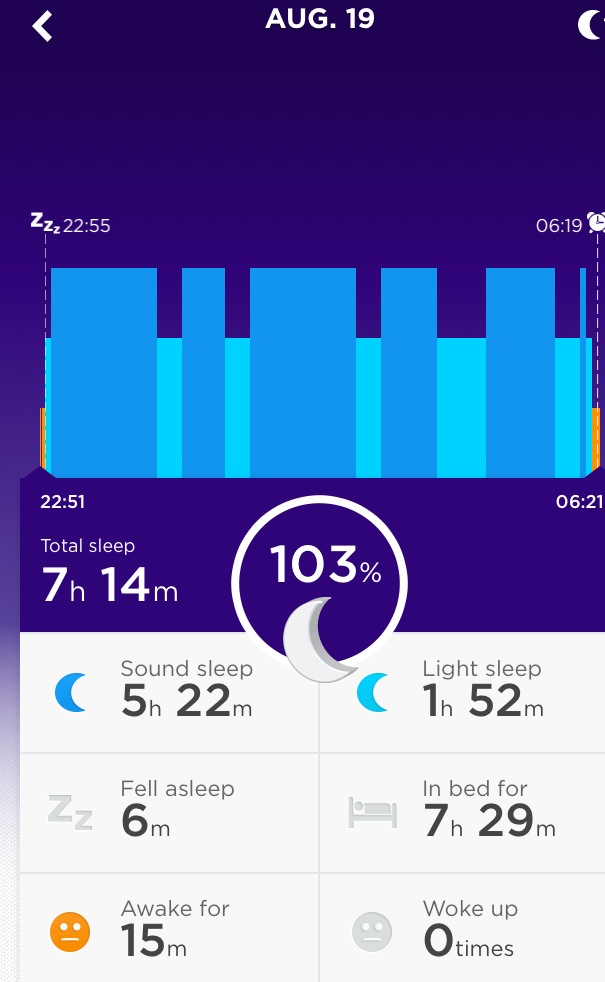
Jawbone Up not only tracks our sleep. The app also shares our data in a meaningful way with our friends – like we share our thoughts on Twitter.
Our most personal data however is generated on our mobile and wearable devices. On our smartphones, wristbands, or smartwatches, some twenty sensors continuously track our behavior and our actions. There is a plenitude of apps making use of mobile data: To support our training, to guide our routes, to find friends nearby, to share images, etc. etc.
Many people already share their daily workout via apps like Strava or Runtastic. It is even quite common to let such apps automatically post your training results into your social media timeline, e.g. to Twitter or Facebook.
Apps like Jawbone Up or Strava not only track our workout, they also provide for an easy way to share what data they measured. We publish our training data the same way there, as we publish our stories on Twitter or Facebook. Our data becomes equivalent to the texts and images we post. The most highly integrated version of this data-as-story so far is Google Now.

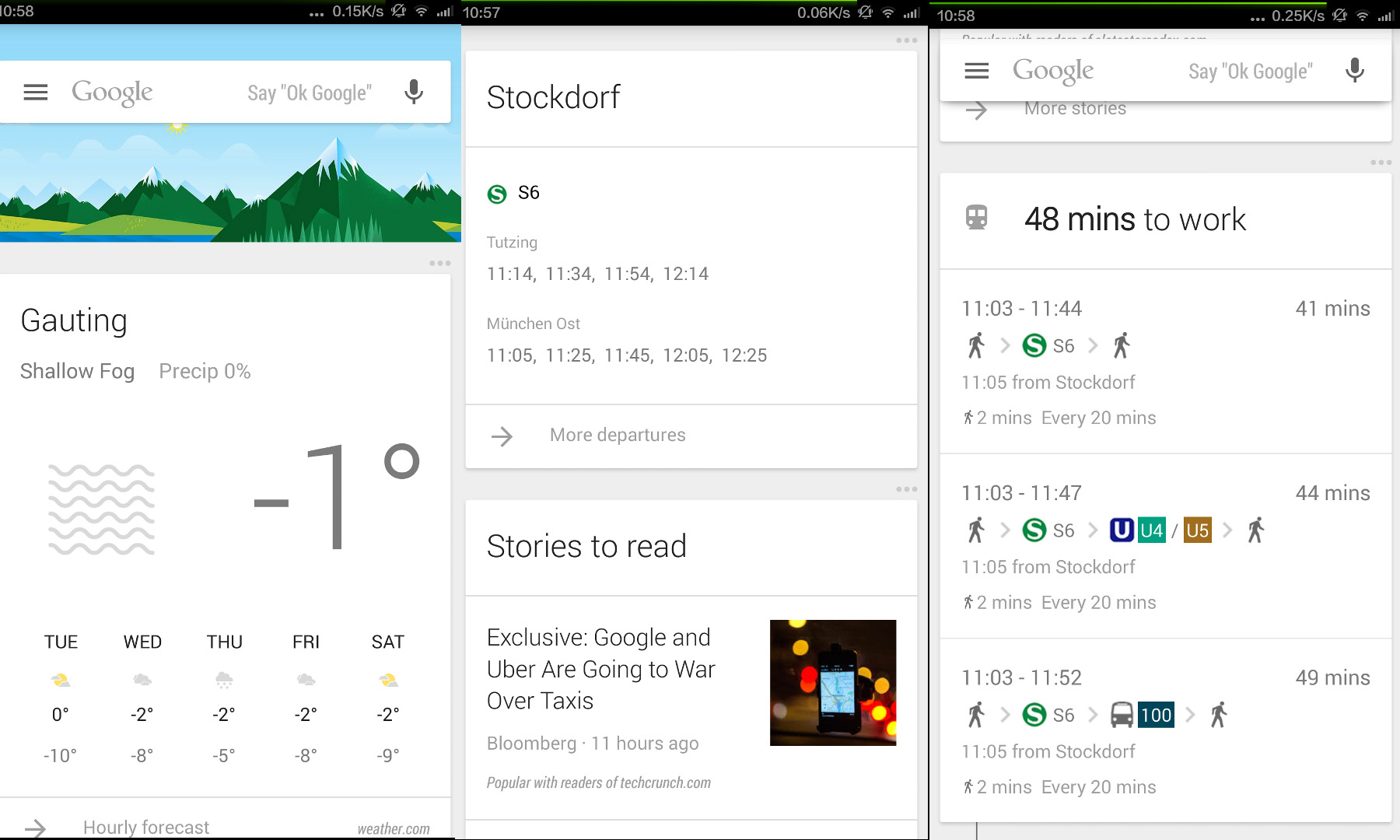
Image on top: Google Now. Google Now follows the idea to display all kinds of information in the form of tiles, like Twitter or Facebook would display the posts of the people you follow in a timeline. Funny enough, Google obviously has no clue where my “place of work” seams to be.
Data is media not only regarding the content. Advertising which has by and large been data driven for decades is facing a major transformation. Media planning and buying – the art of placing ads in the most efficient way, i.e. optimizing effect for a given budget – is changing dramatically. About 20% of all ads are placed programmatic now. Programmatic buying means that an algorithm decides which exact user would be appropriate to watch the ad instead of buying the spot via explicit insertion order, as it used to be. The decision if a certain user would match with the campaign’s objective is made by predictions based on the users’ observed behavior. Data thus drives the ads we get displayed.
With the idea of ‘The Quantified Self‘, data starts to conquer even the concept of our identity. We are not only what we tell, how we appear, how we act voluntarily, but we are as well defined by our innards, by our bodies’ functions, the data that comes from our physical being. The concept of ‘self’ is changing by this notion, overcoming the strict separation of mind and body, of conscious and unconscious. The physical aspects of our lives now get equal credit, as being veritable part of our being ourselves.
Data is becoming integral part to our stories. It pervades through all the media. We should learn to see data as part of our lives the same way, we are used to tell about things with words.
Further reading:
We are content!
Data stories: From facts to fiction.
by Kira Nezu | 15 January 2015 | Blockchain
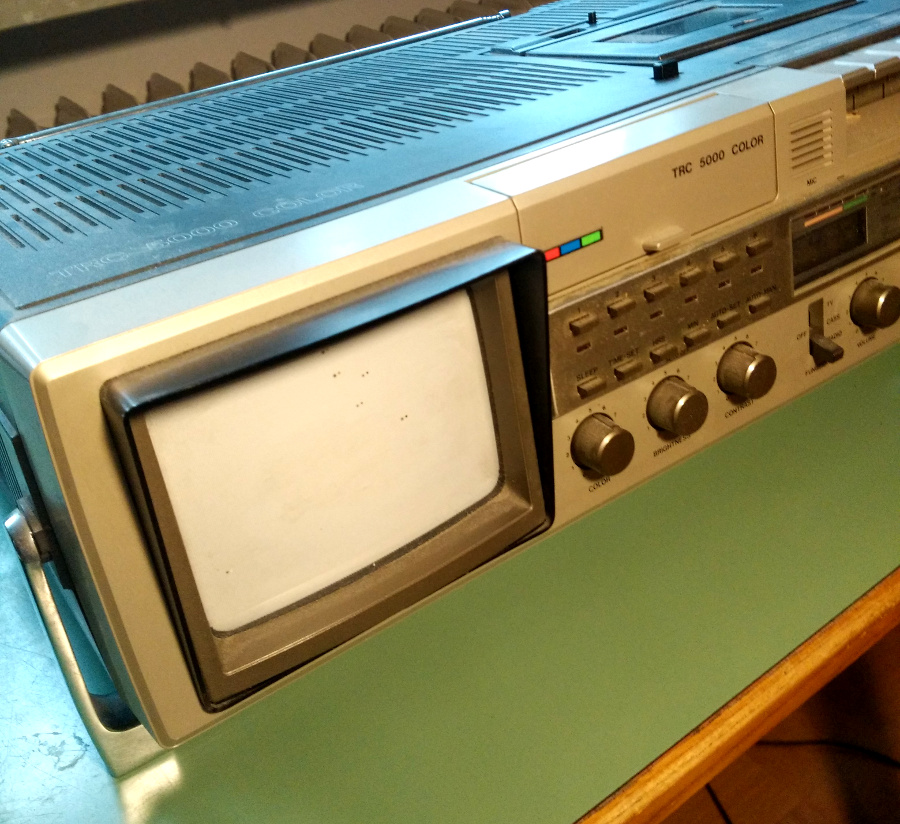
In the US, smartphone and tablet displays have replaced the TV set as screen number one. Meanwhile, not only the time spent on mobile devices has become longer on mobile than on the tube -primarily the intensity of using mobiles, the attention, people dedicate to mobile content, is higher.
Smartphones and tablets have thus become the first screen.
Nevertheless, there are plenty of occasions, when a smartphone is out of place, or even annoying: At the table, during a lively conversation, or while driving a car, to name just three obvious examples. My twitter friend Jürgen Geuter has put it in one sentence, why smartwatches will the remedy here: To check the wrist watch is socially accepted. Completely within the common boundaries we may just look on our smartwatch if the awaited reply on Whatsapp has arrived, just as we would have consulted the watch to get the time. Likewise, smartwatches are handy in the sense of the word, when we drive a car, and in combination with speech recognition many smartphone apps will work even better than the hands-free kit.
Smartwatches will thus become the second screen, the companion of our smartphones. Also therefore they will find their buyers.

by Kira Nezu | 10 January 2015 | Blockchain
As reply to our “Call for Data Fiction”, Benedikt Koehler has applied the BreakoutDetection packege for R on our sample data set. Here you see his findings with the code:
http://beautifuldata.net
by Kira Nezu | 9 January 2015 | Blockchain
Since 1967 the Consumer Electronics Show CES in Las Vegas has been the display for the latest products in electronic entertainment. Every first week in Januar the big brands disclose their secret products, that will be stacked on the shelves – or rather: put on the online shops.
Until recently, CES was the home match for the classic industry: Hifi, TV sets, car radio, … Even with Apple, Microsoft, and their likes have played an increasingly important role, their focus at this trade show was still also “classic” home entertainment: Smart TV, home cinema, computer games.
TV ist dowdy
Also for 2015 the industry had set-up their things. Companies like Samsung would make clear their strategy in advance: Even more fancy TV sets with even more features. But things turned out quite differently. It seamed as if nobody wanted to watch the TV screens on this year’s CES. Classic home electronics appeared like a relict from the 70s. If not before, it became clear at CES 2015, that TV is no longer the “first screen”.
Three Trends at CES2015
Three trends dominated the visitors’ interest and the media coverage of this year’s CES:
First: Connected home, in particular smoke detectors, thermostates, and other totally unsuspicous devices, which however gain enormously in their usefulness when connecte via the Internet; it is thus not the “talking refridgerator” that has been predicted by industry journalists for years, but classic, dry appliences.
Second: Connected car. What the automotive industry has shown at CES was really amazing: Autonomous cars, market ready; convincing systems for accident prevention, and other novelties in driving safety, that we can expect now in new cars.
Third: Wearable tech, electronics that we carry directly with us. Apart from fitness gadgets like wristbands, pedometers, or connected scales, there are in fact hundreds of smart watches with all kinds of applications, from fitness up to caring for the severely ill.
All three trends have one thing in common: The display by which we interact with them is mobile.
Our smartphones are already no longer just the second screen behind the TV set. In the US, the time spent with mobile devices exceeded watching TV. And the awareness that we dedicate to our mobile screens when checking them more than 200 times a day, is far greater.
The Content
The content that works on our mobiles is by no means online, with just less space on the screen. On our smartphones and tablets, we use mainly the direct communication. Social media, especially Facebook and Twitter, and in particular image-sharing platforms like Instagram are still the closest to what used to be “classic” media. But more and more forms of connected communication draw their users by the millions or even billions, like messaging apps of Whatsapp or Snapchat sort, or totally new forms, like Yo.
What not long ago would have been derogatorily called ‘user generated content’, UGC, has become simply the content.
The trends at CES show, how this development will further evolve. Next to the content that gets posted consciously and arbitrarily by the users, like texts or images, more and more automatically generated data is added. Every morning there are thousands automatic posts, published by fitness apps like runtustic about the training of their users. Lifetracking cameras like the narrative clip pictorially document without us being active, our daily routine, Jawbone reports our deep sleep phases to all connected friends in our user group. With ‘Bring Your Own Data’ sharing of very intimate data, gathered by our gadgets, becomes a serious part of our health care: Our self-tracked data support our doctors at helping us.
Social media, that is shared thoughts and pictures, and self-tracking, that is shared data, are two sides of the same coin: The most interesting stories are humans themselves.