German Government Officially Supports Blockchain Technology

German Government Officially Supports Blockchain Technology

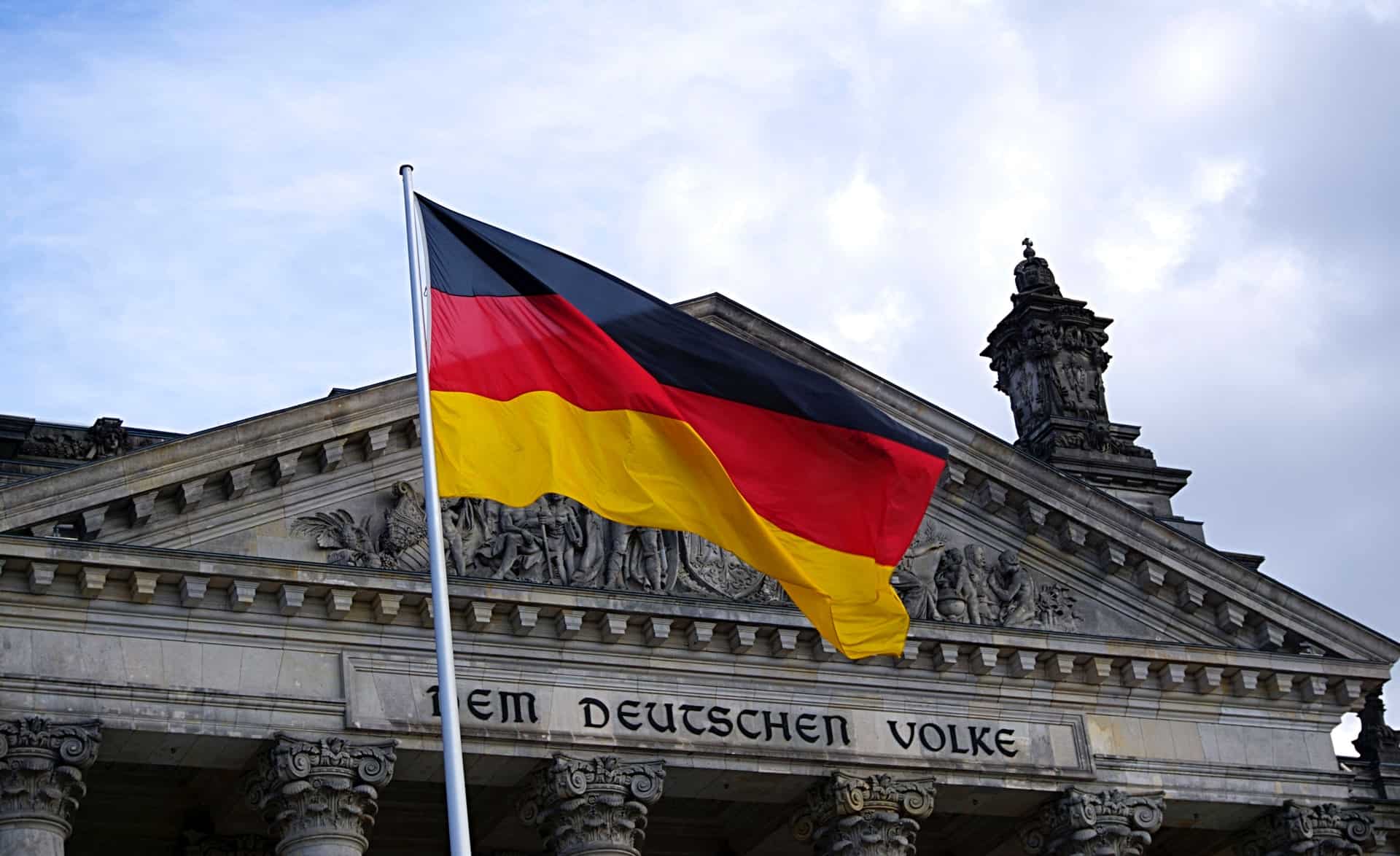
On 18 September 2019, the German government issued a 24-page strategy paper called “Blockchain-Strategie der Bundesregierung”, an official statement outlining the initiatives Germany together with other EU states plan to support Blockchain-technology. This paper was published shortly after the EU published its “Blockchain Now and Tomorrow” paper, which summarizes the EU initiatives regarding Blockchain application. It is worth mentioning, that the paper by Germany is much more extensive and specific when comparing both statements.

Blockchain is one of the most discussed technological topics within the German Cabinet. This is due to the fact that this technology will impact many different areas including economy, society, international trade and environment. The Cabinet states that Blockchain is “one of the technologies which is anticipated to have a profound impact over the next 10-15 years.”, mainly due to an increase of Blockchain activities within startups but also established companies. Therefore, the Germany government reached out to 168 prestigious experts with different backgrounds to elaborate the potential of Blockchain. The outcome of this initiative was the base for this strategy paper. The very good news is that in general the German government fully supports Blockchain technology. However, there are some limitations. The paper outlines that the Cabinet will not support private stablecoins as an alternative to sovereign currency. This implies that initiatives like Facebook’s Libra will be clearly blocked.  

So, what are the key initiatives according to this paper?

Ensuring stability and stimulating innovation with Blockchain in the financial sector

The German Government plans to open German law for electronic securities as early as this year. In its first iteration, only digital bonds will be covered. If this turns well, electronic shares and investment funds on the Blockchain will be considered as a next step. The paper outlines “The regulation of electronic securities should be technology-neutral, so that future electronic value papers can also be issued on a Blockchain.”. That’s great, in particular for our new company RAAY Real Estate, which supports the issuance of digital tokens for the real estate industry.

Establishing a token exchange

The Cabinet will work on laws on the regulation for exchange for non-traditional securities, i.e. security tokens and cryptocurrencies. A new “BaFin” permit for exchanges will allow the trading of crypto-assets on German exchanges.

Enhancing and supporting Blockchain innovations

The German Government will promote and financially support Blockchain projects. As an example they plan to pilot a Blockchain-based energy system connected to a public database. Also, they mention that they will promote the testing of Blockchain-based verification of higher education certificates.

Applying Blockchain in digital ID

Germany will seriously explore the use of Blockchain for digital identity. Timing is unclear, but the Cabinet announced that they plan to explore the benefits of Blockchain in use cases like maintaining the records of civil status, document registration, passports and ID cards.

Blocking private stablecoins

The strategy paper clearly states that the German Government will not support the establishment of any private stablecoin to get dominance in the country, as well as in the EU.

Overall, the Blockchain strategy paper published by the German government clearly proves that Germany is very serious about becoming the leading state for Blockchain technology. Surprisingly, the paper is very extensive and covers a broad range starting from finance to industrial applications. According to CoinDesk, the German parliament member Thomas Heilmann stated: “The home of the emerging token economy will be in Germany, just as Silicon Valley became a hotspot for previous innovations.

This is great to hear – let Germany become the Silicon Valley for Blockchain in Europe!

“Traditional VCs Are Dead”: Full House at The State Of The ICO Ethereum Meetup

“Traditional VCs Are Dead”: Full House at The State Of The ICO Ethereum Meetup

“I can honestly say my industry is being disrupted beyond belief right now. The funny thing is, I like it”, said Jamie Burke during yesterday’s Ethereum Munich meetup “The State of the ICO”. Jamie is betting his Outlier Venture’s fund on the idea to launch a handful, large ICOs to invest in communities and therefore in economies, rather than in startups.

Jamie’s fireside chat (no, there was no fire but it was hot as hell) with Datarella’s founders Michael Reuter and Joerg Blumtritt was a fascinating tour de force towards a potential next level of venture investing in general, and a new breed of investors focusing on communitarian, anti-fragile investments rather than amassing a portfolio of companies of which 90% will fail.

Before, lawyers Dr. Nina-Luisa Siedler of DWF and Dr. Markus Kaulartz of CMS inspired the audience with their highly informative and at the same time very sympathetic presentation on the legal aspects of ICOs. Both being long-time experts in the field of blockchain, managed to entertain everybody although their messages were far from being easy-going. Especially their slide “Consequences in case of incompliance” filled the room with enthusiasm. Their complete slidedeck “Legal Aspects of ICOs” can be downloaded here.

Again, the Ethereum meetup was a great success: everybody learned a lot, and from what we overheard on the floor, some of the individual conversations until late at night resulted in new ideas for …. future ICOs.

The State Of The Initial Coin Offering ICO

The State Of The Initial Coin Offering ICO

In our upcoming Ethereum Meetup we will discuss one of the hottest topics you can read about in the tech space: Initial Coin Offerings ICO, sometimes referred to as Initial Token Offerings ITOs or, more simply, as Token Sales.

In June 2017, blockchain project teams have raised more money through ICOs than through traditional venture capital firms. Has one of the key aspects of applied blockchains – the elimination of the middle-man – unexpectedly come upon the venture capital industry?

It might be too early to confirm this assumption but some VCs have supposedly decided not to wait any longer but to start using ICOs as an instrument to leverage their traditional businesses. Over at CrowdstartCapital, we have compiled a list of the world’s largest ICOs.

Jamie Burke, Dr. Nina Luise Siedler, Dr. Markus Kaulartz

In our meetup, we will approach the ICO from different perspectives, trying to get hold of this phenomenon:

  • Is an ICO the right moneyraising tool for your project?
  • What are the pitfalls of an ICO?

We are very happy to have one of the most prolific experts in the field of blockchain investing to present his perspective on ICOs: Jamie Burke, Founder and CEO of Outlier Ventures and Convergence VC. Jamie and bis team have analysed over 1,000 blockchain-related startups. He is quite critical when it comes to ICOs, That’s the reason we are very much looking forward to meeting Jamie on 25 July.

Right after Jamie introduced us to the actual ICO sphere, we are happy to have Dr. Nina Luise Siedler and Dr. Markus Kaulartz with their interactive take on the legal aspects of ICOs. Everybody has heard of Bitcoin and other crypographic coins or tokens, and most of us know what those are from a technical perspective. Markus and Nina will go beyond that and will explain what tokens are under applicable laws. They will give some practical insights to explain that there are different kinds of tokens which can be used for various business purposes. Depending on the kind of token, different regulatory frameworks apply to ICOs. Markus and Nina will share insights of what companies have to consider when running their own ICO.

We are very much looking forward to having exciting discussions! See you at our partner Deloitte’s  Munich offices on July, 25!