
by Michael Reuter | 1 April 2014 | Blockchain
From rapid urbanization in China to dung-fired stoves in New Delhi, air pollution claimed 7 million lives around the world in 2012, according to the World Health Organization. Globally, one out of every eight deaths is tied to dirty air – which makes air pollution the world’s single biggest environmental health risk. And, in areas with very bad air pollution, people live an average of 5 fewer years than those in other areas.
Not only in Chinese megacities or indian agricultural areas, people are trying hard to keep air pollution at bay. In Portland, Oregon, a local initiative called Neighbors for Clean Air is using Big Data to make bad air visible. The group is part of an experiment in initiated by Intel Labs, that uses 17 common, low-cost sensors, each weighing less than a pound to gather air quality data. This data feeds to websites that analyze and present comprehensible visualizations of the data. The sensors itself are built using an Arduino controller. They measure carbon and nitrogen dioxide emissions, temperature and humidity.
By making the air pollution problem visible, the experiment not only made people recognize the importance of technology in understanding air quality, but Neighbors for Clean Air could forego an agreement with a local metal foundry to cut emissions.
If you want to have a look at your own air pollution, go to Air Quality Egg – perhaps one of the several hundred eggs worldwide has been installed in your neighborhood.
by Kira Nezu | 31 March 2014 | Blockchain
Asthma is one of the most common chronical conditions. For many who are affected, it would be necessary to monitor their lung functions much more frequently than by visiting their doctor once or twice a year.
Spirometers which measure the volume of air taken in and out whith a breath are expensive and even if you’d buy one, you’d still have to carry another device with you. Smartphones are ubiquitous, everybody carries one – this is what makes mHealth so powerful after all.
SpiroSmart is an app that makes use just of the most basic function of any phone: the microphone. By exhaling all your lung’s content into the phone’s mike at the distance of your full arm’s lenght, SpiroSmart calculates the breath capacity. The app analyzes the dynamics of the sound, the exhaling makes to fulfill the task of the classic spirometers that do the same with a small fan that gets propelled by the exhaled breath inside a mouthpiece. The error rate lies close to the parameters set up by the American Thoracic Society ATS.
SpiroSmart is developed by an interdisciplinary team at the University of Washington in Seatle.
Links:
“Tracking Lung Function on any Phone”. Poster by E. Larson et.al.
by Michael Reuter | 28 March 2014 | Blockchain
If a technology wants to be respected it should demonstrate its social relevance. Then it will be approved by the people and its implications will be accepted. Otherwise it will be dead on arrival.
Generally, there are two different sorts of people: tech lovers and tech skeptics. The first are open to any innovation and happily embrace new technologies, products and services. The others look for risks and potentially negative implications of new tech. Ok – that may sound a little black and white – but for this post it helps. I think, if a new technology wants to be regarded as valuable, it should demonstrate social relevance. What do I mean with that? Let me explain using the example of or app explore.
A quick reminder for those who don’t now explore: the app helps you to learn more about yourself, your behavior. It does two things:
- it tracks you by collecting data from your smartphone’s sensors – like geolocation data, and
- it offers you questionnaires regarding your behavior to be answered by you.
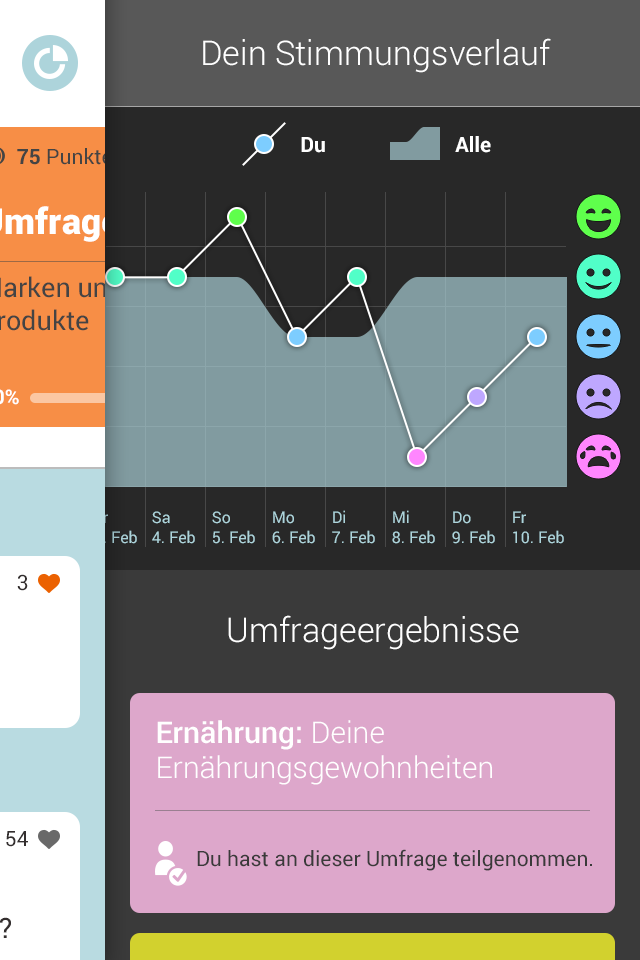
The more questions you answer, the more does explore know about you and the better is the feedback you get from explore: your behavior, presented in nice-to-read graphs, with comparisons of your own behavior with that of other explore users. explore is a quantified self app, fully functional without any additional gadget.
The goal of explore is to help you improving the quality of your life. And that’s why you provide explore with your personal data: you will learn a lot about yourself – how you behave in certain situations and how this correlates with other factors, such as weather conditions, your individual communication behavior, your stress level, etc. If, for instance, you don’t feel well for the last few days, explore might find out a strong correlation with a higher than normal coffee intake. And since we all forget quickly – we even don’t remember what we did last Monday – explore supports you by showing your behavior in a time line. That might be the first time you don’t have to speculate about the reason for your not-so-well-being, but you actually see the reason!
“The first thing you have to know is yourself. A man who knows himself can step outside himself and watch his own reactions like an observer.”
Adam Smith
We are individuals, all of us are different. There is no standard recipe for illnesses or bad feelings. There are as many recipes as there are people. And this is where explore comes in: since you provide explore with your individual data, you will get individual feedback and recommendations about what to change, if necessary. And here we are: I think that our app explore – and its behavioral analytics in the background – is socially relevant.
3 Aspects of explore’s Social Relevance
- Everybody can use explore. The app is free and there is no need of using an additional gadget like a fitness band, or else. It’s in your smartphone – with you all the time.
- It’s absolutely easy to participate: explore asks the right questions at the right time – nobody must be overly creative and fill in an empty diary – just answer short questionnaires in under a minute.
- Users get individual personalized recommendations to change their behavior, if necessary. No standards, but individual advice.
For me, it’s absolutely great to work with a product (and a team, of course!) that helps people to change their lives for the better. Depending on the usage and the individual user, these might be minor changes – but with every small improvement is a good one. And since human beings can only change themselves for the better by changing their behavior (and not by waiting, taking pills or expecting any other external help), explore is a well applicable tool. And then it becomes socially relevant.
Please send me your perspective on socially relevant technology – would love to discuss!
by Kira Nezu | 27 March 2014 | Blockchain
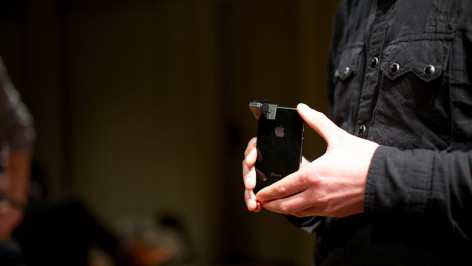
iSpex is a plastic contraption that can be clipped on top of a smartphone’s camera. In this simple slit spectrograph light is defracted and polarized by shining through birefringent plastic sheets and a polarisation film. iSpex measures how aerosoles – microscopic or nanoscopic particles hovering in the athmosphere – change the polarization of the highly polarized light that shines from an unclowded, blue sky. This change in polarization renders a distinct pattern in the spectrum, that is cast by the iSpex-device into the phone’s camera. By this approach, iSpex can measure how the air is polluted with particulate dust, which is regarded especially unhealthy and has become topic of fierce political discussions, when the EU ordered city governments to regulate and even lock out automotive traffic.
Behind iSpex stands a consortium of the Netherlands Research School for Astronomy at University of Leiden, Netherlands Institute for Space Research (SRON), National Institute for Public Health and the Environment (RIVM), and the Royal Netherlands Meteorological Institute (KNMI).
Over the course of summer and autumn 2013, thousands of people in the Netherlands participated in “national iSpex days”, jointly measuring particulate dust. The first results of this awesome social effort are published, and we can hope this project will find epigones in other countries.
iSpex website:
Measuring aerosols with spectropolarimetry

by Kira Nezu | 26 March 2014 | Blockchain

Smartphones carry versatile sensors. With appropriate apps, expensive instruments can be very well replaces – even sometimes the Geiger counter.
Gamma rays which are often products of radioactive decay, are also electromagnetic waves, just like light, however much more energetic. That means: as radioactive radiation can expose a chemical photographic film, it can as well effect the camera chip in the smartphone.
A team of researchers at the Idaho National Laboratory in Idaho Falls have used this property to change common smartphones into detectors for radioactive radiation. The radiation is recorded via the camera an an app, which calculates the radiation intensity from the data collected.
With this approach we learn again, how versatile mobile devices can be deployed. Up to thirty sensors in each smartphone measrure all kinds of variables like temperature, magnetism, brightness, sound and many more. With a little creativity we can combine these measurements and get valuable data about the environment around the smartphone and its user, that not rarely can replace expensive, specialized methods.
Here the link to the original publication:
Joshua J. Cogliati, Kurt W. Derr, Jayson Wharton: Using CMOS Sensors in a Cellphone for Gamma Detection and Classification

by Michael Reuter | 13 March 2014 | Blockchain
Neben unseren mobilen Studien fragen wir unsere Nutzer immer wieder nach Ihrer Meinung zu aktuellen Tagesthemen. Momentan ist der Steuer-Prozess um FC Bayern Präsident das nationale Top-Thema. Daher haben wir einige Fragen gestellt. Hier sind die Antworten:
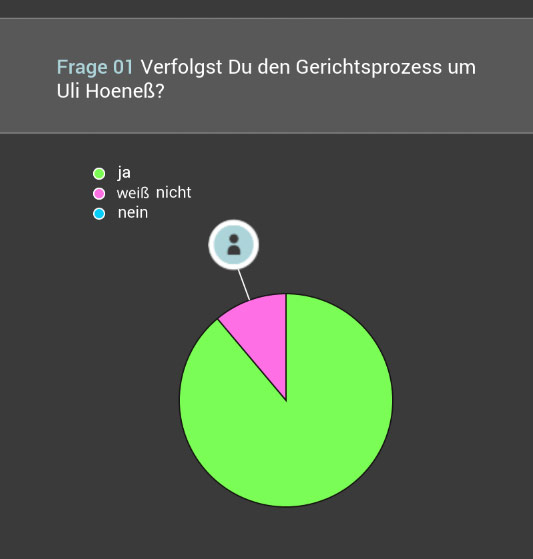
Frage 1: Verfolgst Du den Gerichtsprozess um Uli Hoeneß?
Antwort 1: knapp 90% der explore Teilnehmer verfolgen den Prozess.
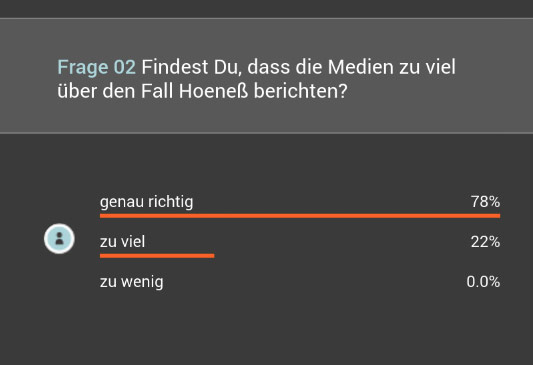
Frage 2: Findest Du, dass die Medien zuviel über den Fall Hoeneß berichten?
Antwort 2: Lediglich 22% geben an, genervt zu sein, weil so viel über den Fall berichtet wird.
Frage 3: Was glaubst Du, passiert mit Uli Hoeneß?
Antwort 3: 56% der Befragten sehen Uli Hoeneß im Gefängnis, 22% sehen ihn frei und ebenfalls 22% meinen, dass er sich ins Ausland absetzt.

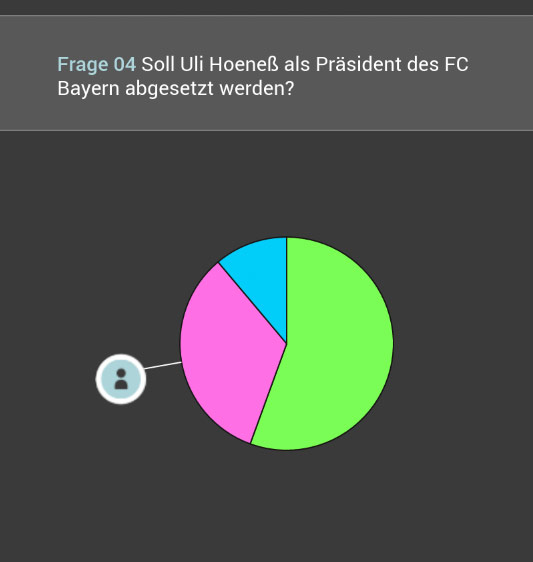
Frage 4: Soll Uli Hoeneß as Präsident des FC Bayern abgesetzt werden?
Antwort 4: Dass Uli Hoeneß nicht mehr der geeignete Präsident des FC Bayern ist, denken knapp über 50% der Befragten.
Wir sind gespannt, wie die Richter am Landgericht München II entscheiden werden – und ob sich Uli Hoeneß ins Ausland absetzt.
UPDATE:
Alea iacta est: Uli Hoeneß ist zu einer Haftstrafe von drei Jahren und sechs Monaten verurteilt worden. Nun kann er Revision beantragen. Den Gang ins Gefängnis müsste er erst antreten, wenn das Urteil rechtskräftig ist. (Wir glauben auch nicht, dass eine Flucht ins Ausland eine Option für Herrn Hoeneß ist.)
UPDATE 2
Uli Hoeneß verzichtet auf Revision und tritt den Gang ins Gefängnis an. Zudem tritt er von allen Ämtern mit sofortiger Wirkung zurück.

by Michael Reuter | 5 March 2014 | Blockchain
Wir suchen einen Ruby on Rails Entwickler per sofort!
Datarella erzählt die Geschichten hinter Daten: basierend auf der Research App ‚explore‘ entwickelt Datarella eine Behavioral Analytics Plattform mit integrierter Complex Event Processing Engine, die in Echtzeit das Verhalten von Teilnehmern analysiert. Nachdem Teilnehmer die App ‚explore‘ installiert haben, erhalten Sie in Abhängigkeit ihres Verhaltens Umfragen zugespielt. Die erhaltenen Antworten werden gemeinsam mit den erhobenen Sensordaten analysiert und ergeben ein klares Bild über Verhalten und Befindlichkeit der Teilnehmer.
Deine Aufgaben
Du wirst Datenbank und Web-Frontend für unsere App weiterentwickeln mittels Einbau, Mitenwicklung und Bug-Fixing neuer Features. Du setzt Features schnell und sicher in sauberen Rails-Code um. Du bist mitverantwortlich für die Sicherheit und Qualität des Backends. Wir bieten Dir einen spannenden Teilzeit-Job mit flexibler Zeiteinteilung. Du kannst von zuhause arbeiten und stehst in engem Kontakt mit unserem Entwicklerteam.
Deine Qualifikation
- Du hast sehr gute Ruby on Rails Kenntnisse
- Du hast Erfahrungen im Umgang mit Datenbanken (SQL, zB PostgreSQL, und idealer Weise auch MongoDB)
- Von Vorteil: Erfahrung in HTML, CSS, JavaScript, git
- Du entwickelst gerne in einem agilen Prozess
- Du hast gute kommunikative Fähigkeiten, eine strukturierte Arbeitsweise, kannst Dich selbst Organisieren und hast Teamgeist
- Du sprichst und schreibst gut Englisch
Bewirb Dich, indem Du eine email mit den relevanten Informationen über Dich an info (at) datarella (dot) com schreibst!
by Michael Reuter | 14 January 2014 | Blockchain
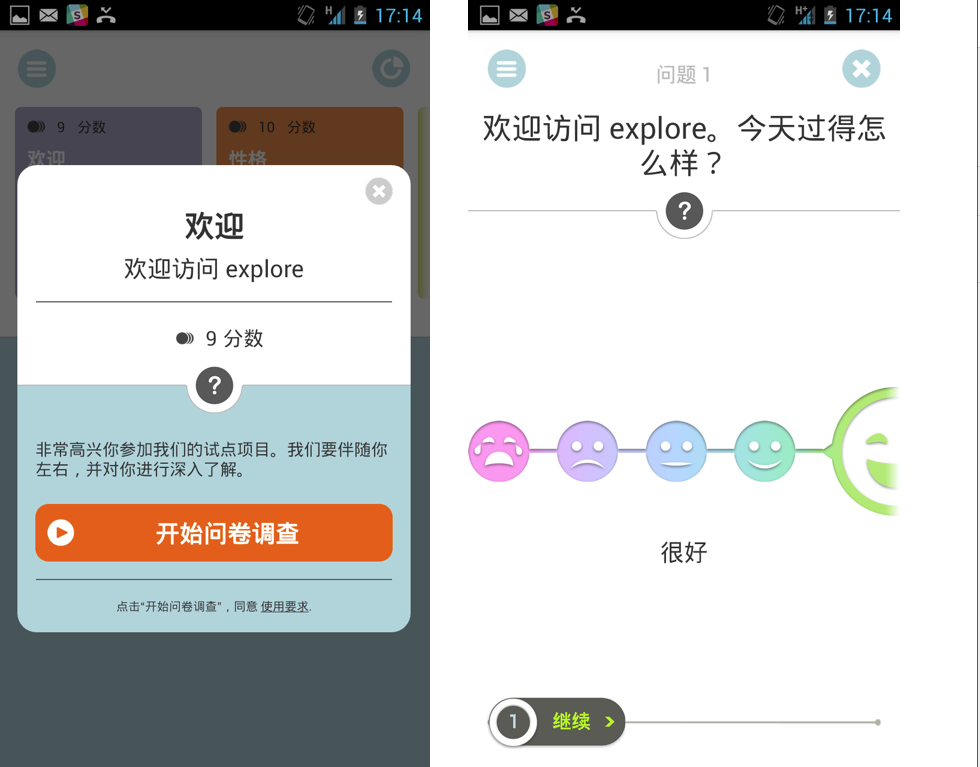
The Chinese version of the ‘explore’ app is ready for download. And that’s unique: right before the launch of the English version ist the Chinese app the first international version! It can be used for research in China itself or for surveys within the Chinese target group living abroad.
Download explore
by Michael Reuter | 14 January 2014 | Blockchain
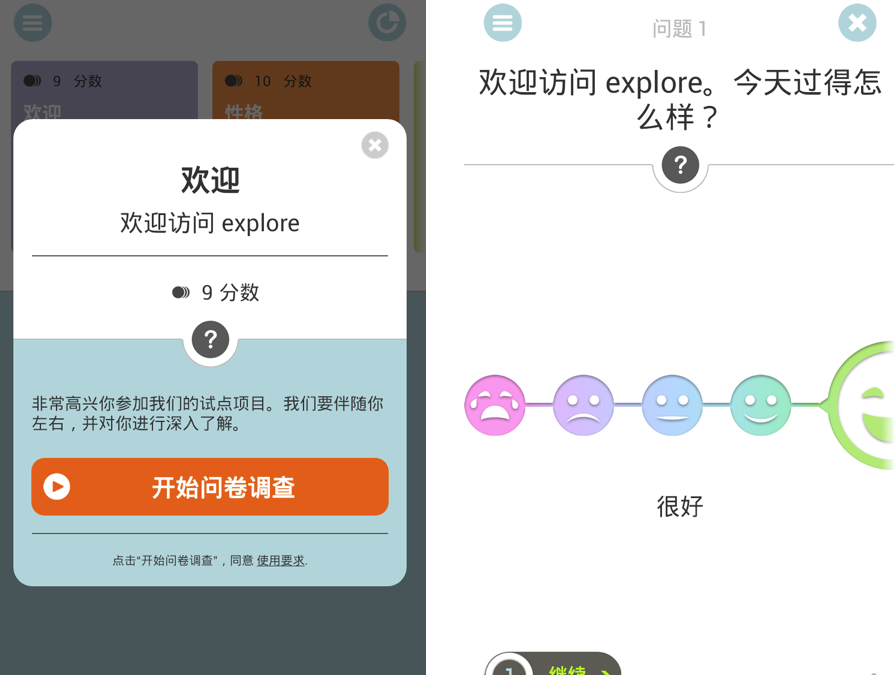
Die explore App steht ab sofort auch für den Einsatz in China zu Verfügung. Noch vor der englischen ist die chinesische Sprachversion von explore die erste Version für den internationalen Einsatz. Sie kann von interessierten Unternehmen ab sofort für Umfragen ihrer chinesischen Zielgruppen genutzt werden.
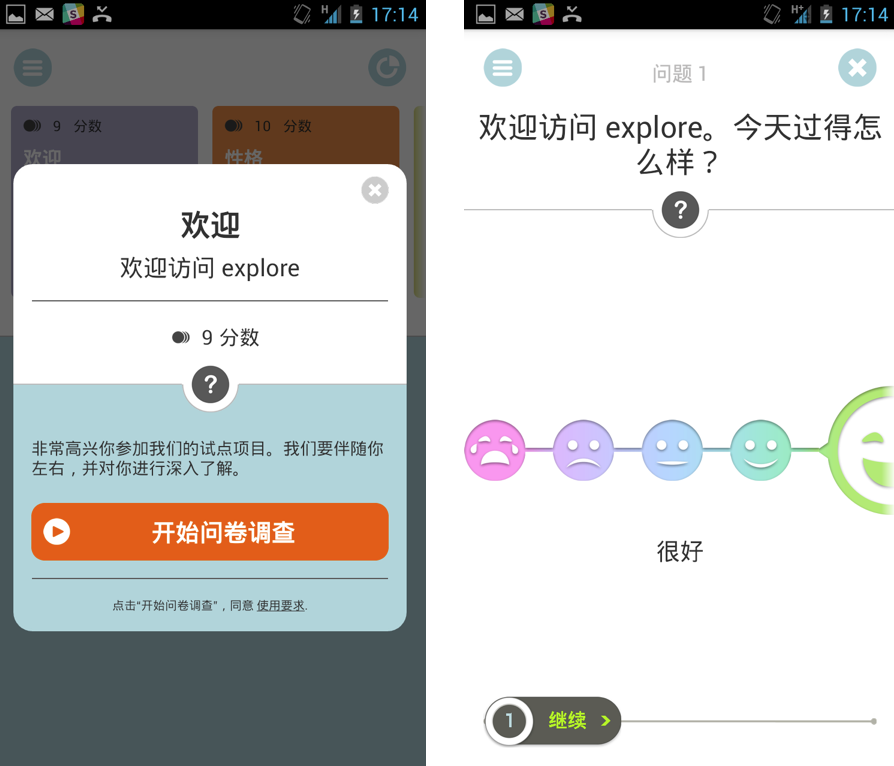
Download explore App
